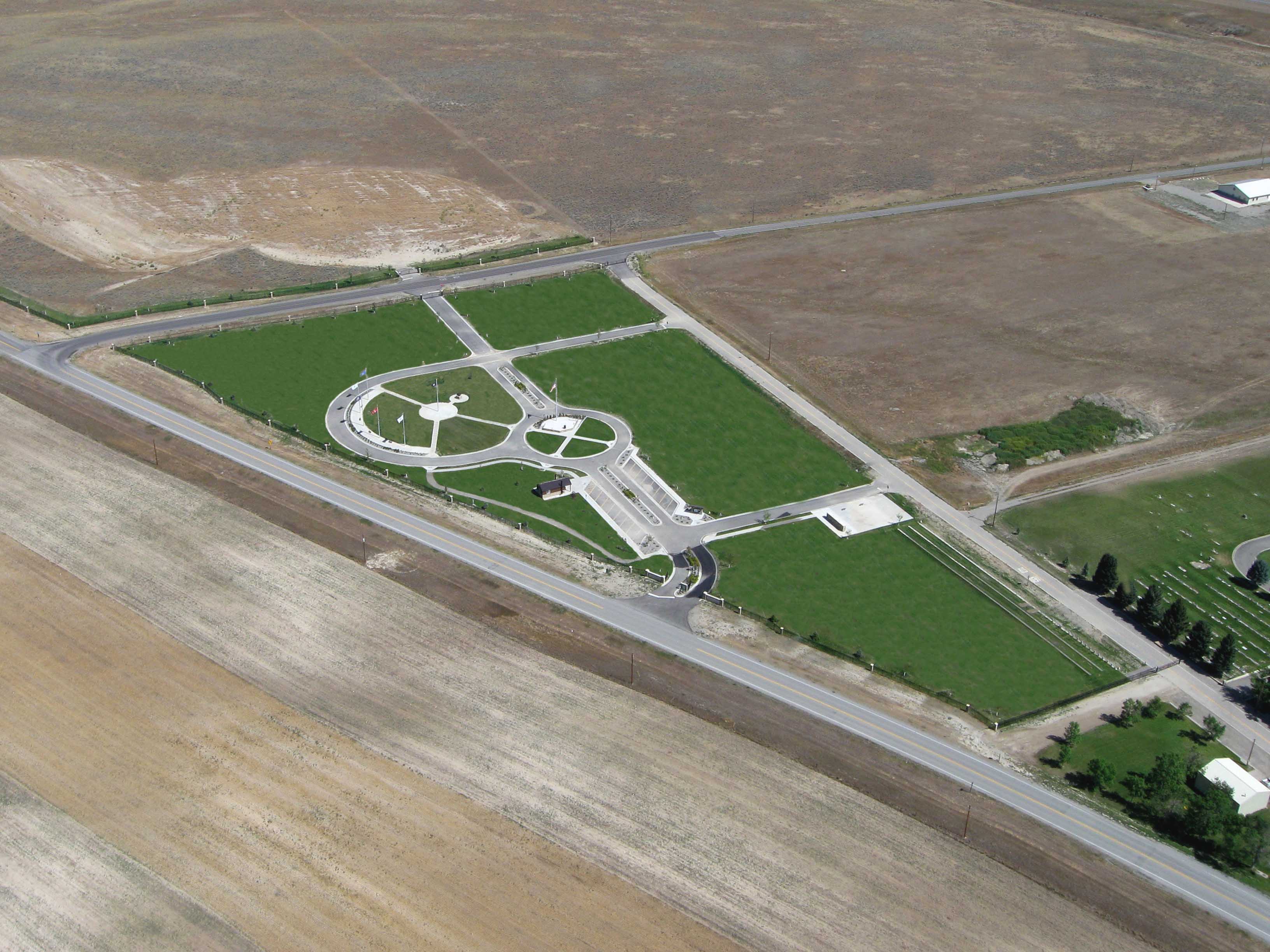
Yellowstone National Cemetery
The federal government did not build Yellowstone National Cemetery. The veterans of Yellowstone County, Montana, did. Tired of traveling hundreds of miles to reach the nearest open national cemetery, they raised $1.7 million, purchased land from the city of Laurel, hired a local woman-owned design firm, and constructed a cemetery that met every federal standard. Then they petitioned Washington to take it. On May 26, 2014, the Department of Veterans Affairs accepted their gift, making Yellowstone National Cemetery the first burial ground established under the Rural Veterans Burial Initiative.
A Century of Service
Montana's first national cemetery dates to 1879, when the Army established the fourth-class Custer National Cemetery at what is now Little Bighorn Battlefield National Monument. The soldiers who fell at the Battle of the Little Bighorn lay there, along with those who died in the Plains Indian Wars and at frontier military posts across the region. By 1940, the National Park Service had taken over management. But Custer National Cemetery eventually closed to new burials, leaving Montana's largest city, Billings, and its surrounding county, home to the state's largest veteran population, without a nearby place to honor their dead.
Building From the Ground Up
By the early 2000s, the state had three veterans cemeteries in Helena, Missoula, and Miles City, but nothing near Yellowstone County. The state legislature authorized a cemetery but provided no funding. So the veterans organized. Yellowstone County purchased land from Laurel, fifteen miles west of Billings. Peaks to Plains Design drew the plans. Hardy Construction broke ground on Memorial Day 2008. By Veterans Day of that year, the cemetery stood complete. On December 8, 2008, Glenn L. Butz, a World War II Army veteran, became the first person laid to rest there.
From County to Country
Senator Jon Tester of Montana led the campaign to convince Veterans Affairs that rural states needed smaller national cemeteries closer to where veterans actually lived. In 2011, the Department launched its Rural Veterans Burial Initiative, identifying eight states lacking accessible national burial grounds: Montana, Wyoming, Utah, Nevada, Idaho, North Dakota, Wisconsin, and Maine. Veterans Affairs agreed to accept the Yellowstone County Veterans Cemetery as the initiative's first site. Citizens submitted fifty-two proposed names for the new national cemetery. A veteran living near Laurel suggested Yellowstone National Cemetery, arguing the name reflects grandeur of America's west, with nobility, strength, courage, and character.
Sacred Ground
The dedication ceremony on May 27, 2014, wove together the many strands of Montana's history. Leaders of the Crow Nation and Northern Cheyenne Nation performed tribal blessings in their native languages. Federal officials stood alongside local civic leaders and the veterans who had made the cemetery possible. Since then, the National Cemetery Administration has expanded the grounds, installing 762 in-ground crypts capable of holding 1,524 caskets and multiple columbaria with capacity for over 1,200 cremation niches. As of May 2025, nearly 2,400 veterans and their family members rest beneath the Montana sky.
Hallowed Ground Today
The cemetery sits one mile north of Laurel on Buffalo Trail Road, administered by the Continental Division of the National Cemetery Administration with oversight from Fort Logan National Cemetery in Denver. The grounds occupy land that once belonged to the city of Laurel, with additional state land purchased for future expansion. Row upon row of white markers stand against the backdrop of the Yellowstone River valley, the same country where Sergeant Nathaniel Pryor of the Lewis and Clark Expedition once rode. For the veterans of Montana's high plains, the long journey to a final resting place now ends much closer to home.
From the Air
Yellowstone National Cemetery is located at 45.70N, 108.77W, one mile north of Laurel, Montana. From 3,000-5,000 feet AGL, look for the orderly rows of white headstones on the prairie north of town along Highway 532 (Buffalo Trail Road). Laurel lies 15 miles west of Billings along the Yellowstone River. Billings Logan International (KBIL) is the nearest commercial airport, approximately 17 miles east. The cemetery is visible from the Laurel approach corridor to KBIL.