Yemen
In the Wadi Hadhramaut, a valley carved deep into the eastern Yemeni desert, hundreds of mud-brick towers rise eleven stories into the air. Shibam -- the Manhattan of the Desert -- has stood here since the 16th century, its adobe skyscrapers packed within defensive walls, their upper facades painted white with gypsum that gleams against the brown canyon beyond. Some of these buildings are over 700 years old. They are among the most extraordinary examples of human architecture anywhere on Earth, and they are in danger. Yemen's civil war, ongoing since 2015, has devastated the country's infrastructure, displaced millions of people, and created what the United Nations has called the world's worst humanitarian crisis. The heritage sites that make Yemen irreplaceable -- Old Sana'a, Shibam, Socotra Island -- survive in the crossfire of a conflict that shows no clear resolution.
Three Thousand Years of Kingdoms
Yemen's history stretches back to the Minaean and Sabaean kingdoms of the 12th century BCE. The Sabaean capital at Ma'rib, built around a dam that was one of the engineering wonders of the ancient world, is linked to the legend of the Queen of Sheba. For centuries, Yemeni kingdoms controlled the lucrative incense and spice trade that connected the Arabian Peninsula to the Mediterranean and India. The Himyarite kingdom, which ruled much of South Arabia before the 6th century, left inscriptions and ruins still visible today. The Islamic caliphates took control in the 7th century, followed by centuries of competing dynasties, Ottoman rule, and eventually the colonial carve-up that created North and South Yemen. Unification came in 1990, but peace did not follow. The country's recent decades have been marked by dictatorship, al-Qaeda activity, and the Houthi insurgency that erupted into full-scale civil war in 2015, with a Saudi-led bombing campaign compounding the destruction.
The Gingerbread City in the Sky
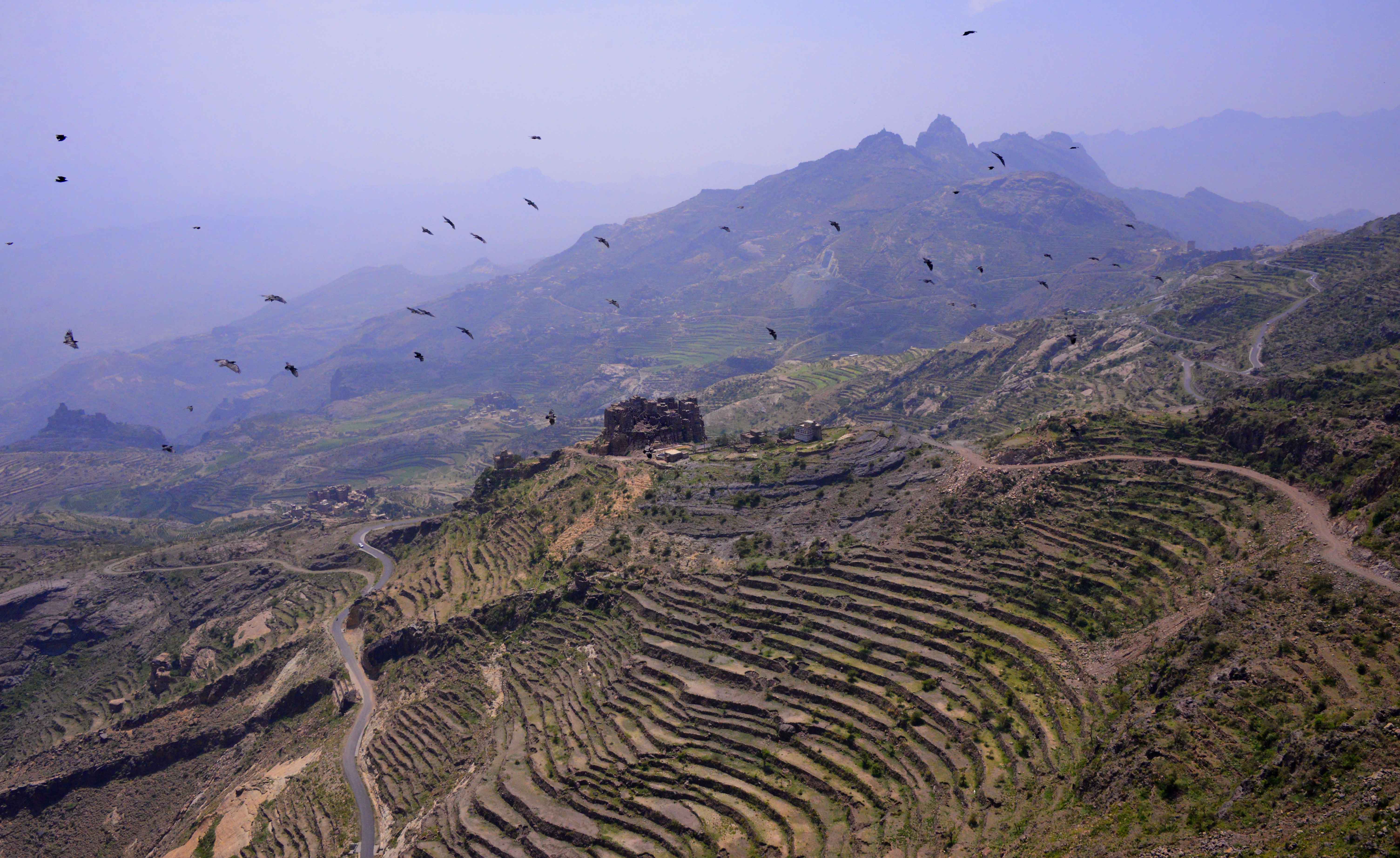
Old Sana'a sits at over 2,200 meters above sea level, one of the highest capital cities in the world. Its UNESCO-listed old city is a marvel of Islamic urban architecture: tall tower houses built from rammed earth and baked brick, their facades decorated with geometric white gypsum patterns that make them look like enormous gingerbread houses. The city has been continuously inhabited for over 2,500 years. Wandering its narrow streets -- or at least, doing so before the war made travel nearly impossible -- meant passing through living history: markets selling frankincense and myrrh, the same goods that made this region wealthy millennia ago. Kawkaban, a fortress-city northwest of Sana'a at 3,000 meters, preserves Himyaric inscriptions and Stars of David from the old Jewish roots of the Himyar civilization, overlooking a plain dotted with ancient mud-brick towns.
Socotra: The Most Alien Place on Earth
Off Yemen's southern coast, separated from the mainland by 350 kilometers of open sea, lies Socotra -- an island so biologically isolated that a third of its plant species exist nowhere else on Earth. The dragon blood tree, with its dense umbrella-shaped canopy, is the island's icon: when its bark is cut, it bleeds a deep crimson resin that ancient civilizations used as dye, medicine, and varnish. The desert rose grows in bulbous, elephantine forms among the limestone plateaus. The waters surrounding the island are turquoise, the beaches white and essentially undeveloped. Socotra has been called the most alien-looking place on the planet, and from above, the description holds: the landscape resembles nothing else in the Arabian Peninsula or anywhere in the broader region. Its remoteness has so far insulated it from the worst of the mainland conflict, but the island's ecosystem remains fragile and its future uncertain.
A Landscape of Extremes
Yemen's geography is as dramatic as its history. The Tihamah coastal plain along the Red Sea is among the hottest places on Earth, with temperatures regularly exceeding 48 degrees Celsius. From this furnace, the western highlands rise abruptly to peaks above 3,000 meters, where monsoon rains from Africa create conditions wet enough to grow coffee -- Yemen's gift to the world, first exported through the port of Mocha. The central highlands plateau around Sana'a experiences some of the highest diurnal temperature swings anywhere: warm days and freezing nights. Eastward, the land descends through wadi-cut plateaus into the Rub al-Khali, the Empty Quarter, the largest continuous sand desert on Earth. In the far east, the Hauf National Park receives seasonal monsoon rains that sustain the only natural forest on the Arabian Peninsula, a green anomaly in a region defined by aridity.
Heritage in the Balance
Yemen's people are caught in a catastrophe. The civil war has destroyed roads, hospitals, and water systems. Cholera outbreaks have swept the country. Millions face food insecurity. For travelers, Yemen is effectively closed: most international flights are suspended, embassies have evacuated, and the few remaining routes in or out involve significant personal risk. The cultural toll is equally devastating. Airstrikes have damaged sites in Old Sana'a. The mud-brick towers of Shibam are deteriorating without maintenance. Archaeological sites from the Sabaean and Himyarite periods, some never fully excavated, face looting and neglect. What makes Yemen's situation particularly painful is the scale of what stands to be lost. This is not a country with a handful of notable monuments. It is a country where three thousand years of continuous civilization have left layers of heritage so deep that every valley, every mountain town, every stretch of coast holds something irreplaceable. The Yemeni people, whose warmth and hospitality travelers consistently describe as extraordinary, deserve better than what the present has given them.
From the Air
Located at 15.50N, 48.00E, Yemen occupies the southwestern tip of the Arabian Peninsula. Old Sana'a is at 2,200 m elevation in the western highlands. The terrain transitions from the Red Sea coastal plain (Tihamah) through dramatic western highlands to central plateau and eastern desert (Rub al-Khali). Socotra Island lies approximately 350 km south of the mainland in the Arabian Sea. Major airports: Sana'a International Airport (OYSN) and Aden International Airport (OYAA), though operations are severely limited due to the ongoing conflict. The western mountain ranges with peaks above 3,000 m are visible as a dramatic escarpment from the Red Sea side. WARNING: Active conflict zone -- all airspace should be treated with extreme caution.