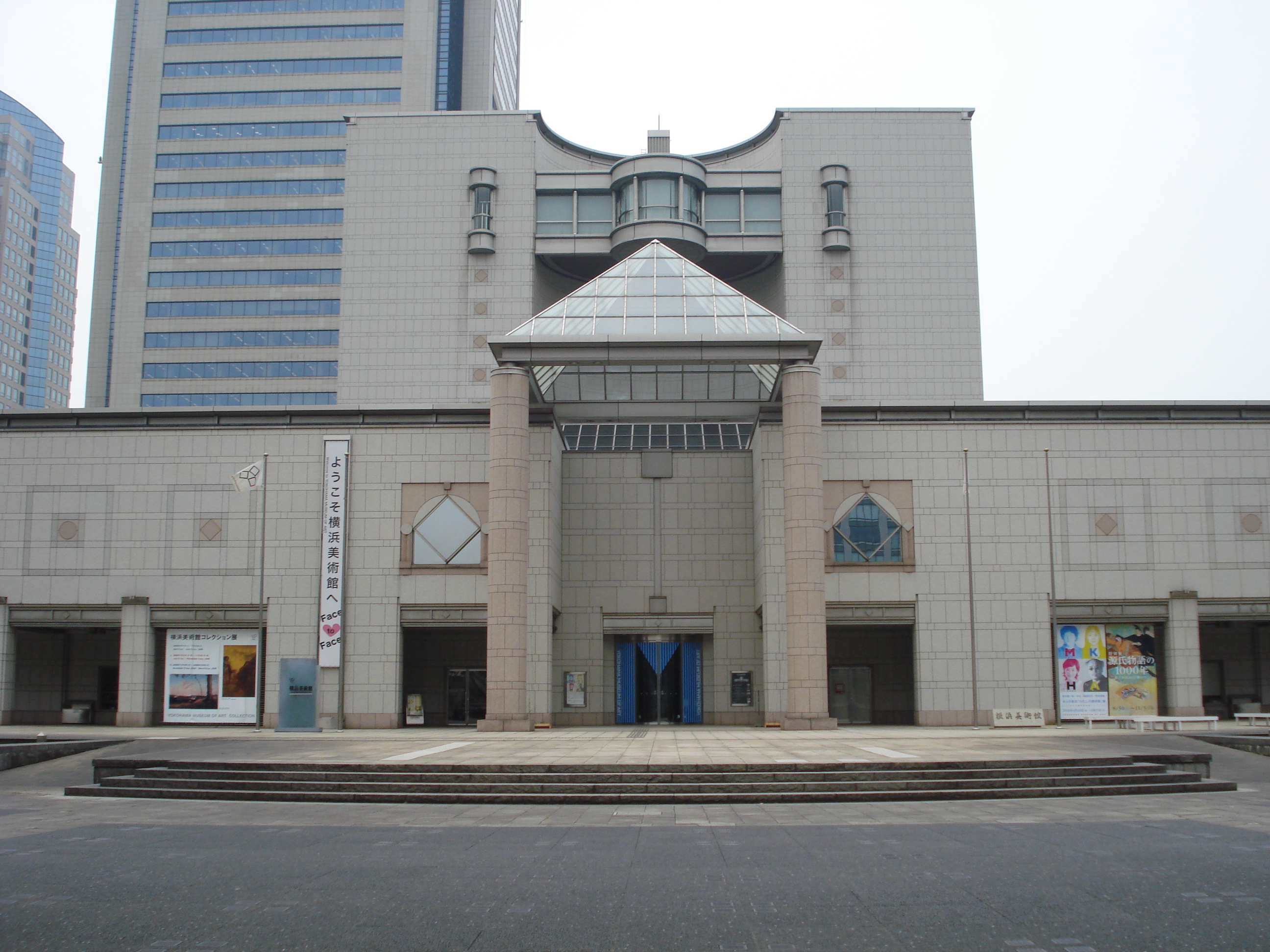
Yokohama Museum of Art: Tange's Temple of Modern Art
The building announces itself before you even notice the art inside. Kenzo Tange -- the architect who designed the Hiroshima Peace Memorial Museum and Tokyo's Yoyogi National Gymnasium -- created for Yokohama a structure so airy and precisely proportioned that the Grand Gallery feels less like a room and more like a held breath. Founded in 1989 in the Minato Mirai 21 district, the Yokohama Museum of Art sits next to the Yokohama Landmark Tower on reclaimed land that was once Yokohama's shipyard. Tange won the Pritzker Prize in 1987, two years before the museum opened, and the building stands as one of his late masterworks: spacious, light-filled, and designed to make the art -- not the architecture -- the point of every room.
Surrealists on the Waterfront
The museum's permanent collection reads like a roll call of 20th-century art's most restless minds. Constantin Brancusi, Paul Cezanne, Salvador Dali, Max Ernst, Rene Magritte, Henri Matisse, Joan Miro, Ossip Zadkine, and Pablo Picasso are all represented. Dadaist and Surrealist works are especially well represented -- a curatorial emphasis that gives the collection a distinctive character compared to Japan's other major modern art museums. Alongside the European masters, the museum features work by important Japanese artists with connections to Yokohama: Imamura Shiko, known for his nihonga paintings; Kanzan Shimomura, a pioneer of modern Japanese-style painting; and Chizuko Yoshida, a printmaker whose work bridged Japanese and Western techniques. Japanese-American sculptor Isamu Noguchi is also prominently featured, his organic stone forms scattered through the galleries. By its 30th anniversary in 2019, the museum had accumulated over 12,000 artifacts, celebrated with a 400-piece exhibition called "Meet the Collection" divided into two thematic parts: "life" and "world."
Exhibitions That Push Boundaries
The Yokohama Museum of Art has never been content to simply display its permanent holdings. Its temporary exhibition program has consistently taken risks. In 2004, "Paradise Lost: The Politics of Landscape" examined how landscape painting and photography shifted across Europe, the United States, Japan, and East Asia during the seventy years from Impressionism through World War II. In 2005, a collaboration with the Louvre and Tokyo National University of Fine Arts and Music brought 19th-century French paintings spanning Neoclassicism to Romanticism. In 2008, "Goth: Reality of the Departed World" dove into the goth subculture through avant-garde works by artists like Dr Lakra and Pyuupiru -- not exactly standard museum fare. The Yokohama Triennale, a major international contemporary art event, has made the museum its primary venue. The 2014 edition, titled "ART Fahrenheit 451: Sailing into the Sea of Oblivion," brought 65 participants from 19 countries under the artistic direction of Morimura Yasumasa.
A Building That Breathes
Tange designed the museum across three floors, each with a distinct purpose. The first floor holds a lecture hall and parking. The second floor contains the main galleries -- including the celebrated Grand Gallery -- along with a Children's Workshop where visitors ages four to twelve work in studio, craft, and audiovisual spaces. The cafe Bashamichi-Jubankan and a museum store selling postcards, framed prints, and art supplies round out the floor. The third floor houses additional galleries, including a dedicated photography gallery, an Art Archive Center stocked with Japanese and foreign art books, catalogs, and magazines, and a Citizen's Workshop used for lectures, study groups, and hands-on work in printmaking and three-dimensional media. The building's proportions are generous -- described as "attractive and spacious," "airy and well-lit" -- qualities that owe everything to Tange's mastery of natural light and open volume. After a renovation ahead of the 2023 Yokohama Triennale, the building emerged refreshed, hosting for the first time a Triennale under non-Japanese artistic directors: Carol Yinghua Lu and Liu Ding.
Minato Mirai's Cultural Anchor
The Minato Mirai 21 district was purpose-built as a futuristic waterfront city-within-a-city, and the Yokohama Museum of Art is its cultural cornerstone. The 296-meter Yokohama Landmark Tower rises next door, and the surrounding blocks are filled with convention centers, shopping complexes, and a Ferris wheel that lights up the harbor at night. But the museum grounds its flashier neighbors in something deeper -- a commitment to art as public good rather than private spectacle. The Citizen's Workshop and Children's Workshop are not afterthoughts; they are central to the museum's mission of making art accessible and participatory. Komai Tetsuro, the pioneer of modern Japanese copperplate printmaking who expressed what the museum describes as "a cosmos of endless wandering amid reveries and madness" in black ink on white paper, received a major retrospective here in 2018. That such quiet, introspective work shares a neighborhood with skyscrapers and theme parks speaks to what the Yokohama Museum of Art does best: it insists that looking carefully at a single print matters as much as any skyline view.
From the Air
Located at 35.4571°N, 139.6306°E in Yokohama's Minato Mirai 21 waterfront district. The museum sits adjacent to the 296-meter Yokohama Landmark Tower, the tallest building in the district and a dominant visual reference. The Cosmo Clock 21 Ferris wheel is nearby to the south. Yokohama Bay and the harbor are to the east, with the Yokohama Bay Bridge visible beyond. Nearest major airport is Tokyo Haneda (RJTT), approximately 12 nautical miles to the north. Best viewed at 2,000-4,000 feet AGL to see the museum in context with the Minato Mirai skyline. The Yokohama waterfront and Yamashita Park stretch to the southeast.