Yokota Air Base
Somewhere beneath the tarmac at Yokota Air Base, manhole covers stamped "WAAB" still carry the ghost of a name this place almost had. In 1945, the U.S. military planned to honor Medal of Honor recipient Raymond Wilkins by renaming the freshly captured airfield "Wilkins Army Air Base" -- but the paperwork never arrived. The name stuck to the metal instead, and seven decades later those covers remain underfoot, a quiet footnote in the story of one of America's most important overseas installations. Yokota sits in the Tama Area of Western Tokyo, its long runway cutting across six different municipalities, housing 14,000 personnel and serving as the headquarters for both United States Forces Japan and the Japan Air Self-Defense Force's Air Defense Command.
From Tama Airfield to American Hands
The Imperial Japanese Army built this airfield in 1940, naming it Tama. It became the nerve center of Japanese Army Air Forces flight testing -- the equivalent of Wright-Patterson Field in Ohio. American reconnaissance first spotted it in November 1944, when an F-13 Superfortress photo aircraft flew from Tinian in the Mariana Islands and identified the runway alongside the nearby Nakajima Aircraft Company factory. The XXI Bomber Command launched eight missions to destroy both targets in spring 1945, but heavy clouds defeated every attempt. The Nakajima plant was finally struck in April, yet Tama itself was never bombed. Two days after Japan's formal surrender on September 2, 1945, the 1st Cavalry Division walked into an intact airfield and found 280 of the Imperial Army's most advanced aircraft sitting in the hangars. They named it Fussa Army Airfield, then renamed it Yokota after a nearby village that appeared on a 1944 American map.
Wars Fought from Suburban Tokyo
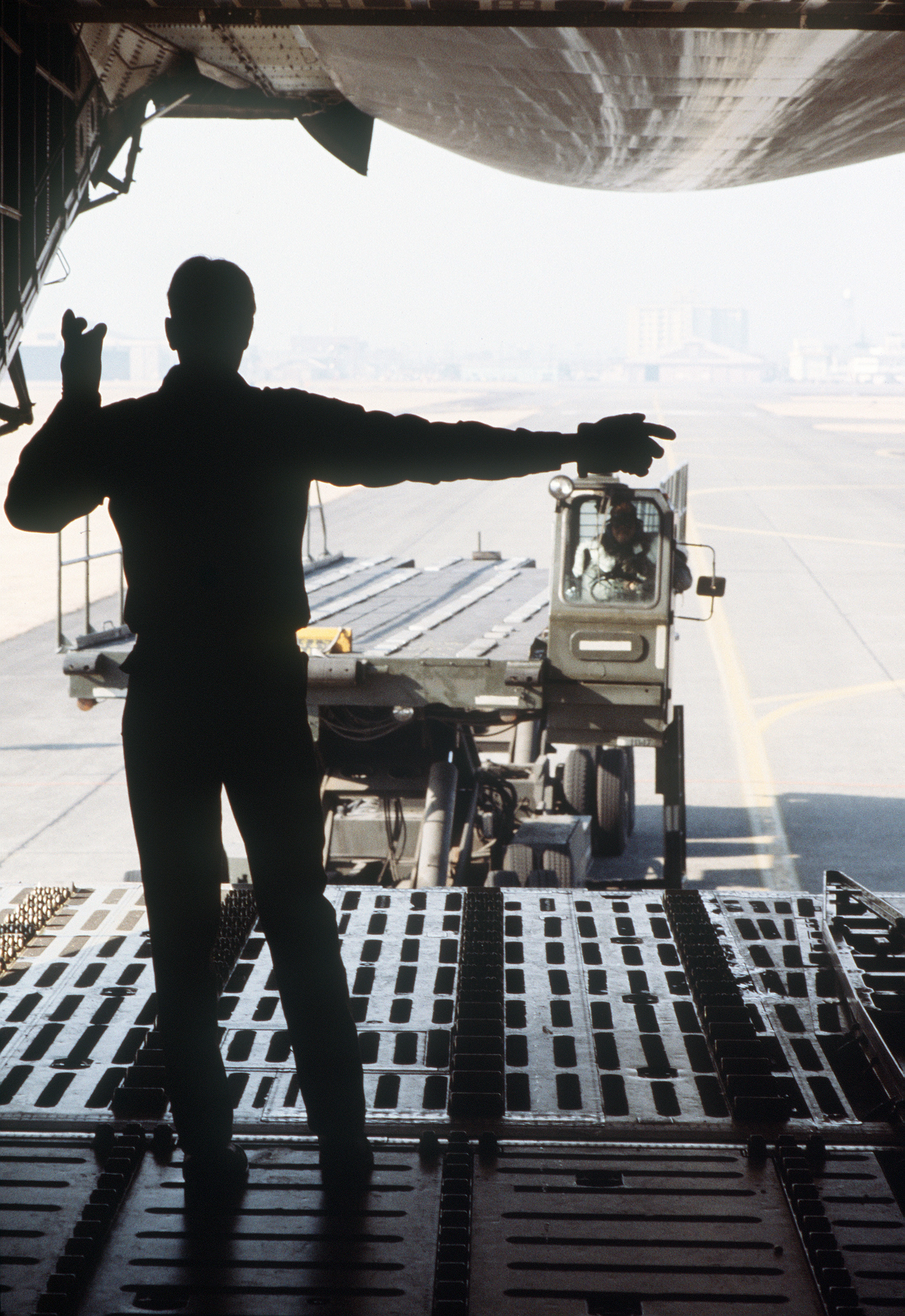
Yokota became a launchpad for conflict almost immediately. During the Korean War, F-84E Thunderjets of the 27th Fighter-Escort Wing flew armed reconnaissance and close air support missions over the peninsula. Reconnaissance units mapped Japan and South Korea using converted B-17s and early jet aircraft. One squadron, the 3rd Emergency Rescue, flew modified B-17G bombers rigged to drop 27-foot lifeboats by parachute, carrying enough provisions for twelve survivors to last twenty days at sea. Through the decades, the base grew into the Pacific Air Forces' primary forward hub. Today the 374th Airlift Wing operates C-130J Super Hercules transports, UH-1N Huey helicopters, and C-12J Huron aircraft, while CV-22B Ospreys arrived in 2018 -- the first permanent deployment of the tiltrotor aircraft outside Okinawa, sparking local protests over noise and safety concerns.
The Neighbors Next Door
Living alongside a major air base has never been easy. With 20,000 departures and landings per year and nighttime carrier-landing simulations rattling windows, the communities of Fussa, Akishima, and the surrounding municipalities have fought decades of legal battles over noise pollution. Gravel extracted from the Tama River during construction lowered the riverbed and disrupted the Fuchu-yosui irrigation system, which had served local farms since the Edo period. Fuel leaks contaminated groundwater. Repeated lawsuits against both the Japanese and American governments have sought flight restrictions and compensation, though only partial damages have been awarded. The tension is a long-running negotiation between strategic necessity and the daily lives of millions who share their skyline with military aircraft.
Operation Tomodachi and the Friendship Festival
Yokota proved its value as a lifeline in March 2011, when the devastating Tohoku earthquake and tsunami struck Japan. The base became a critical hub for Operation Tomodachi, airlifting relief supplies and coordinating disaster response while roughly 600 American family members voluntarily departed for safety during the Fukushima nuclear crisis. In calmer times, the base opens its gates each May for the annual Friendship Festival, drawing roughly 200,000 Japanese visitors over two days to tour cargo planes, sample American food, and meet service members. In May 2022, the festival coincided with President Joe Biden's arrival aboard Air Force One -- the massive presidential aircraft touching down while festival-goers watched from the flight line. Volunteers from across the base form a temporary unit called "D Squadron" each year to host the event.
A Piece of America in Tokyo
Yokota is a self-contained American town set improbably in the suburbs of the world's largest metropolis. The Department of Defense Education Activity runs elementary, middle, and high schools on base. The University of Maryland Global Campus offers college courses. The 500-acre Tama Hills Recreation Area provides hiking and a golf course. The base has also left its mark on Japanese popular culture: Ryu Murakami set his controversial debut novel Almost Transparent Blue here in 1976, and the anime Blood the Last Vampire unfolds on its grounds. The 2016 film Snowden depicted it as one of Edward Snowden's workplaces. For the American Forces Network, Yokota houses the broadcast center for Tokyo radio -- beaming a slice of home across the Kanto Plain.
From the Air
Yokota Air Base (ICAO: RJTY) is located at 35.749N, 139.349E in the Tama Area of Western Tokyo. The base has a prominent single runway visible from altitude, stretching across the flat Kanto Plain west of central Tokyo. Recommended viewing altitude: 3,000-5,000 feet. Look for the large runway surrounded by suburban development. Nearby airports include Tokyo Narita (RJAA) to the east and Tokyo Haneda (RJTT) to the southeast. Tachikawa, another former military airfield, is immediately to the east. The base is about 30 nautical miles west of central Tokyo.