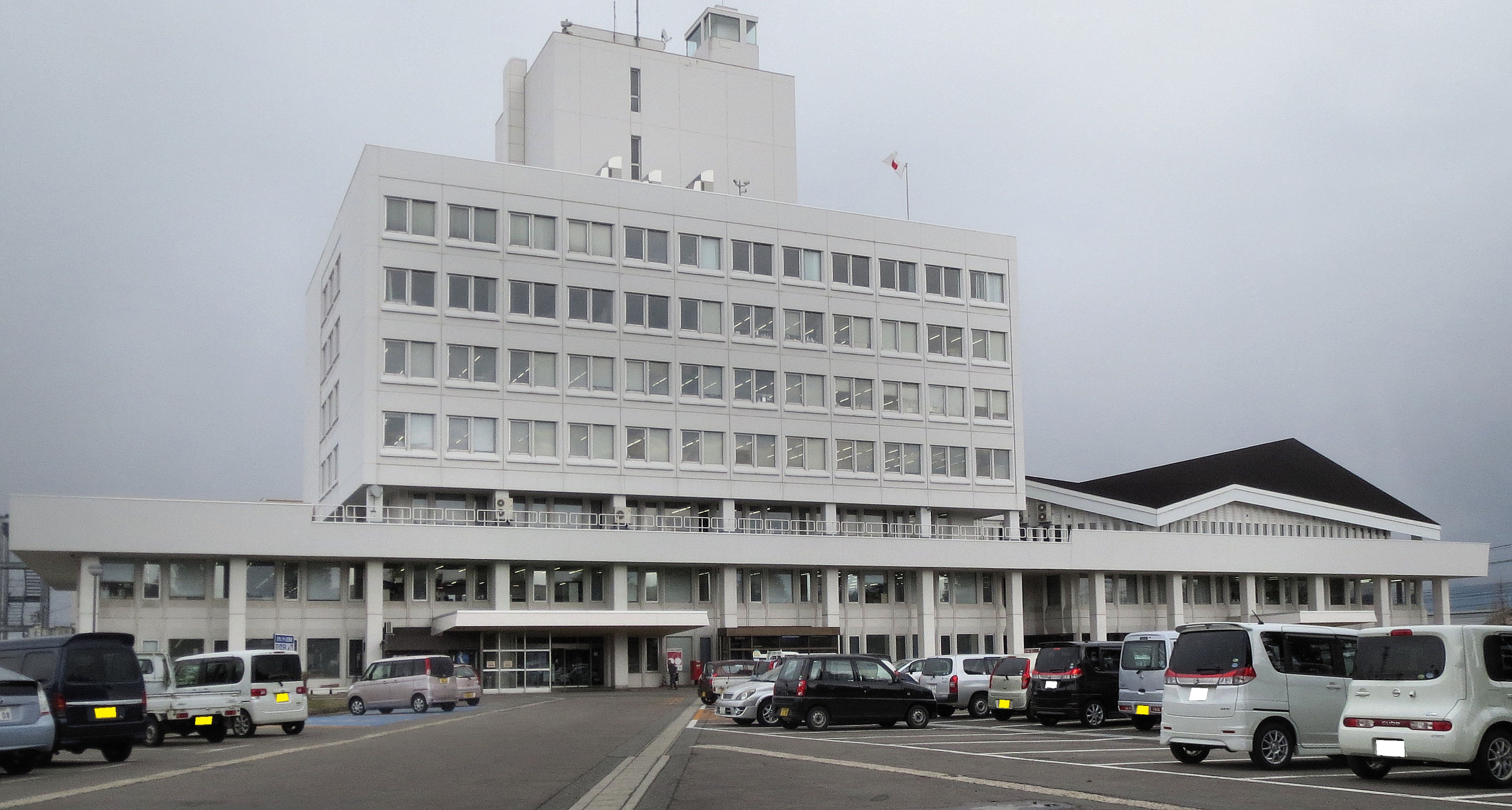
Yonezawa
The biggest thing to happen in Yonezawa in four centuries was a television show. In 2009, NHK broadcast Tenchijin, a year-long historical drama set during the last gasps of the Sengoku era, and overnight this unassuming mountain town in southern Yamagata Prefecture was awash in banners, statues, and souvenir shops commemorating warlords who last walked these streets in the 1600s. The fuss has subsided, but the history that inspired it has not gone anywhere. Yonezawa was a grand castle town, seat of the Uesugi clan, birthplace of the legendary 'One-Eyed Dragon' Date Masamune, and home to feuds, punishments, and reinventions that span from the Kamakura period to the Meiji Restoration. Today, the castle is gone, but the moat, the shrine, and the fierce local pride remain.
Warlords and Wrong Sides
Yonezawa's story is inseparable from the Uesugi clan. During the Muromachi and Sengoku periods, the Uesugi were among Japan's most powerful families. Their centuries-long feud with the Takeda clan of Kai Province is the stuff of legend. But in 1600, the Uesugi backed the wrong side at the Battle of Sekigahara, and the victorious Tokugawa shogunate crushed them -- stripping their holdings from 1,200,000 koku down to 300,000, leaving them with nothing but a scrap of territory centered on Yonezawa. The castle was demolished by government order in 1873, but the old moat still traces a rectangle through the city center, and Uesugi Shrine, built on the castle ruins, keeps the clan's memory alive. Date Masamune, born here in 1567, left for greater conquests at Sendai, but Yonezawa claims him too.
Beef Worth the Journey
Yonezawa beef is counted among Japan's three great wagyu brands, alongside Kobe and Matsusaka. The cattle are raised in the mountain basin's dramatic temperature swings -- cold winters and warm summers -- and fattened for 32 months on a blend of wheat and corn. The result is intensely marbled meat with fat that melts at remarkably low temperatures, dissolving on the tongue. Three beef restaurants compete for attention right outside the train station, with countless more in the city proper. Locals advise skipping the cheap bento boxes sold at station kiosks -- those are made from lesser cuts. The proper way to experience Yonezawa beef is at a ryokan or specialty restaurant, where sukiyaki simmers in an iron pot and thin slices of raw beef are served alongside. With a single steak easily running 8,000 yen, sukiyaki offers the best balance of flavor and value.
Eastern Light, 23 Generations Deep
Yonezawa is sake country, and the flagship is Toko -- 'Eastern Light' -- brewed by the Kojima Sohonten family since 1597. The brewery earned the privilege of supplying sake to the Uesugi lords, a position so prestigious it allowed them to continue brewing even during periods when sake production was restricted. Now in its 23rd generation under the same family, Toko produces sake across the full spectrum, from everyday futsushu to top-shelf daiginjo. The Toko Brewery Museum, housed in a restored kura storehouse spanning roughly 460 square meters, is the largest sake brewing museum in the Tohoku region. It sits just minutes from the brewery itself, offering visitors a walk through the tools, vessels, and techniques of centuries of craft. The name 'Eastern Light' was inspired by the brewery's location east of Yonezawa Castle, where the founder greeted the rising sun each morning.
Hot Water in the Hills
Yonezawa itself has no hot springs, but the mountains surrounding the basin hold seven onsen within easy reach. The best known are Onogawa Onsen, a 20-minute bus ride away, and Shirabu Onsen, 50 minutes into the hills. These are traditional Japanese hot spring villages -- small clusters of ryokan where guests soak in mineral-rich water piped from volcanic sources, eat multi-course kaiseki dinners, and sleep on tatami. The town is connected to the wider world by the Yamagata Shinkansen, which runs hourly from Tokyo in just over two hours. But Yonezawa is deceptively spread out. The train station sits on the wrong side of the river, two kilometers from the city core, and infrequent buses shuttle visitors toward Uesugi Shrine and the old castle district.
From the Air
Yonezawa is located at 37.91N, 140.13E, in a flat mountain basin in southern Yamagata Prefecture. The city is visible as a compact urban area surrounded by rice paddies, with mountain ranges on the western and southern horizons (Iide and Azuma ranges). The old castle moat and Matsugasaki Park are identifiable as a rectangular green space near the city center. Nearest airports: Yamagata Airport (RJSC), approximately 69 km north, and Fukushima Airport (RJSF), approximately 80 km southeast. The Yamagata Shinkansen rail line is visible running north-south through the valley. In winter, heavy snow blankets the basin and surrounding peaks. Best aerial views from 5,000-8,000 feet, approaching from the east over the open valley.