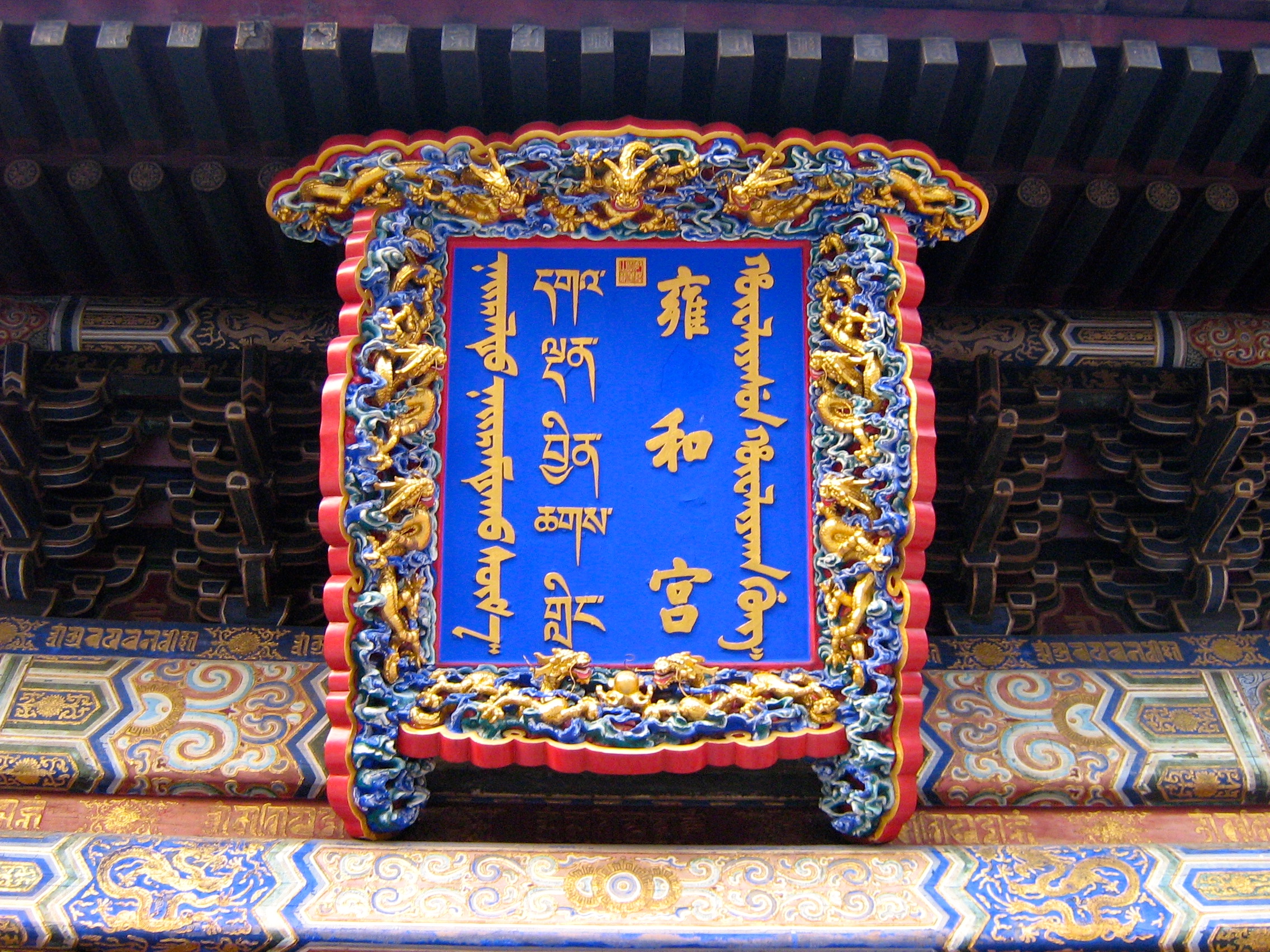
Yonghe Temple
The 18-meter statue of Maitreya Buddha in the Pavilion of Ten Thousand Happinesses was carved from a single piece of white sandalwood. A gift from the 7th Dalai Lama to the Qianlong Emperor, it took three years to transport from Tibet to Beijing. Eight additional meters of the statue extend underground, anchoring a figure so massive it earned a place in the Guinness Book of Records. This is the kind of place the Yonghe Temple is -- a site where superlatives feel understated, where a prince's residence became the highest-ranking Buddhist temple in Qing dynasty China.
A Prince's Address, an Emperor's Birthplace
Construction began in 1694 on the site of a former residence for Ming dynasty court eunuchs. The Kangxi Emperor awarded the building to his fourth son Yinzhen in 1702, and the young prince moved in the following year. When Yinzhen ascended the throne as the Yongzheng Emperor, the residence gained an aura of imperial birth that made it too significant for ordinary use. The Hall of Everlasting Protection, once the emperor's personal living quarters, later held his coffin before burial. Converting a prince's residence into a monastery was the Qianlong Emperor's solution to a problem of dynastic protocol: no one of lesser rank could inhabit a future emperor's home, but a monastery dedicated to Tibetan Buddhism could serve both religious and political purposes. The conversion also strengthened Qing ties to Tibet at a time when that relationship mattered enormously.
Where Han Chinese and Tibetan Art Merge
Walking the temple's 480-meter central axis, the architecture tells a story of cultural fusion. Five main halls separated by courtyards progress from south to north, each blending Han Chinese architectural forms with Tibetan Buddhist iconography. The Gate Hall of Harmony and Peace houses a Maitreya Buddha flanked by the Four Heavenly Kings in a distinctly Chinese arrangement. The Hall of Harmony and Peace contains three bronze Buddhas of the Three Ages alongside murals of the bodhisattva Avalokitesvara. In the Hall of the Wheel of the Law, a large statue of Je Tsongkhapa, founder of the Gelug school, presides over the Five-Hundred-Arhat-Hill -- an intricate carving of red sandalwood with arhat figures cast in five different metals: gold, silver, copper, iron, and tin. Each hall escalates in drama, building toward the towering sandalwood Maitreya that dominates the northern pavilion.
Surviving the Storm
After the Chinese Civil War ended in 1949, the Yonghe Temple was declared a national monument and closed for thirty-two years. The Cultural Revolution, which destroyed countless temples and monasteries across China, somehow spared it. The intervention credited with saving the temple came from Premier Zhou Enlai, who reportedly issued personal orders for its protection. Whether the story is fully accurate or has grown in the telling, the result is undeniable: while other religious sites were gutted, the Yonghe Temple preserved its bronze Buddhas, its sandalwood carvings, and its centuries-old architectural integrity. When it reopened to the public in 1981, it resumed life as both a functioning Gelug monastery and one of Beijing's most visited cultural sites -- a place where tourists light incense alongside monks performing daily rituals.
The Mask Dance Returns
Among the traditions interrupted by the Cultural Revolution was the temple's cham dance, a ritual masked performance with roots in Tibetan Buddhist practice. Originally held on the twenty-eighth day of the twelfth lunar month and the fourth day of the first, the dance had been rescheduled during the Guangxu Emperor's reign to an eight-day performance stretching from the twenty-third of the first lunar year. The closure of the temple suspended the tradition entirely. It was not revived until 1987, when monks resumed the centuries-old performance. Today the Yonghe Temple sits near the northeastern corner of Beijing's Second Ring Road, accessible by two subway lines, surrounded by the noise and commerce of a modern megacity. The prayer wheels still turn. The incense still burns. The 26-meter sandalwood Buddha still gazes down from its pavilion, as it has since a Dalai Lama's gift arrived after its three-year journey from Tibet.
From the Air
Located at 39.95N, 116.41E in Dongcheng District, near the northeastern corner of Beijing's Second Ring Road. The temple complex is visible from altitude as a long north-south corridor of traditional rooflines amid dense urban development. Nearest airport is Beijing Capital International (ZBAA/PEK), approximately 22 km northeast.