Youth Pledge Museum
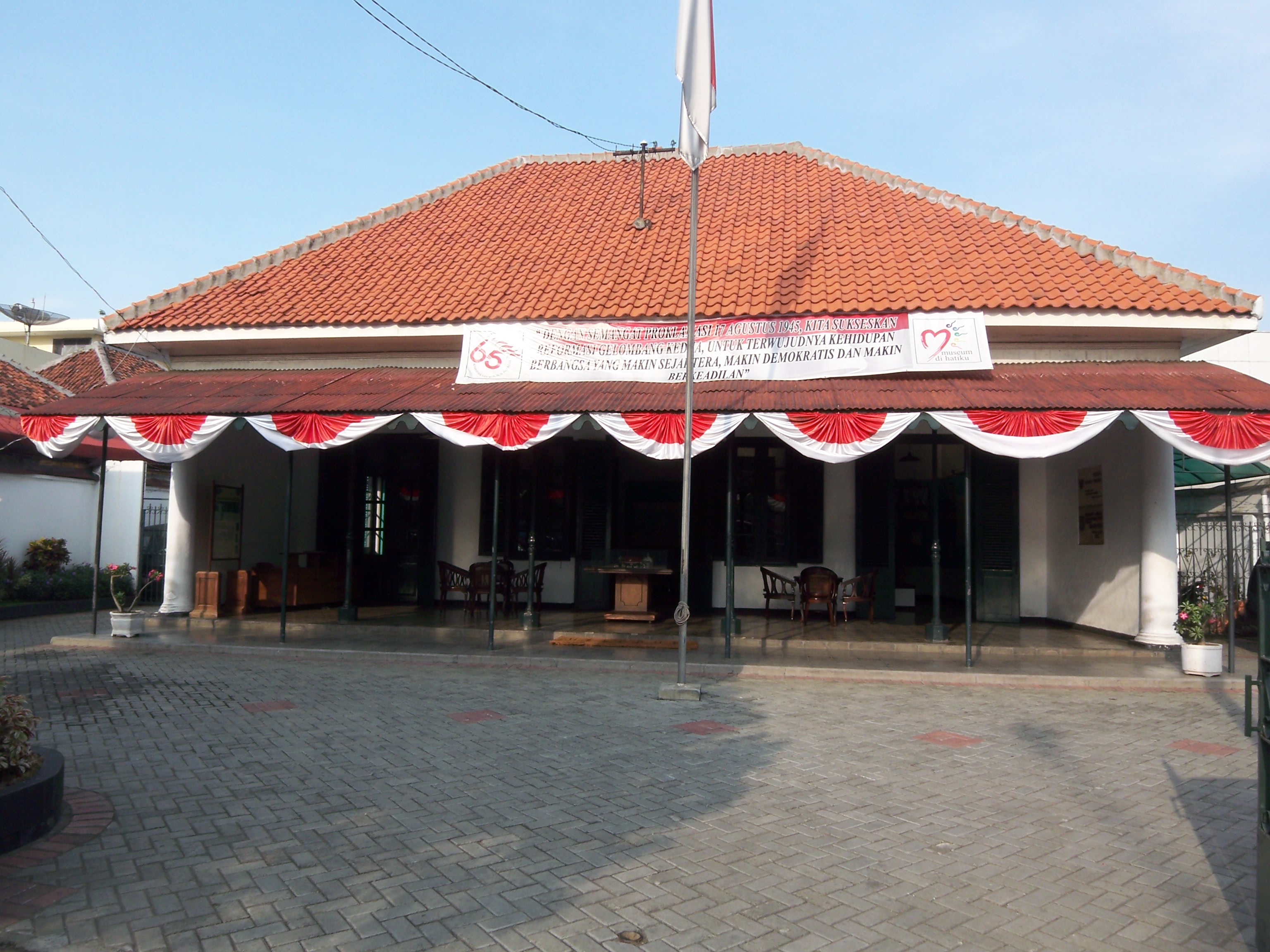
The rent was 12.5 gulden per month -- roughly the price of 40 liters of rice -- and for that, a student got a bed in a 460-square-meter boarding house at Jalan Kramat Raya 106, Central Jakarta. The building had no particular distinction. It was not designed for history. But the young men who lived there in the mid-1920s, members of Jong Java and a growing constellation of student organizations, needed space to rehearse Javanese dances, debate politics, and plan scouting expeditions. On October 28, 1928, delegates from those organizations gathered in this building for the third session of the Second Youth Congress and declared what became Indonesia's founding creed: one homeland, one nation, one language. The boarding house is now a museum.
The Indonesische Clubhuis
Before it became a national shrine, Kramat 106 was simply a meeting place for restless students. Jong Java activists rented it in 1925 because their previous space in Kwitang was too cramped. By 1926 the residents had grown diverse -- youth activists from Sumatra, Java, the Celebes, drawn together by the Perhimpunan Pelajar-pelajar Indonesia (PPPI), the Indonesian student association established after the first youth congress. They invited speakers like the young Sukarno to address them. They published a magazine called Indonesia Raya. In 1927 they mounted a nameplate on the front of the building: Indonesische Clubhuis, the official gathering place for the national youth movement. All of this happened under the watchful eye of the Politieke Inlichtingen Dienst -- the Dutch colonial intelligence service that monitored every meeting, required police approval for every gathering, and could impose a vergader-verbod, a ban on assemblies, at will.
Twenty-Eight Words That Built a Nation
The Second Youth Congress met over two days, October 27-28, 1928, in three sessions at three different locations across Jakarta. The third and final session took place at Kramat 106. It was here that the delegates -- representing Jong Java, Jong Sumatranen Bond, Pemuda Kaum Betawi, Jong Islamieten Bond, and other regional youth groups -- adopted the Sumpah Pemuda, the Youth Pledge. Three declarations, twenty-eight words in Indonesian: We the sons and daughters of Indonesia acknowledge one homeland, Indonesia. We the sons and daughters of Indonesia acknowledge one nation, the Indonesian nation. We the sons and daughters of Indonesia uphold the language of unity, Indonesian. At the same session, Wage Rudolf Supratman performed "Indonesia Raya" on his violin -- the melody that would become the national anthem. The pledge transcended the ethnic and regional divisions that colonial rule had exploited and entrenched. It was not a call for revolution. It was something more subversive: a statement of identity.
A Building's Wandering Life
After the students stopped paying rent in 1934, the building at Kramat 106 drifted through a series of unremarkable tenancies. Pang Tjem Jam rented it as a residence from 1937 to 1951. Loh Jing Tjoe turned it into a flower shop and hotel. The Customs and Excise Inspectorate used it for offices from 1951 to 1970. By then, the place where the national identity was declared had no marker, no plaque, nothing to signal what had happened there forty years earlier. In 1968, a figure named Sunario took the initiative to gather the history of the Sumpah Pemuda and petitioned the governor of Jakarta to restore the building. The DKI Jakarta Regional Government renovated it in 1973, and Governor Ali Sadikin inaugurated it as the Sumpah Pemuda Building on May 20 of that year. President Suharto re-inaugurated it in 1974. It is now managed by the Ministry of Culture.
What the Rooms Hold
The museum's 2,867 items follow the chronology of the youth movement through a sequence of exhibition rooms. Visitors enter through the Introduction Room, where the original Dutch-era floor tiles survive -- a small, tangible link to the colonial period. Bust statues of Muhammad Yamin and Sugondo Djojopuspito, two of the congress's key figures, flank the entrance. Deeper inside, rooms devoted to each phase of the movement display photographs, flags, and documents from organizations like Perhimpunan Indonesia and the Jong Sumatranen Bond. The most prized artifact is Wage Rudolf Supratman's violin -- the instrument on which he first performed "Indonesia Raya." A diorama recreates the atmosphere of the third session. Scouting equipment from the 1920s sits in glass cases. In the pavilion, a thematic room connects the 1928 pledge to the upheavals of 1945, 1966, and 1998 -- three more moments when Indonesian youth took the future into their own hands.
From the Air
Located at 6.18S, 106.84E on Jalan Kramat Raya in Central Jakarta, approximately 2 km east of the National Monument (Monas) in Merdeka Square. The museum building is a modest colonial-era structure, not easily distinguishable from the air among the dense urban fabric of Central Jakarta. Nearest major airport is Soekarno-Hatta International (WIII), about 25 km northwest. Halim Perdanakusuma Airport (WIHH) lies roughly 12 km to the southeast. Best appreciated from low altitude in conjunction with other Central Jakarta landmarks.