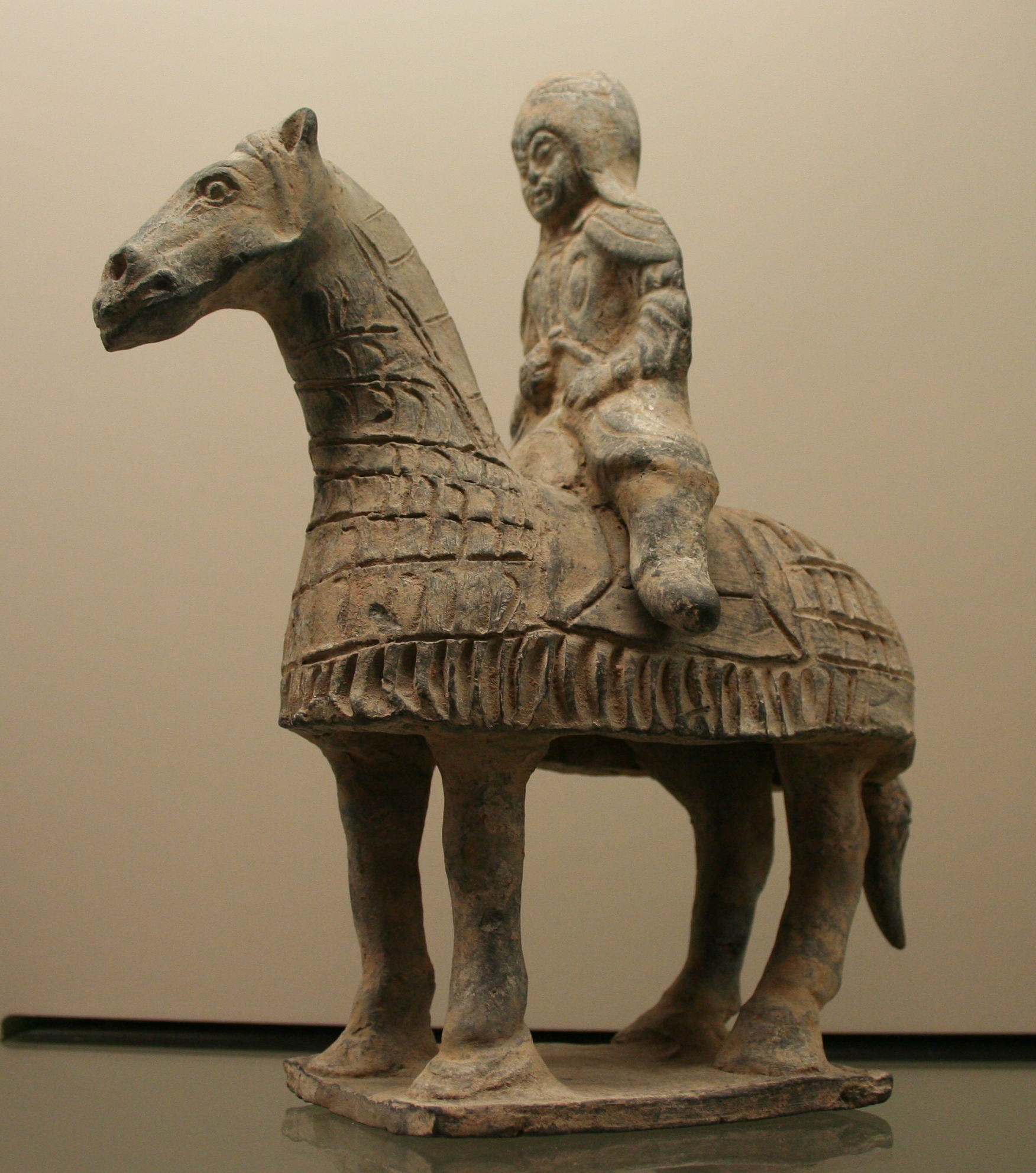
Youzhou (Ancient China)
The name Youzhou has not been spoken as an administrative reality for over a thousand years, yet it shaped the ground beneath modern Beijing more than any name that followed. Ancient Chinese texts traced it to the legendary division of the empire, one of the original Nine Provinces that supposedly organized China before written records began. Whether or not that mythic origin holds, Youzhou was very real from 106 BC onward, governing the vast northern frontier of the Han dynasty from a capital called Ji, the city that would eventually become Beijing.
Mythic Roots, Political Reality
The question of Youzhou's age depends on which ancient text you trust. The Classic of History, from the Spring and Autumn period, lists nine original provinces without mentioning Youzhou at all. But the Erya, written around the third century BC, includes it. The Rites of Zhou adds it too. Sima Qian, writing from 109 to 91 BC in the Records of the Grand Historian, explained the discrepancy: the sovereign Shun felt the northern domain was too vast and carved Youzhou from the older province of Yanzhou. All the ancient sources agreed on one thing: Youzhou was essentially the territory of the State of Yan, one of the seven great powers of the Warring States era.
Frontier Province of the Han
In 106 BC, Emperor Wu of Han organized the Western Han dynasty into thirteen province-sized prefectures, each overseen by an inspector. Youzhou encompassed eleven commanderies stretching from modern Shanxi in the west through Hebei and Liaoning to the Korean peninsula, containing 173 counties in all. Its capital sat at Ji, within present-day Beijing. For three centuries, Youzhou functioned as the empire's northern shield, a sprawling administrative zone where Chinese agricultural civilization met the steppe. When the Yellow Turban Rebellion erupted in AD 184, the prefecture became a prize for a succession of warlords: Liu Yu, Gongsun Zan, Yuan Shao, and ultimately Cao Cao, who pacified the north after defeating the Wuhuan in AD 207.
Dynasties Rise and Fall at Ji
Through the Three Kingdoms, the Jin dynasty, and the tumultuous Sixteen Kingdoms period, the name Youzhou persisted even as its boundaries shrank and shifted. The Kingdom of Wei held it during the Three Kingdoms. The Western Jin administered seven commanderies from the same capital. When the Northern Wei fractured in 534, rebellions erupted in and around Youzhou with startling regularity. A Buddhist monk named Liu Shaozeng led one in 514. The Sui dynasty, uniting China in 589, abolished the prefecture system entirely and renamed Youzhou as Zhuo Commandery. The Tang dynasty restored it, but as a much smaller unit.
The Name That Vanished
Youzhou's final chapter was written by betrayal. In the Five Dynasties and Ten Kingdoms period, the warlord Liu Rengong seized the city and declared himself King of Yan. After his regime fell, Shi Jingtang, founder of the Later Jin, made a fateful bargain: he ceded the Sixteen Prefectures, Youzhou among them, to the Khitan people of the Liao dynasty. In 938, the Khitans established a secondary capital there and renamed it Nanjing Youdu Prefecture. By 1012, it became Xijin Prefecture, then Yanjing. The name Youzhou was never used again. But the city it had governed for a millennium went on to become the capital of the Jin, Yuan, Ming, Qing, and the People's Republic. Beijing owes its position in history to a prefecture that most people have forgotten.
From the Air
Located at 39.91°N, 116.36°E in central Beijing. The ancient city of Ji, capital of Youzhou, lay beneath what is now the southwestern part of Beijing's old city. Nearest airport: Beijing Capital International (ZBAA), approximately 25 km northeast. The area is now fully urbanized with no visible traces of the ancient prefecture boundaries.