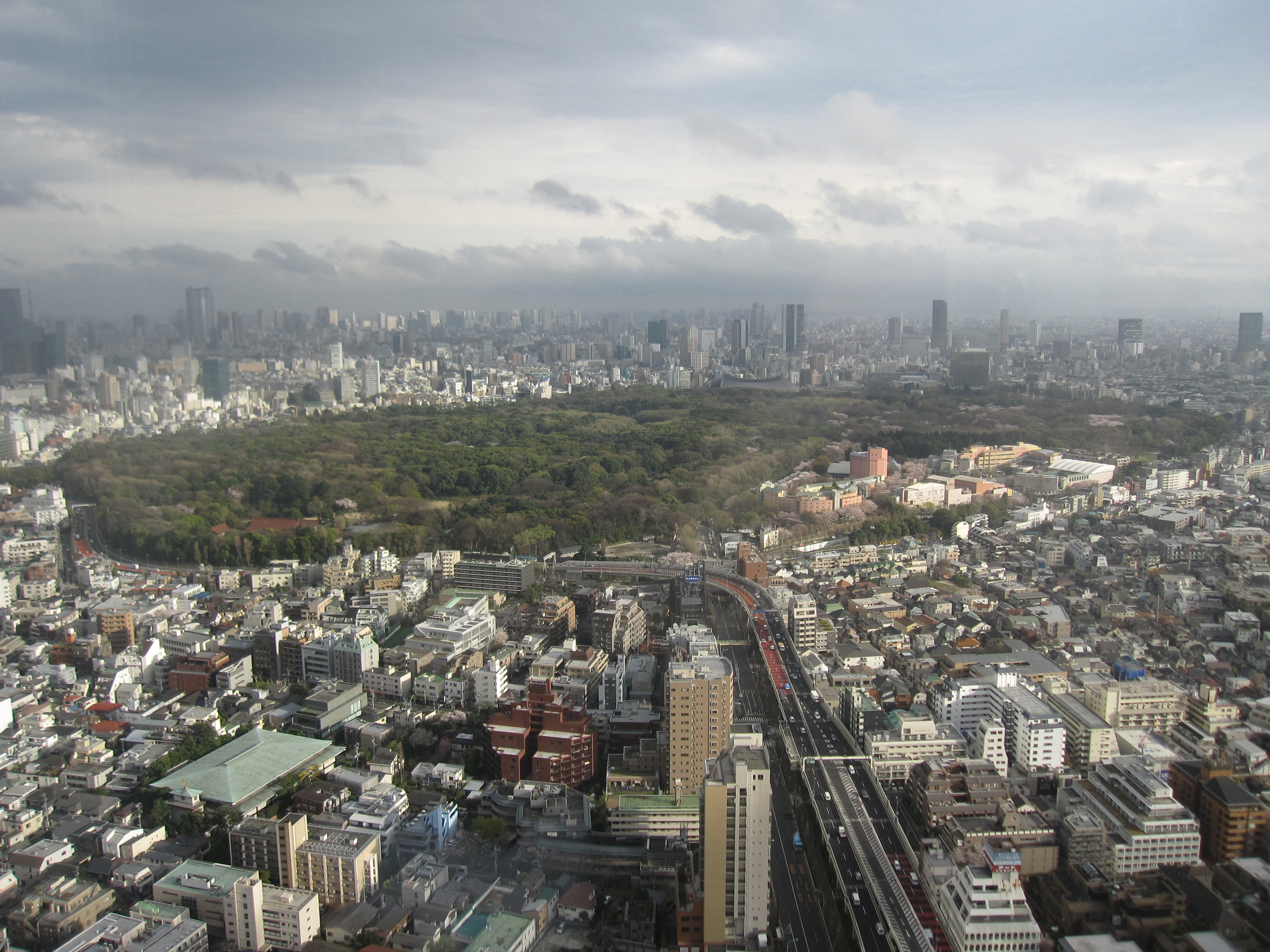
Yoyogi Park
Every Sunday morning near the Harajuku entrance, a man in a pompadour the size of a motorcycle helmet plugs an amplifier into a portable generator, and the 1950s begin again. The rockabilly dancers of Yoyogi Park have been greasing their hair and swiveling their hips on the same strip of pavement since the late 1990s, and they are only the latest subculture to claim this 54-hectare slab of green in the heart of Shibuya. Before the dancers came the cosplayers, before the cosplayers came the Olympic athletes, before the athletes came the American military families, and before any of them, a biplane lifted off from this very ground and gave Japan its first taste of powered flight.
The Field Where Japan First Flew
On December 19, 1910, Captain Yoshitoshi Tokugawa coaxed a Henri Farman biplane off a military parade ground in what is now central Shibuya. It was the first successful powered aircraft flight in Japan. The field continued as an army training area for decades afterward, its gun drills loud enough, according to local lore, to frighten the famous dog Hachiko at nearby Shibuya Station. When Japan surrendered in August 1945, the U.S. occupation forces requisitioned the site and built Washington Heights, a sprawling residential compound of more than 800 housing units for American officers and their families. For nearly two decades, a piece of suburban America -- complete with lawns, a chapel, and a commissary -- sat in the middle of Tokyo.
Olympic Reinvention
Tokyo's selection to host the 1964 Summer Olympics forced the question of what to do with Washington Heights. The Americans vacated, and the compound was demolished to make way for the main Olympic Village and one of the twentieth century's most celebrated buildings: the Yoyogi National Gymnasium. Designed by Kenzo Tange in collaboration with engineer Yoshikatsu Tsuboi, the gymnasium used a revolutionary suspended-roof structure -- two main cables, each 33 centimeters in diameter and weighing 250 tons, strung between 40-meter-high columns set 126 meters apart. The sweeping, tentlike roof eliminated the need for interior columns and created a vast open arena for swimming and diving events. The Pritzker Prize committee later called it "among the most beautiful buildings of the 20th century." The gymnasium went on to host handball during the 2020 Summer Olympics, more than half a century after its debut.
Fifty-Four Hectares of Sunday Freedom
In 1967, the land north of the gymnasium complex and south of Meiji Shrine was converted into Yoyogi Park, which opened fully in 1971. Its 54 hectares make it one of the largest parks in central Tokyo -- a generous sprawl of lawns, ponds, fountains, forest groves, and paved plazas that feels almost extravagant in a city where space is measured in tatami mats. The park sits adjacent to Harajuku Station and Meiji Shrine, making it a natural crossroads. On weekdays it draws joggers, dog walkers, and office workers escaping for lunch. On Sundays it transforms into an open-air stage for Tokyo's subcultures: rock bands, martial arts clubs, jugglers, comedians, cosplayers dressed as anime characters, and the leather-clad rockabilly crews who dance to amplified records of Elvis and Chuck Berry near the Harajuku gate.
Pompadours and Pandemics
The rockabilly dancers became a Yoyogi institution almost by accident. In 1998, when Harajuku's pedestrian-only zone closed, the dance crews -- some of whom had been performing since the 1980s -- migrated to the park's entrance. They set up every Sunday, rain or shine, their pompadours lacquered into gravity-defying sculptures, their moves a joyful anachronism in a city that otherwise races toward the future. But Yoyogi has faced darker moments too. In 2014, Tokyo experienced its worst dengue fever outbreak in a century, with 160 confirmed autochthonous cases -- the first recorded in Japan in 70 years. Gene sequencing traced the outbreak to mosquitoes in Yoyogi Park, and the park was closed on September 4 for fumigation. It reopened weeks later, and the Sunday performers came back. In Yoyogi, they always come back.
From the Air
Yoyogi Park is centered at approximately 35.672N, 139.698E in Shibuya, Tokyo. From the air it appears as a large, irregularly shaped forest canopy directly south of the dense tree cover of Meiji Shrine, with the distinctive swept-roof silhouette of the Yoyogi National Gymnasium visible at its southern edge. The park covers 54 hectares and is one of the most recognizable green spaces in central Tokyo. Nearest airport: Tokyo Haneda (RJTT), approximately 14 km south-southwest. Narita International (RJAA) is roughly 65 km east-northeast. Best viewed at 2,000-3,000 feet, where the contrast between the park's green canopy and the surrounding urban density is most striking. The NTT Docomo Yoyogi Building's clock tower, just southeast of the park, serves as a useful visual landmark.