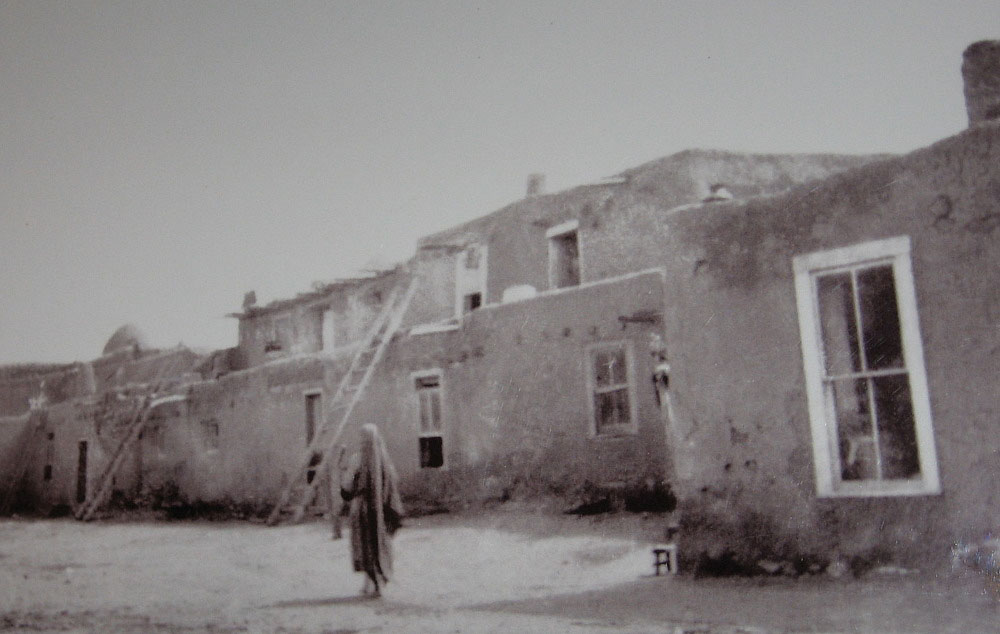
Ysleta del Sur Pueblo
In 1680, the Pueblo peoples of New Mexico rose up against Spanish colonial rule in one of the most successful Indigenous rebellions in North American history. But for the Tigua people, the Pueblo Revolt brought not liberation but forced exile. Captured by the retreating Spanish, they were marched 400 miles south through the Chihuahuan Desert. In 1682, they established Ysleta del Sur -- 'Little Island of the South' -- on the banks of the Rio Grande. More than 340 years later, their descendants remain, one of only three federally recognized tribes in Texas and the southernmost Pueblo people in existence.
Four Hundred Miles of Exile
The Tigua had already been refugees once. Driven from their original homeland at Quarai Pueblo by drought, they sought shelter at Isleta Pueblo, a larger community of their Southern Tiwa relatives near present-day Albuquerque. When the Pueblo Revolt erupted in August 1680, the Spanish fled south, taking captured Indigenous people with them. The Tigua walked every step of that 400-mile journey through desert terrain to El Paso del Norte. Once there, they built their new pueblo and immediately constructed an acequia -- an irrigation canal system -- that would sustain agricultural life in the desert for centuries. That farming infrastructure helped pave the way for the entire region's development.
Holding On Through Centuries
The Tigua maintained their syncretic political and religious traditions through the 19th century and into the 20th -- offices of Cacique (chief), Governor, War Captain, and subordinate positions that blended Spanish colonial governance with Indigenous practice. Local newspapers regularly reported on tribal elections and the community's primary celebration on St. Anthony's Day. But lacking a federal reservation with clear boundaries, the Tigua intermarried extensively with Mexican Americans and adopted many of their neighbors' cultural practices. The Tiwa language faded; Spanish, then English, took hold. When anthropologist Jesse Walter Fewkes visited in 1901, he found only 25 who could still speak Tiwa -- though he documented surviving dances, chants, and the community's continued use of its Tigua name: 'Chiawipia.'
The Long Road to Recognition
By the 1950s, the Tigua community had fallen into poverty. Most members lived near the old mission church while others scattered across El Paso seeking work. In 1961, the mayor wrote to the Bureau of Indian Affairs requesting assistance -- but this was the 'Termination Era,' when the federal government was actively ending its relationships with tribes. The request was denied. The Tiguas found an unlikely champion in Tom Diamond, a young attorney supporting the Kennedy and Johnson civil rights agenda. Diamond helped reconnect them with relatives at Isleta Pueblo in New Mexico. When Isleta's governor, Andy Abeita, visited, he was astonished at how many traditions the Texas band had preserved. Diamond also introduced the Tiguas to Vine Deloria, Jr., the Lakota scholar who featured them prominently in his landmark 1969 book Custer Died for Your Sins as symbols of Indigenous survival.
Sovereignty Restored
Political reality proved complicated. In 1967, Texas recognized the Tiguas but the federal government refused full acknowledgment. The 1968 Tiwa Indians Act -- borrowing language from the Lumbee Act -- explicitly barred tribal members from any federal services 'as Indians.' Under Texas jurisdiction, the tribe developed tourism programs where members demonstrated traditional crafts, but state resources proved insufficient. Finally, on August 16, 1987, Public Law 100-89 restored the federal relationship, renaming the community Ysleta del Sur Pueblo. Today nearly 4,700 enrolled citizens maintain their identity in the desert. The tribe operates businesses including the Speaking Rock Entertainment Center, providing employment throughout El Paso. Efforts continue to revive the Tiwa language, word by word, ceremony by ceremony. The people who walked 400 miles in 1680 have proven they will not disappear.
From the Air
Ysleta del Sur Pueblo occupies the Ysleta section of southeastern El Paso at approximately 31.69N, 106.33W, roughly 10 miles southeast of downtown along the Rio Grande. The historic Ysleta Mission, established 1682, marks the community's spiritual center and is visible from lower altitudes as one of the area's oldest structures. The broader Ysleta neighborhood appears as dense residential development along the border corridor, with the Speaking Rock Entertainment Center as a prominent commercial landmark. The Rio Grande forms the US-Mexico border immediately to the south, with Juarez's urban sprawl continuing across the river. El Paso International Airport (KELP) is approximately 8 nm northwest. The Ysleta-Zaragoza International Bridge crossing is nearby. From altitude, the area blends into El Paso's southeastern suburbs, but knowing this community has maintained continuous presence here since 1682 adds profound historical weight to the landscape below.