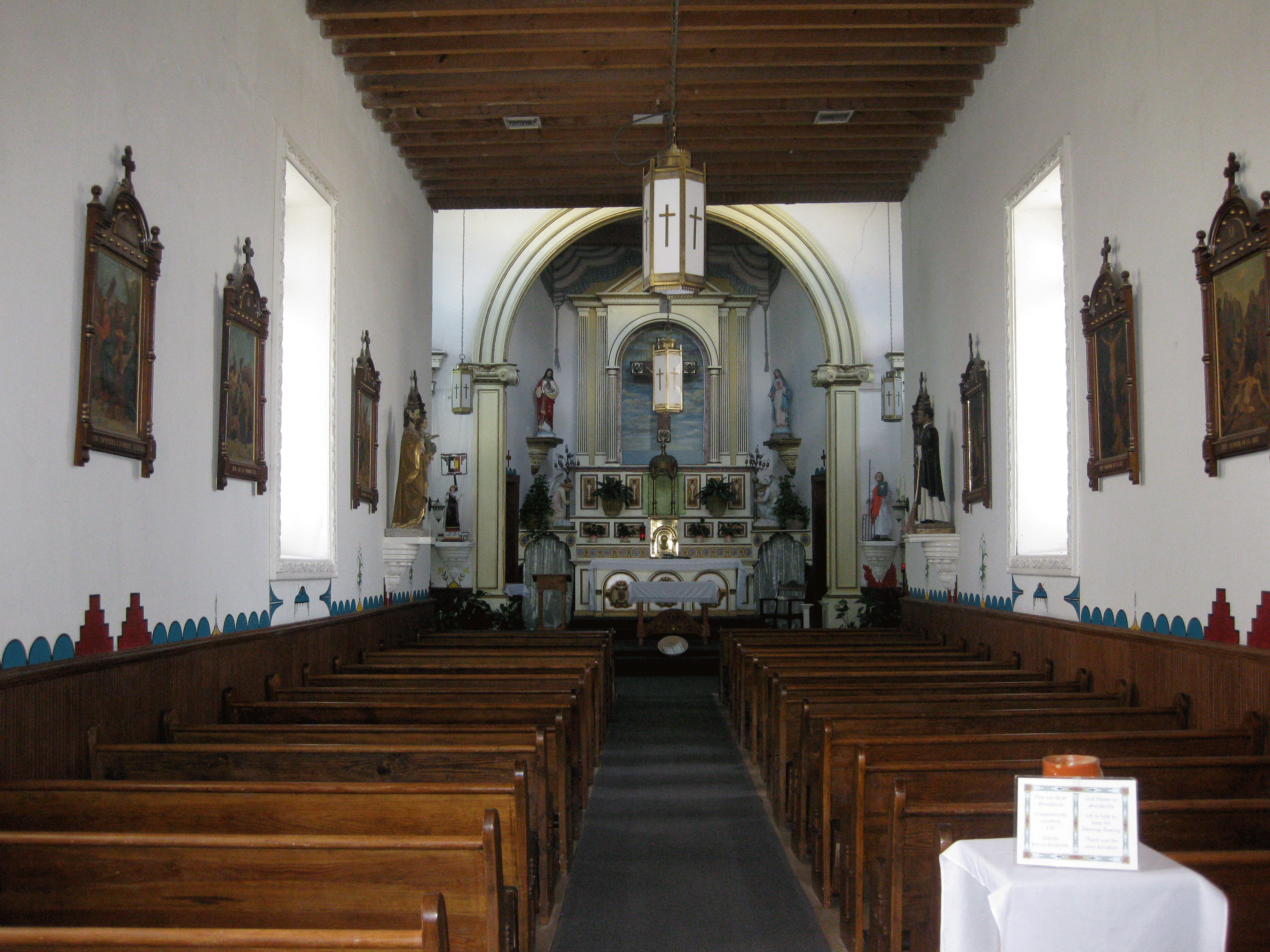
Ysleta Mission
When the Pueblo Revolt of 1680 forced the Tigua people from their ancestral home near Albuquerque, they fled south with Spanish colonists and rebuilt their community in the desert along the Rio Grande. The mission they founded there, dedicated to their patron Saint Anthony, has survived floods, fires, and shifting national borders to become the oldest continuously operated parish in Texas. Today the distinctive beehive bell tower still rises above the Ysleta del Sur Pueblo, a testament to a community that refused to disappear.
Flight from the North
In 1680, the Pueblo peoples of New Mexico rose against Spanish colonial rule in one of the most successful Indigenous rebellions in North American history. The Tigua people of Isleta Pueblo, located south of present-day Albuquerque, faced an impossible choice as the revolt swept through the region. Some fled west to Hopi territory in Arizona. Others followed the retreating Spanish colonists southward along the Rio Grande, eventually settling near El Paso del Norte. In 1682, these refugees built a permanent adobe structure that would become Ysleta Mission, formally dedicated as La Mision de Corpus Christi de San Antonio de la Ysleta del Sur. The 'Y' in Ysleta and the addition of 'del Sur' (south) distinguished the new settlement from the mother pueblo they had been forced to abandon.
A River That Moved Borders
The Rio Grande proved both lifeline and nemesis for the mission community. Over two centuries, floods forced the church to relocate multiple times. The most consequential flood came in 1829, when the raging waters not only destroyed the mission structure but carved an entirely new course for the river. When the waters subsided, the land where the church had stood was no longer in Mexico but had become part of the Republic of Texas. The congregation rebuilt, and in 1897 added the iconic gables and distinctive beehive-shaped bell tower that define the mission's silhouette today. A decade later, in 1907, chemicals stored in that same bell tower to repel bats ignited a fire that gutted the building. The current structure dates from 1908 and has remained largely unchanged since.
The Tigua Endure
Through all the upheavals of history, the Tigua people have maintained their connection to Ysleta Mission and their devotion to Saint Anthony of Padua. Every June 13, the community celebrates the feast day of San Antonio with morning Mass followed by traditional dances that echo ceremonies performed for centuries. The tribal government offices stand nearby, as does the Tigua Cultural Center, ensuring that faith and heritage remain intertwined. The community also claims the distinction of cultivating the oldest continuously farmed plot of land in the United States, a living connection to agricultural traditions that predate European contact.
Preservation and Celebration
In 1990, a collaborative effort emerged to preserve the historic missions of the El Paso area. Local governments joined with the Catholic Diocese and private organizations to restore Ysleta Mission along with the nearby Socorro Mission and the Presidio Chapel of San Elizario. Mexican architects specializing in adobe restoration developed comprehensive plans, and the National Park Service and National Trust for Historic Preservation provided technical and financial support. Today the mission remains an active parish staffed by Conventual Franciscans, hosting the annual Ysleta Mission Festival each July. This three-day celebration, one of El Paso's largest events, helps fund ongoing preservation efforts for a building that has weathered more than three centuries of Southwest history.
From the Air
Ysleta Mission sits within the urban fabric of El Paso, Texas, at approximately 31.69°N, 106.33°W at about 3,700 feet MSL. The mission's distinctive white walls and beehive bell tower are visible from low altitude approaches. Located roughly 12 miles southeast of El Paso International Airport (KELP), the mission lies along the Rio Grande in the historic Ysleta del Sur Pueblo. Best viewed during morning or late afternoon light when the adobe walls glow against the surrounding residential development.