Yunju Temple
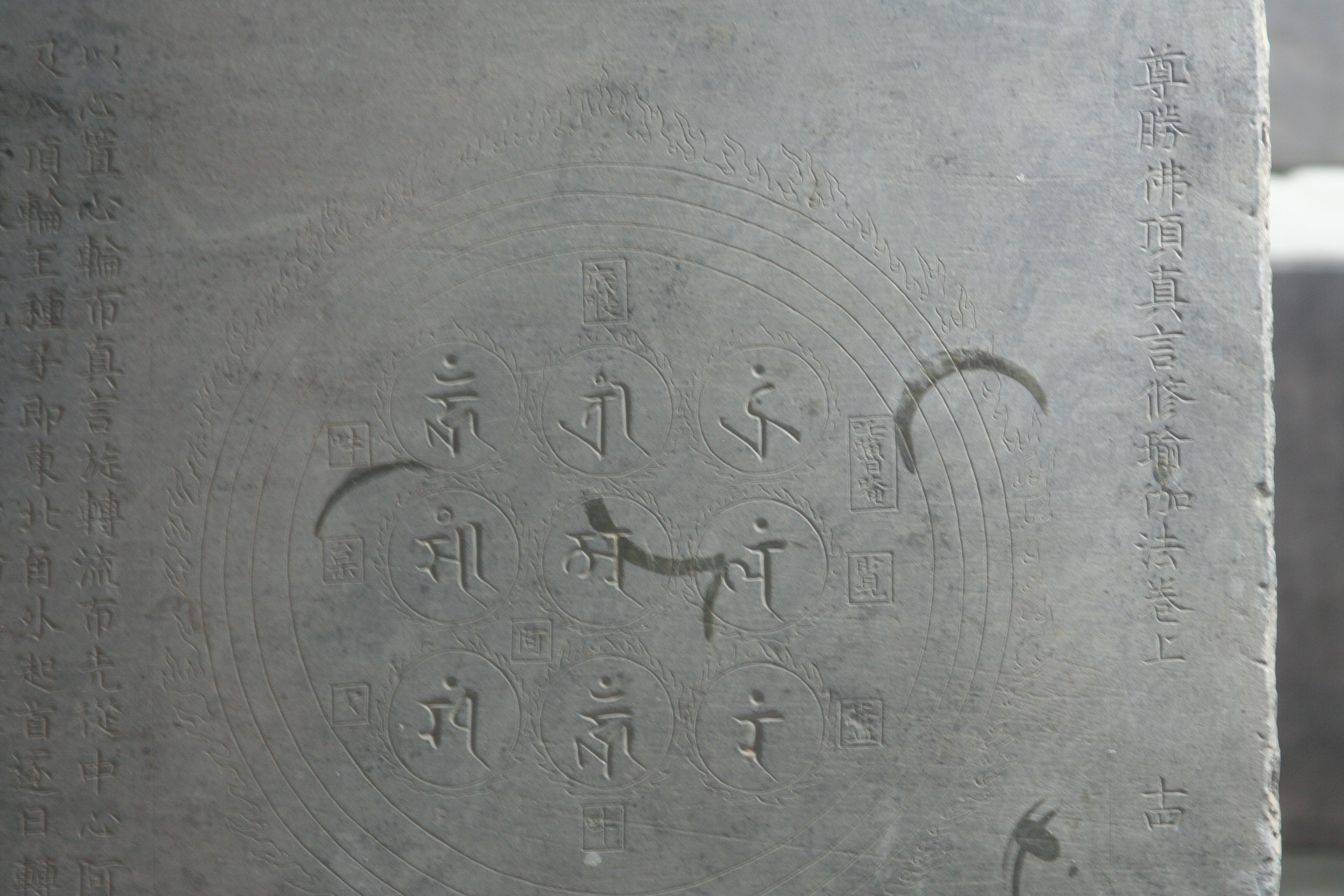
Around 611 CE, a monk named Jingwan made a vow. Buddhism had recently survived two imperial campaigns to destroy it -- under Emperor Taiwu of Northern Wei and Emperor Wu of Northern Zhou -- and Jingwan was convinced the faith would face worse. The Buddhist concept of the Degenerate Age held that the dharma would eventually decline beyond recovery. Paper burned. Wood rotted. But stone endured. So Jingwan began carving Buddhist sutras into stone steles at Yunju Temple, 70 kilometres southwest of Beijing, and set in motion a project that would continue for over a thousand years.
A Library Against Apocalypse
The numbers are staggering. Over the centuries, monks at Yunju Temple produced 1,122 Buddhist sutras in 3,572 volumes, carved onto more than 14,200 stone steles engraved on both sides. Nine caves were excavated into the mountainside and filled with these stone pages. Two underground depository rooms were added. The most famous cave, known as Leiyin Cave, is open to the public -- a large chamber whose four walls are covered floor to ceiling with sutras, with a central area reserved for Buddhist ceremonies. A statue of Maitreya, the future Buddha, was once enshrined here but was removed by unknown persons during the early 1940s, when a significant portion of the temple was destroyed.
Dynasties of Devotion
Construction of Yunju Temple began during the Northern Qi dynasty, between 550 and 570 CE, though the exact year is lost to history. Royal patronage arrived during the Sui dynasty and deepened under the Tang. Princess Jinxian, around 713 to 755 CE, petitioned Emperor Xuanzong to donate over 4,000 manuscript scrolls of the Buddhist Tripitaka and land to support the temple's stone-carving mission. Donors during the Sui and Tang periods often chose which sutra to engrave, which is why many texts appear multiple times across the stele collection. One of Jingwan's successors was involved in carving the oldest surviving copy of Tripitaka Master Xuanzang's 649 CE translation of the Heart Sutra, dated to 661 CE. The last stone stele was engraved in 1691, by which time the fear of an imminent Degenerate Age had faded -- but the tradition had acquired its own momentum.
Paper, Wood, and Stone
Yunju Temple's treasures extend beyond stone. The temple holds over 22,000 scrolls of rare printed or manuscript sutras, including the Ming dynasty's Yongle Southern Tripitaka from 1420 and the Yongle Northern Tripitaka from 1440. It also possesses one of only two complete extant woodblocks of the Chinese Tripitaka in the world: the Qianlong Tripitaka of 1733, carved on more than 77,000 blocks. Because the stone steles were engraved with meticulous attention to the source manuscripts, they serve as a corrective tool for later printed editions of Buddhist scripture -- errors introduced through centuries of hand-copying can be checked against the stone originals. Two bone relics of the Buddha are also held at the temple and available for public viewing.
Pagodas and Persistence
Twelve pagodas from the Tang and Liao dynasties stand across the temple grounds, along with three tomb pagodas from the Qing dynasty. The temple's original layout arranged six halls from east to west, with guest accommodations and monks' dormitories flanking both sides. Much of the complex was destroyed in the early 1940s, but substantial portions have since been restored. Walking through Yunju Temple today, among the pagodas and the cave entrances and the reconstructed halls, the scale of the original project becomes clear. Jingwan and his successors did not merely preserve scripture. They built a monument to the belief that some things must outlast everything else -- that if the world turned against the dharma, the mountains themselves would remember it.
From the Air
Located at 39.61N, 115.77E in Fangshan District, 70 km southwest of Beijing. The temple complex is nestled in mountainous terrain with cave entrances visible in the hillside. Nearest major airport is Beijing Daxing International Airport (ZBAD). The surrounding limestone hills contain the nine sutra caves. Recommended viewing at 3,000-5,000 feet AGL.