Zadar
Alfred Hitchcock reportedly called Zadar's sunset the most beautiful in the world. Whether he actually said it matters less than the fact that Zadar put it on every brochure -- the city has always understood how to turn attention into identity. What the attention finds, though, is genuine. Zadar is the oldest continuously inhabited city in Croatia, a distinction that means people have lived on this Adriatic peninsula without interruption since before Rome was an empire. Its Venetian city walls, inscribed on the UNESCO World Heritage List, enclose 34 churches on a single peninsula. The Guardian called it "Croatia's new capital of cool" in 2017, but Zadar was ancient before cool was invented, and it will outlast whatever that word means tomorrow.
Thirty-Four Churches on a Peninsula
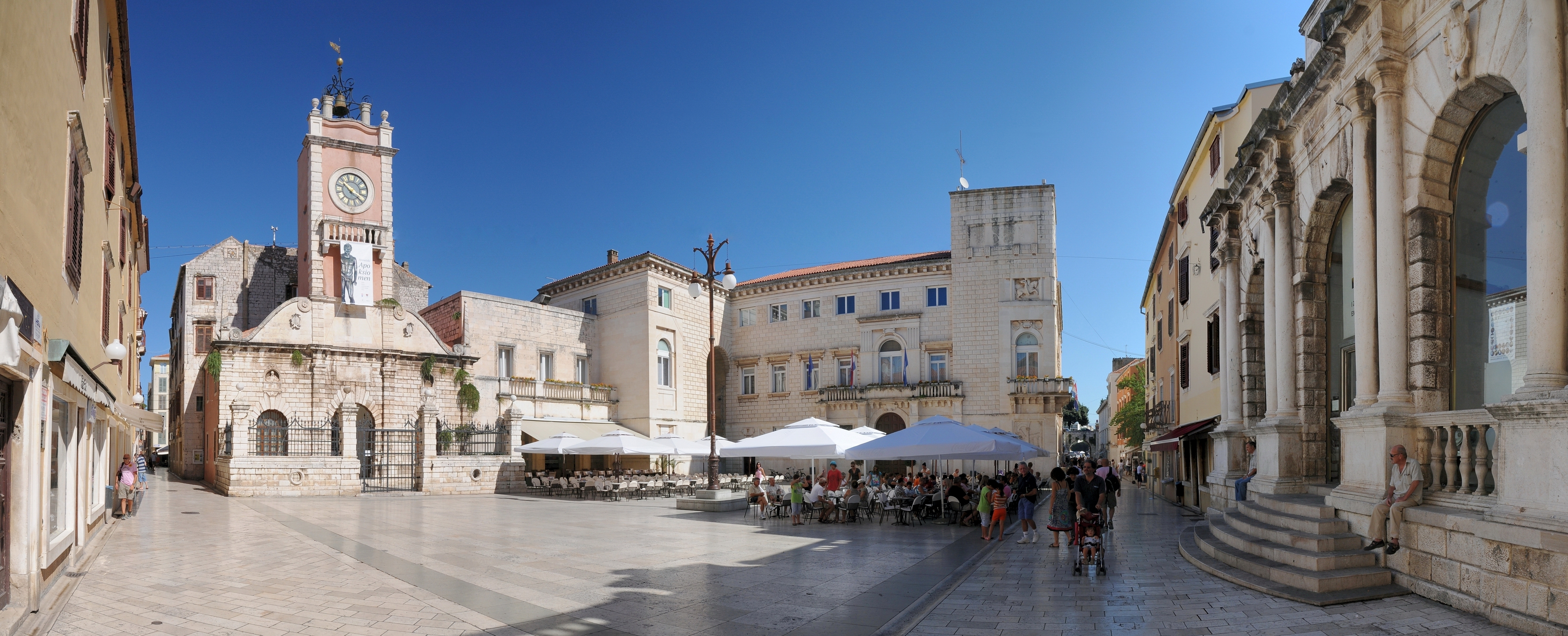
Zadar's old town occupies a narrow peninsula jutting into the Adriatic, and walking its atmospheric streets is an exercise in accumulation. Thirty-four churches crowd this compact space, each carrying a different chapter of the city's long history. The oldest, St. Simeon, dates back centuries. The circular Church of St. Donatus, built in the 9th century on the foundations of a Roman forum, has become Zadar's visual signature -- its austere, cylindrical form appears on postcards and guidebooks as a shorthand for the city itself. Nearby, the Cathedral of St. Anastasia holds the relics of the city's patron saint. The density of sacred architecture tells a story about what mattered here across the millennia: this was a city where spiritual investment was physical, expressed in stone and mortar and bell towers rising above the rooftops. The Land Gate, built in 1543 in Venetian Renaissance style, still serves as the ceremonial entrance to the old town, its lion of St. Mark announcing which empire once held these walls.
The Sea Organ and the Greeting to the Sun
In 2005, architect Nikola Basic installed an instrument into the marble steps of Zadar's harbor promenade. Beneath the stone, a system of polyethylene tubes and a resonating cavity transforms the movement of waves into sound -- low, haunting chords that shift with the sea's rhythm. The Sea Organ produces music without electricity, without performers, without any human intention beyond the initial design. Each note depends on wave height, speed, and the tide, so the instrument never repeats itself. Walk along the waterfront at dusk and the sound rises from beneath your feet, blending with conversation, footsteps, and the slap of water against stone. Nearby, Basic's other installation -- the Greeting to the Sun -- is a twenty-two-meter circle of glass plates set into the pavement, collecting solar energy during the day and producing a light show after dark. Together, these installations transformed Zadar's waterfront from a pleasant promenade into something stranger and more memorable: a place where the natural world performs for anyone willing to sit and listen.
Venetian Walls and Deeper Layers
The walls that earned Zadar its UNESCO inscription were built by Venice during the 16th and 17th centuries, when the republic fortified its Adriatic possessions against Ottoman expansion. But Venetian stone sits atop Roman foundations, which sit atop something older still. Zadar's continuous habitation means the peninsula is a geological core sample of civilization -- each era built on the compressed remains of the one before. Roman columns stand in the open near St. Donatus, remnants of the forum that once anchored civic life here. Medieval towers punctuate the Venetian walls. Austrian and Italian influences from more recent centuries mark the newer districts beyond the peninsula. The result is a city where no single period dominates. Walk from the Roman forum to the Venetian Land Gate to a modernist sea organ, and you have traversed two thousand years without ever leaving the waterfront.
The Adriatic's Living Room
Zadar's relationship with the sea is not symbolic. It is practical, daily, and omnipresent. The city sits at the center of northern Dalmatia's island archipelago, with ferries departing regularly for Dugi Otok, the Kornati Islands, and other destinations scattered across the Adriatic. Sailing season peaks in early summer, when south-southeast winds make for reliable conditions and sea temperatures climb toward 25 degrees Celsius. Beaches line the coast in every direction -- Kolovare near the city center, Borik with its hotel complexes and water sports, Vitrenjak near the sailing club. Swimming along Zadar's coast is not a resort activity but a local habit, as natural as the evening stroll. The seafront promenade fills at sunset for what becomes an informal nightly gathering, residents and visitors mixing along the paved walkway while the sea organ hums beneath them and the sky over the Adriatic turns colors that make you understand why someone, whether Hitchcock or not, once called this the finest sunset in the world.
Gateway to Wild Places
Zadar's position makes it the natural staging point for some of Croatia's most spectacular natural landscapes. Plitvice National Park, with its cascading lakes and waterfalls, lies inland along the bus route to Zagreb. Krka National Park offers its own waterfall scenery with the added draw of swimming near the cascades. The Kornati archipelago -- more than eighty islands forming a national park -- provides the kind of stark, quiet beauty that feels increasingly rare in the Mediterranean. Paklenica National Park, carved into the Velebit mountain range, draws hikers and climbers to its dramatic canyons. Even Dugi Otok, the long island visible from Zadar's harbor, holds the Telascica Nature Park with its salt lake and resident donkeys. Zadar serves all these destinations without being overshadowed by them, because the city itself carries enough history, enough beauty, and enough character to hold a traveler's attention long after the day trips are done.
From the Air
Zadar (44.114N, 15.228E) occupies a peninsula on Croatia's northern Dalmatian coast. Zadar Airport (LDZD/ZAD) is 8km east of the city center, with a single runway 04/22. From the air, the old town peninsula is clearly visible projecting into the Adriatic, with the harbor on its southeastern side. The Kornati Islands are visible to the southwest, and Dugi Otok stretches to the northwest. The Velebit mountain range rises inland to the northeast. The coastal highway runs along the mainland. Weather is Mediterranean with hot summers and mild winters; Bora winds can affect operations, especially in winter.