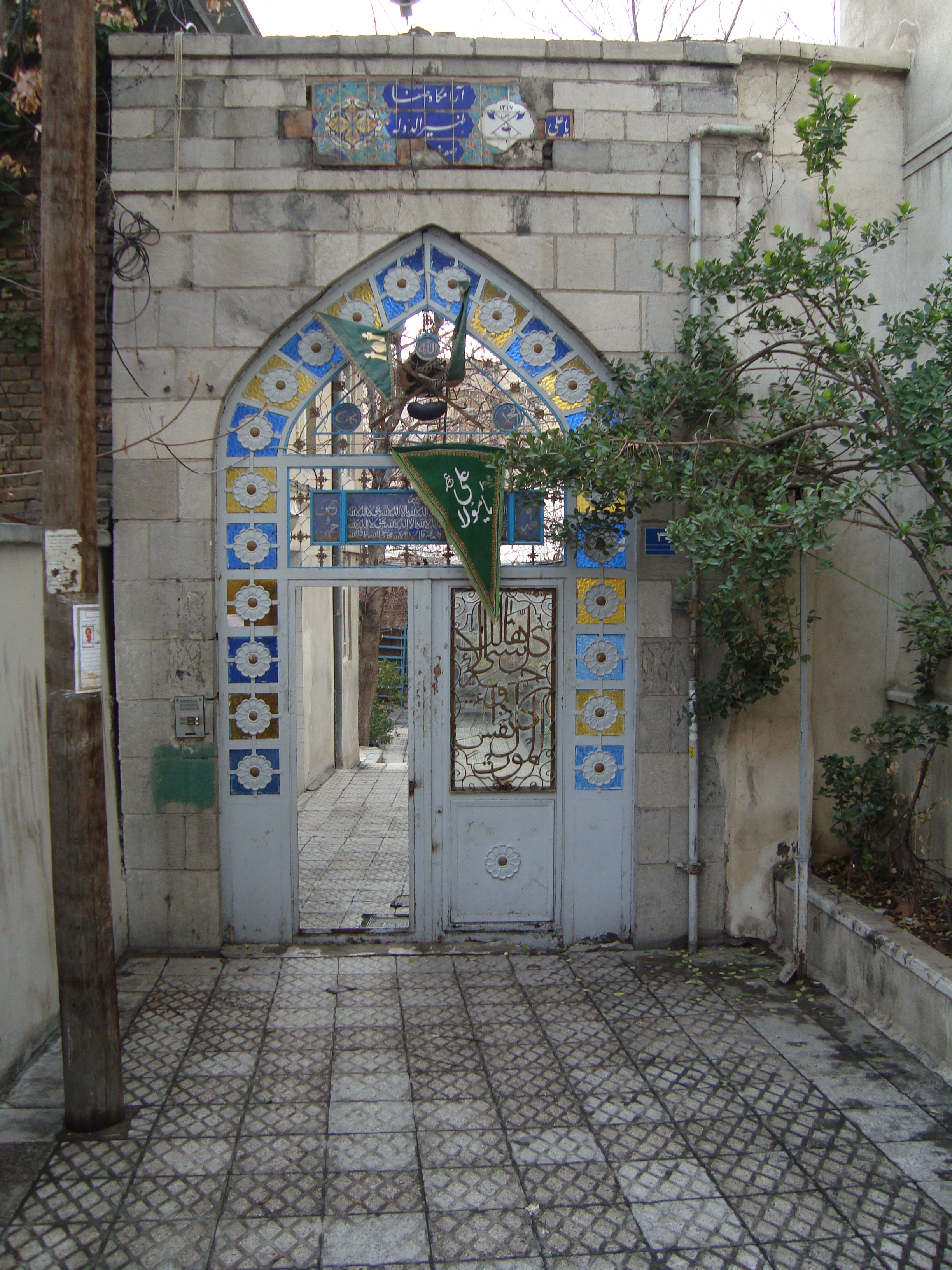
Zahir-od-dowleh Cemetery
Forough Farrokhzad died in a car accident in 1967, at the age of thirty-two. She was Iran's most daring modern poet, a woman who wrote openly about desire and loneliness in a society that preferred its women silent. They buried her at Zahir-od-dowleh Cemetery in the hills of Darband, near Tajrish, where she joined a gathering of Iran's cultural luminaries so remarkable that the small graveyard functions as an unofficial national pantheon. Poets, musicians, Qajar princes, revolutionary constitutionalists, and military generals all lie in this compact hillside plot in northern Tehran -- a place that began as one man's burial wish and became a mirror of Iran's artistic soul.
Beneath the Daghdaghan Tree
Ali Khan Zahir od-Dowleh, head of the Sufi brotherhood known as the Anjoman-e Okhovat, died of a heart attack on June 27, 1924, in his garden in Jafarabad, Shemiran. He was buried in a public cemetery between Tajrish and Imamzadeh Qasim, at the foot of a tree called the Daghdaghan, where he had liked to sit during his lifetime. His disciples enclosed the old cemetery and its adjacent khanqah (Sufi lodge), naming it after their master. The story might have ended there -- one Sufi leader, one grave, one tree. But Zahir od-Dowleh had been popular across social classes, and soon artists, scholars, and politicians began requesting burial alongside him. The khanqah custodians were happy to sell plots, and the cemetery's reputation grew.
The Musicians' Rest
What distinguishes Zahir-od-dowleh from other Iranian cemeteries is the sheer concentration of musical talent interred there. Gholamhossein Darvish, a pioneer of modern Persian music, was buried here in 1926. Abolhasan Saba, the master of the setar and violin who shaped 20th-century Iranian classical music, arrived in 1957. Qamar-ol-Moluk Vaziri, the first woman to sing publicly in Iran and a defining voice of Persian song, was laid to rest in 1959. Hossein Tehrani, the virtuoso tombak player, followed in 1974. Ruhollah Khaleqi, composer and founder of Iran's national music school, joined them in 1965. Walking among the headstones reads like a syllabus for Iranian music history, one gravestone at a time.
Poets and Princes
The cemetery holds more than musicians. Mohammad Taqi Bahar, the poet laureate known as Malek osh-Sho'ara, was buried here in 1951 -- a scholar whose work bridged classical Persian poetry and modern literary criticism. Prince Iraj Mirza, a Qajar royal who wrote satirical and romantic poetry that scandalized the court, arrived in 1926. Princess Zahra Khanom Taj os-Saltaneh, daughter of Naser al-Din Shah and an early advocate for women's rights in Iran, was buried in 1936. Hassan Taqizadeh, a politician and veteran of the Constitutional Revolution who lived to ninety-three, was interred in 1969. These are not minor figures -- they are the people who shaped Iran's transition from Qajar monarchy through constitutional revolution to Pahlavi rule.
A Cemetery That Closed
From the 1960s onward, burials at Zahir-od-dowleh were largely prohibited. Special permits allowed a trickle of interments through the 1960s and 1970s, but the space was finite and the demand relentless. The last burial took place in 1979, when General Ali Neshat, commander of the Imperial Guard, was laid to rest -- one of the final acts of the Pahlavi era, just as the revolution was sweeping the old order away. Today the cemetery sits quietly in the hills above Tajrish, shaded by trees and surrounded by the restaurants and hiking trails of the Darband neighborhood. Visitors come to pay respects at specific graves, reading the names of people whose music they still listen to and whose poems they still recite. The Daghdaghan tree no longer stands, but the ground beneath it holds a century of Iranian culture.
From the Air
Located at 35.812N, 51.434E in the Darband neighborhood of northern Tehran, near Tajrish Square, at the base of the Alborz foothills. The cemetery is a small green area surrounded by dense urban development. Nearest airports: Mehrabad International (OIII) approximately 15 km southwest, Tehran Imam Khomeini International (OIIE) approximately 55 km south. Recommended viewing altitude 5,000-8,000 ft AGL.