Zakouma National Park
Between 2002 and 2010, poachers killed 95% of Zakouma's elephants. The herd dropped from roughly 4,350 animals to around 450. Heavily armed hunters operated with near impunity in this remote corner of southern Chad, and no one had the resources or the will to stop them. Then, in 2010, African Parks -- a nonprofit conservation organization -- assumed management of Zakouma under a partnership with the Chadian government. They recruited rangers, trained a mounted patrol unit on horseback to cover the vast savannah, and overhauled security across the entire region. By 2017, the elephant population had climbed past 500 and was breeding again. Zakouma had become something rare: a conservation story that turned around.
The Killing Years
Zakouma's 3,000 square kilometers of flat, riverine savannah in Chad's southern reaches had always been rich in wildlife. But the park's remoteness, which once protected it, became a liability when organized poaching networks moved in. The hunters came armed with military-grade weapons. Park infrastructure was minimal, enforcement weaker still, and the ivory trade was lucrative enough to justify the risk. An estimated 4,300 elephants roamed the park in 2002. Eight years later, fewer than 450 remained. The slaughter was not unique to Zakouma -- elephant poaching devastated herds across Central Africa during this period -- but the scale and speed of the loss here were staggering. Nearly an entire population, erased in less than a decade.
Rangers on Horseback
African Parks' approach to saving Zakouma was direct: overwhelm the poachers with better-trained, better-equipped, more committed law enforcement. New rangers were recruited from surrounding communities, creating both jobs and local investment in the park's survival. A mounted patrol unit on horseback extended the range of surveillance far beyond what vehicle patrols could cover across the flat, seasonally flooded terrain. The security overhaul did not stop at the park's borders. African Parks worked with communities across the greater Zakouma ecosystem, building relationships that made poaching harder to conceal and conservation easier to sustain. In 2017, the organization assumed management of the adjacent Siniaka Minia Faunal Reserve, nearly doubling its operational footprint. The poaching rate dropped to near zero.
Five Hundred Strong
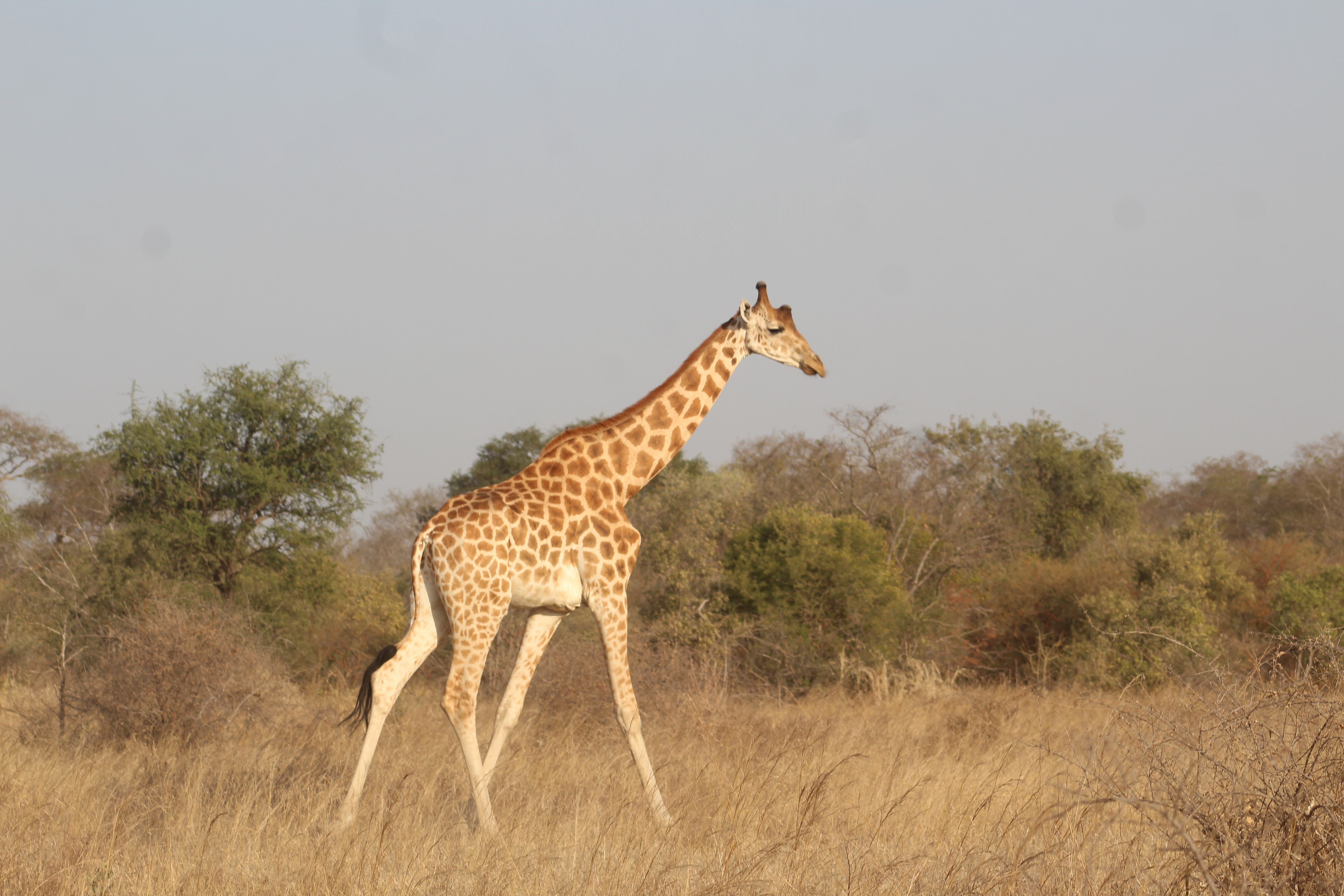
The elephants began to breed again. Calves appeared in the herd -- a sign of stability that biologists watch for closely, since elephants under stress suppress reproduction. By February 2017, the population had surpassed 500, possibly forming the largest single elephant herd remaining in Africa. The sight of it is extraordinary: hundreds of elephants moving together across the open savannah, a spectacle that was nearly extinguished. Zakouma also shelters half the world's remaining Kordofan giraffes, a critically endangered subspecies found only in scattered populations across Central Africa. Nearly 400 bird species have been recorded in the park, including tens of thousands of black-crowned cranes. The park serves as a critical stopover on migration routes that stretch across the continent.
Reaching Zakouma
Getting to Zakouma requires commitment. The park lies 860 kilometers from N'Djamena, Chad's capital -- roughly 13 hours by road in a 4x4, assuming the roadblocks and checkpoints cooperate. Self-driving is discouraged; hiring a vehicle with a local driver who knows the tolls, the routes, and the protocols is standard advice. Charter flights into the park are available through a company contracted by African Parks. The park opens to visitors from mid-November through the end of May, timed to the dry season when the floodwaters recede and wildlife concentrates around shrinking water sources. Tinga Camp offers accommodation starting at around $145 per person per night, with twice-daily game drives included. Camp Nomade, more exclusive, operates only with private guides on bespoke itineraries.
Last Intact Savannah
Zakouma is one of the last intact savannah ecosystems remaining in Central Africa. The landscape is flat and threaded with winding waterways -- best appreciated from the air, where the sinuous channels trace silver lines through golden grass. The climate is extreme: a single intense wet season from May to October floods the plains, followed by months of dry, building heat that concentrates animals around diminishing pools. Photography is permitted within the park, though outside its boundaries Chad's general prohibition on public photography applies. At night, guests can sleep under open skies, the bush alive with sound. It is a place that almost did not survive, and that fact sharpens everything about being there.
From the Air
Located at 10.85N, 19.65E in southern Chad, within one of the last intact savannah ecosystems in Central Africa. The terrain is flat with winding waterways visible from altitude. The park spans approximately 3,000 square kilometers. Nearest major airport is N'Djamena (FTTJ), approximately 860 km to the northwest. Charter flights into the park are available. During the wet season (May-October), much of the park floods. Best visibility during dry season (November-May) when the landscape turns golden and wildlife concentrates near water sources.