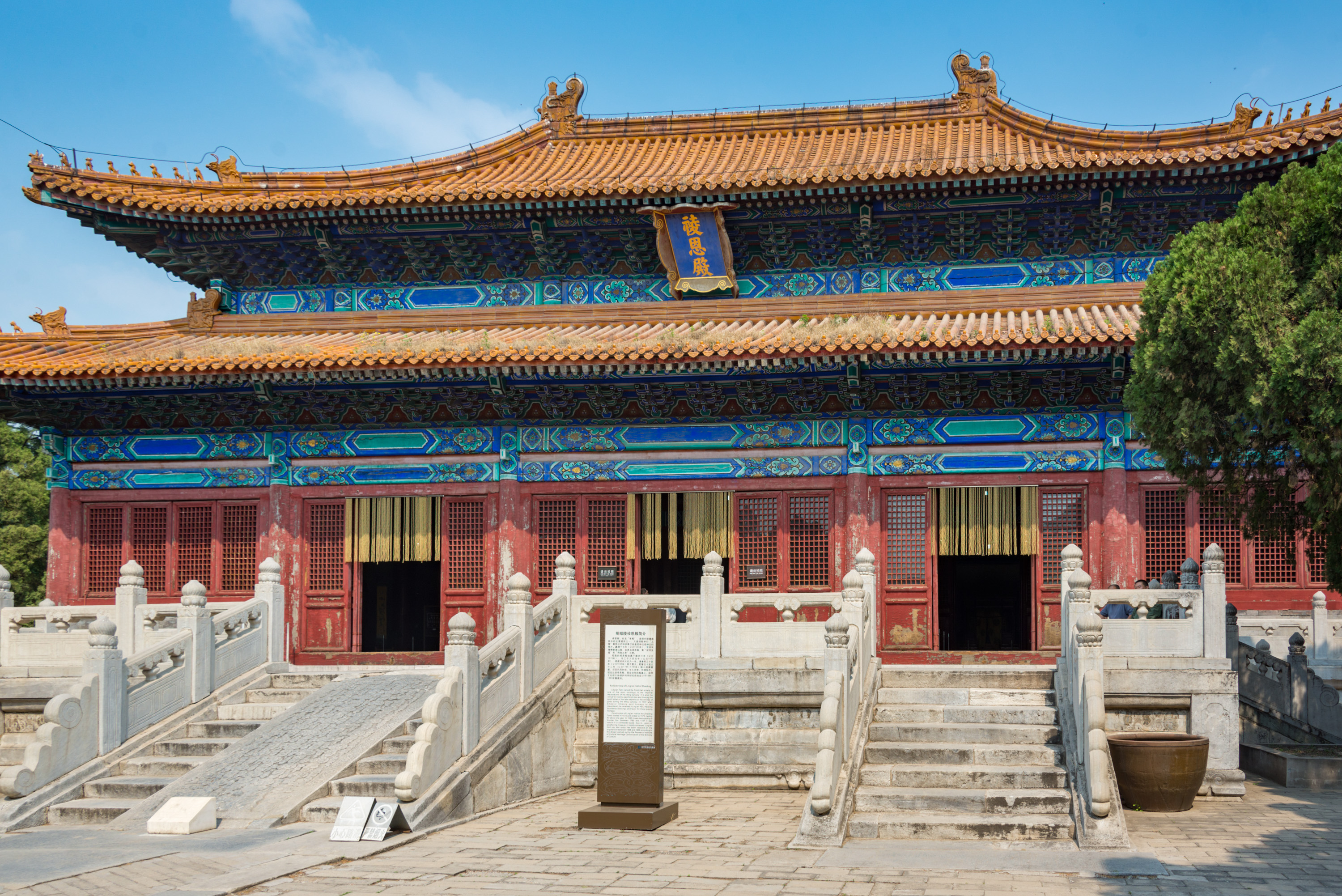
Zhao Mausoleum (Ming dynasty)
It was built for the wrong person. The Zhao Mausoleum was originally constructed as a tomb for the Jiajing Emperor's parents, but when the Longqing Emperor died in 1572, his son, the Wanli Emperor, chose this site to bury his father instead. The reasons for the substitution have blurred with time, but the result was a mausoleum completed in 1573 that became, through accident and renovation, the best-preserved tomb in the entire Ming Tombs complex.
A Reluctant Emperor's Resting Place
The Longqing Emperor ruled for just six years, from 1566 to 1572, inheriting a court riven by factional politics and an empire struggling with border threats from Mongol raiders. He was the thirteenth emperor of the Ming dynasty, sandwiched between his father's paranoid reign and his son's famously indifferent one. His first wife, Empress Li, had already died in 1558, and she was interred at the mausoleum. After the Longqing Emperor's death, his two other wives, Empress Xiao'an and Empress Xiaoding, would join him there. The 34,000-square-meter complex became a family tomb, holding an emperor who reigned briefly and the women who outlived his dynasty's relevance.
Geometry of the Afterlife
The Zhao Mausoleum follows the architectural grammar shared by all thirteen Ming Tombs, but its preservation makes that grammar legible in ways the other tombs cannot match. A continuous geometric axis organizes the entire complex. It begins with a stele in a pavilion, proceeds through the Ling'en Gate to the Ling'en Hall, where successive emperors paid their respects, then continues to the Minglou Tower, enclosed within a square castle. This castle connects to the Precious Castle, a circular wall enclosing the burial mound itself, an artificial earthen dome beneath which lies the underground palace. The architectural progression from square to circle, from the ordered world of the living to the cosmic geometry of the dead, is deliberate and deeply Chinese.
The Kitchen That Survived
What makes Zhaoling unique among the Ming Tombs is not its grandeur but its completeness. Near the entrance, a courtyard contains a sacred kitchen and storeroom, buildings where ritual food offerings were prepared for the imperial dead. Every Ming tomb originally had these structures, but the Zhao Mausoleum is the only one where they survive. This preservation is partly due to the tomb's 1980 renovation, the only significant restoration work performed on any of the thirteen tombs. When the mausoleum opened to the public in 1990, it became one of three tombs accessible to tourists, alongside the larger Changling and the excavated Dingling. The intact kitchen gives visitors something the other tombs cannot: a sense of how the living served the dead, the daily rituals of offering that continued for generations.
One Name, Three Dynasties
The name Zhaoling carries echoes across Chinese imperial history. The Tang dynasty Emperor Taizong, who died in 649, rests in a Zhaoling northwest of Xi'an. The Qing dynasty emperor Hong Taiji, who died in 1643, lies in another Zhaoling in Shenyang. That three dynasties chose the same name for their imperial tombs is not coincidence but convention: zhao carries connotations of clarity and luminosity, qualities each dynasty wished to claim for its rulers in death. The Ming version is the smallest and most modest of the three, fitting perhaps for an emperor whose short reign left the lightest mark on history but whose tomb, through the accidents of preservation, remains the most completely understood.
From the Air
Located at 40.29N, 116.21E within the Ming Tombs complex in the Changping District, approximately 45 km north-northwest of central Beijing. The mausoleum's circular burial mound and surrounding complex are visible from moderate altitude among the other tombs in the valley. Nearest major airport is Beijing Capital International Airport (ZBAA/PEK), about 50 km to the southeast.