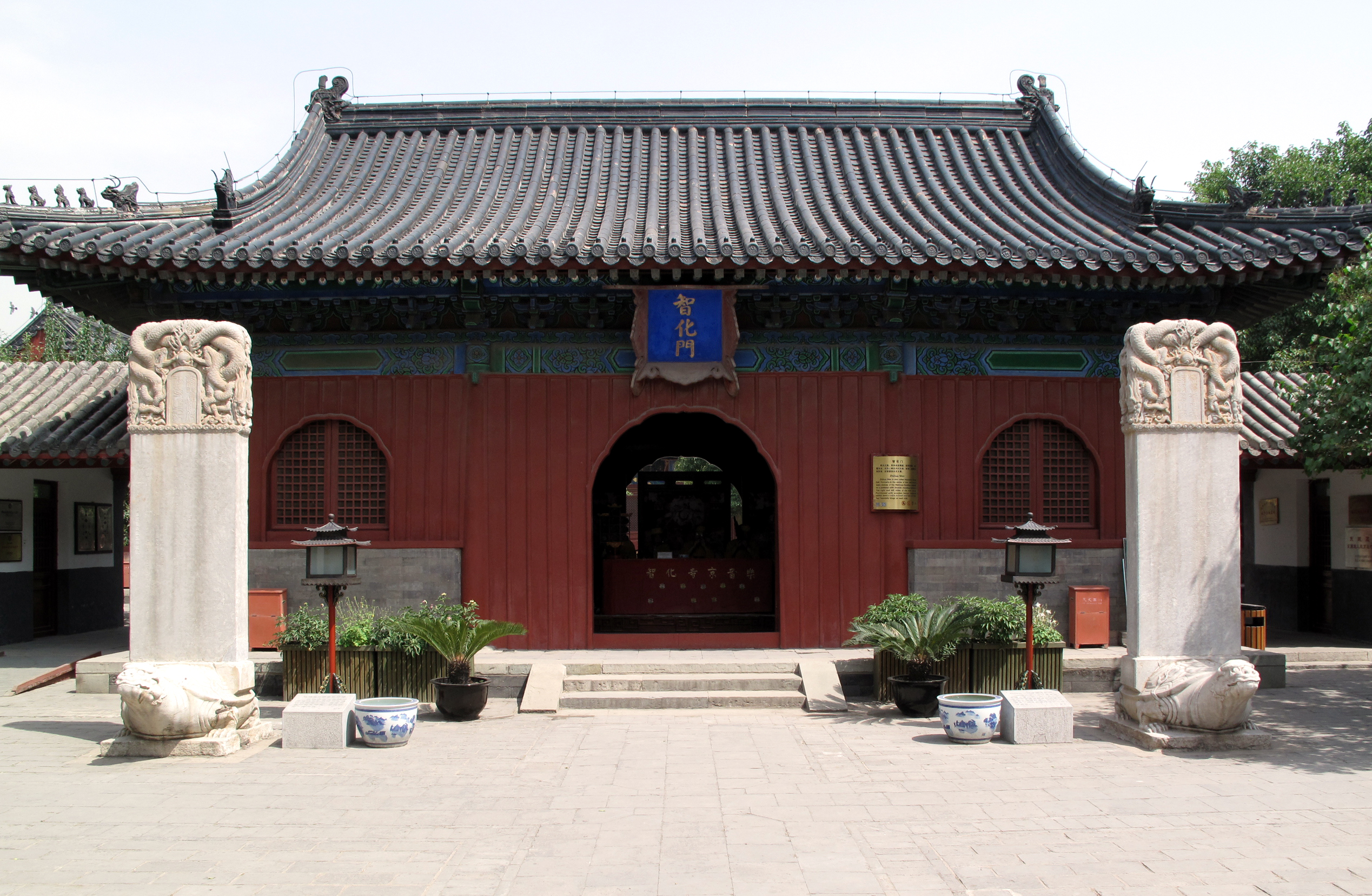
Zhihua Temple
The music drifting through the Zhihua Gate has been passed down for 27 generations. Six musicians -- playing guanzi oboe, dizi bamboo flute, sheng mouth organ, and yunluo gongs -- perform centuries-old Buddhist ritual music in the same hall where their predecessors played for Ming dynasty courtiers. Until his death in 2009, the octogenarian monk Zhang Benxing led the group as the last surviving member of the 26th generation, the last person to have learned every note in the traditional manner. The temple he devoted his life to preserving was built in 1443 by one of the most powerful and controversial figures in Chinese imperial history.
A Eunuch's Ambition in Stone
Wang Zhen was no ordinary court servant. As the dominant eunuch in the Rites Supervising Office under the Zhengtong Emperor, he wielded enough power to commission a private Buddhist temple in the heart of Beijing -- a two-hectare compound that ranks among the most important intact Ming dynasty building complexes in the old city. The temple's black roof tiles set it apart visually from Beijing's other religious buildings, most of which feature the yellow or gray tiles associated with imperial or Buddhist architecture. The choice was deliberate: black tiles signified a private commission rather than imperial patronage, even as the scale and ambition of the complex rivaled state-sponsored temples. Wang Zhen would die six years later at the Battle of Tumu, killed by his own officers after his disastrous military advice led to the emperor's capture. But the temple he built would outlast his reputation.
9,999 Buddhas in the Walls
The Thousand Buddha Pavilion occupies the second floor of the temple's northernmost building, above the Tathagata Hall. Its walls are lined with niches, each containing a small statue, totaling 9,999 Buddhas -- just one short of ten thousand, a number that gives the pavilion its name while observing the Buddhist principle that perfection belongs only to enlightenment itself. Below in the Tathagata Hall, Ming dynasty statues of Shakyamuni sit flanked by Dishitian and Fantian. Outside, a copper incense burner from the Ming period still stands before the entrance. The temple's main worship hall, the Zhihua Hall, contains murals featuring the bodhisattva Dizang, Yanluo Wang, and the Ten Kings of Hell, covering 14.76 square meters of wall space with scenes of judgment and compassion painted during the dynasty that built the temple.
The Rotating Library
West of the Zhihua Hall stands the Zangjing Ge, the Tower of Buddhist Texts, which houses one of the temple's most remarkable artifacts: a Zhuanlunzang, an octagonal rotating wooden sutra cabinet standing more than four meters tall. The cabinet was designed to allow monks to spin it while reciting prayers, symbolically reading all the sutras contained within by turning the cabinet a full rotation. Its three sections are carved with distinct iconographic programs. The bottom depicts the Eight Legions, the middle shows Bodhisattvas and the Four Heavenly Kings alongside vajra warriors, and the top is crowned with a carving of Vairocana flanked by nagas and garuda. That this intricate, fragile wooden mechanism survived nearly six centuries of Beijing's earthquakes, wars, and political upheavals speaks to the temple's remarkable resilience.
A Bell Cast in Sanskrit
The Bell Tower on the east side of the Zhihua Gate houses a bronze bell cast in 1444, just one year after the temple's founding. With a diameter of 1.05 meters and a height of 1.60 meters, its surface is inscribed with mantras written in Sanskrit script -- a connection to the Indian origins of the Buddhist tradition practiced within these walls. Across the courtyard, the Drum Tower holds a Ming dynasty drum nearly as large, its surface decorated with a lacquer pattern of twelve golden dragons. When the Zhihua Temple was designated a nationally preserved cultural relic in 1961, it was one of the first temples in Beijing to receive such recognition. Renovations in 2005, ahead of the 2008 Summer Olympics, ensured that the temple Zhang Benxing spent his life protecting would be ready for the international visitors he never doubted would come.
From the Air
Located at 39.92N, 116.43E in Dongcheng District, within Beijing's Second Ring Road in the Chaoyangmen area. The temple compound with its distinctive black-tiled roofs sits in a traditional hutong neighborhood. Nearest airport is Beijing Capital International (ZBAA/PEK), approximately 23 km northeast.