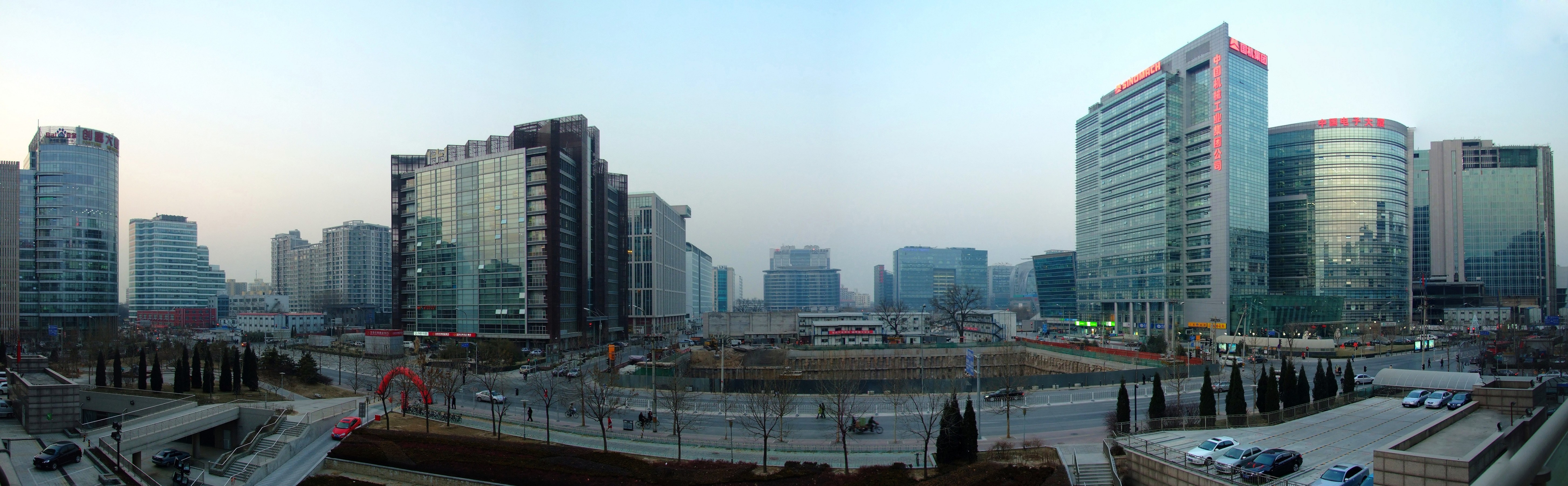
Zhongguancun
In the early 1980s, Chen Chunxian returned from a government-sponsored trip to Boston and Silicon Valley with an idea that sounded absurd at the time: China should build its own technology cluster. He was a researcher at the Chinese Academy of Sciences, not a businessman, and the streets he had in mind were a crowded strip in Beijing's Haidian District known mainly for its proximity to Peking University and Tsinghua University. Within a decade, those streets earned the nickname Electronics Avenue. Within three decades, the area called Zhongguancun had become China's answer to the place that inspired it.
From Electronics Avenue to National Priority
Zhongguancun's early years were scrappy. The strip that earned the Electronics Avenue name in the early 1980s was a dense corridor of small shops selling computer parts and consumer electronics, places where bargaining was expected and the inventory changed weekly. In 1988, the central government formalized the area as the Beijing High-Technology Industry Development Experimental Zone, giving it official status and policy support. By 1999, Zhongguancun had expanded into seven science and technology parks spread across Haidian, Fengtai, Changping, Chaoyang, and other districts. The original area became the Haidian Park, the core of a constellation.
Homegrown Giants
The companies that defined Zhongguancun's identity were born there between 1984 and 1985. Stone Group became the first successful technology company operated by private individuals outside the Chinese government. Founder Group spun off from Peking University. Lenovo emerged from the Chinese Academy of Sciences under Liu Chuanzhi's leadership, eventually purchasing IBM's personal computer division for $1.75 billion in 2005, a deal that made it the world's third-largest PC maker. Both Founder and Lenovo maintained deep ties to their academic origins, with universities remaining significant shareholders. By 2004, over 12,000 high-tech enterprises operated across Zhongguancun's seven parks, employing 489,000 technicians.
The World Moves In
Zhongguancun's proximity to China's top universities and its concentration of technical talent made it irresistible to global technology companies. Google, Intel, AMD, Oracle, Motorola, IBM, Sony, and Ericsson all established Chinese headquarters or research centers in the technology park. Microsoft built a $280-million research campus completed in 2011, housing Microsoft Research Asia and accommodating 5,000 employees. The development center for Loongson, China's first general-purpose microprocessor design, also operates from the area. The district now includes the Haidian Christian Church, designed by Hamburg-based architects Gerkan, Marg and Partners, a building that has become a tourist destination in its own right.
The Academic Backbone
What separates Zhongguancun from a generic tech park is the intellectual infrastructure surrounding it. Peking University and Tsinghua University, consistently ranked as China's two most prestigious institutions, sit within walking distance. Beijing Normal University and the Chinese Academy of Sciences are nearby. This proximity creates a pipeline of talent and research that commercial tech parks in other cities cannot replicate. Line 4 of the Beijing Subway threads through the district with stops at Zhongguancun station and Haidian Huangzhuang, connecting the area to the broader city. The vision Chen Chunxian brought back from California has become physical reality: a neighborhood where academic research and commercial technology feed each other continuously.
From the Air
Located at 39.98°N, 116.31°E in Beijing's northwestern Haidian District, between the Third and Fourth Ring Roads. The area appears from altitude as a dense cluster of modern office towers and university campuses. Nearest airport: Beijing Capital International (ZBAA), approximately 25 km northeast. Peking University and Tsinghua University campuses are visible nearby as large green areas with institutional buildings.