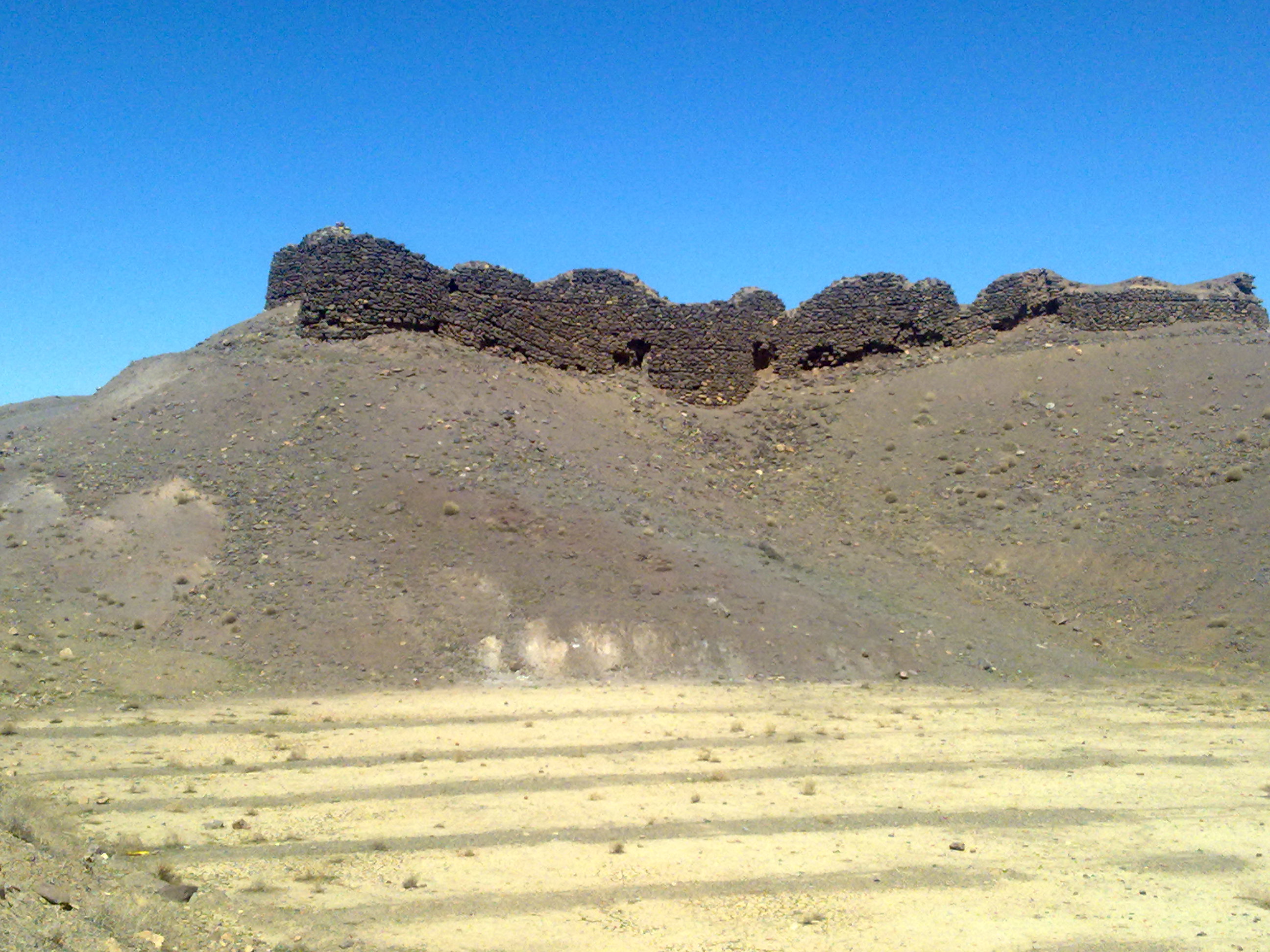
Zibad Castle
Somewhere in the dry hills of Khorasan, a crumbling fortress guards a story that most of the world has forgotten. Zibad Castle, perched in the Kakhk district of Gonabad County in Iran's Razavi Khorasan Province, is believed to be the place where Yazdegerd III -- the last emperor of the Sasanian dynasty -- sought shelter as his empire dissolved around him. The Sasanians had ruled Persia for over four centuries, from 224 to 651 CE. By the time Yazdegerd fled eastward, that empire was already a memory. What remains is a ruin, a mountain cave, and the convergence of history and legend in a landscape that has barely changed since the seventh century.
An Emperor Without an Empire
In 651 CE, Yazdegerd III was a king with no kingdom left to rule. Defeated by the advancing Arab armies, his heavy Sasanian cavalry had proven too slow and rigid to counter their lighter, faster opponents. He fled east across the Iranian plateau toward Khorasan, hoping to rally troops from the frontier provinces. It did not work. The regional governors were tired of his demands and unconvinced the war could still be won. According to the ninth-century historian Al-Baladhuri, writing in his Kitab Futuh al-Buldan, Yazdegerd was killed in the Gonabad area. Other sources say he sought refuge with a miller near Merv, who murdered him for his jewels on the orders of the local warlord Mahoe Suri. The contradictions hardly matter now. What matters is that his death extinguished the last Persian imperial dynasty before Islam, and all of Khorasan fell to the Arab conquerors shortly after.
Fortress on the Edge of Memory
The castle itself sits among the four historical monuments of the village of Zibad, a place so remote that the dry wind seems older than the stonework. Registered as a national heritage property in 2001, it also carries the name Shahab Castle, under which it was nationally registered in 2002. The walls are weathered and broken, but they still trace the outline of a defensive position chosen with care -- high ground with clear sightlines across the surrounding terrain. Whether Yazdegerd himself actually stood behind these walls is a question the stones cannot answer. But the tradition persists, connecting this particular ruin to that particular catastrophe, and giving the castle a weight that its modest size would not otherwise suggest.
A Cave for a Turanian General
Below the castle, in the slopes of Kuh-Zibad mountain, lies a cave called Sufeh Pir. Local tradition holds that it is the burial place of Piran Viseh, a figure from the Shahnameh -- Ferdowsi's great national epic of Iran. In the poem, Piran serves as the king of Khotan and the chief general of Afrasiab, ruler of Turan. He is not purely mythical; Piran appears in the historical chronicles of Tabari and Tha'alibi as well. The cave is now called DarSufa Pir, and according to research by Dr. Abas Zamani, the burial tradition has endured for centuries. History and myth overlap here in the way they often do in Iran -- layers of story compressed into the same landscape, so that a single mountain holds both a seventh-century fugitive emperor and a legendary Turanian warrior.
Where Empires End
Zibad sits in the kind of terrain where empires have always come to their limits. The dry eastern reaches of Khorasan stretch toward the Afghan border, a landscape of brown hills and ancient irrigation channels called qanats -- some of them thousands of years old, still funneling water through underground tunnels to sustain pockets of agriculture. Saffron fields color the hillsides purple in autumn. The region has been a borderland for as long as anyone can remember: between Persia and Central Asia, between settled farmers and nomadic peoples, between old religions and new ones. Yazdegerd's flight eastward in 651 followed the same route that Alexander had marched centuries before, and that the Mongols would thunder along centuries later. The castle is a marker on that ancient corridor, a place where one world ended and another began.
From the Air
Located at 34.28°N, 58.48°E in Razavi Khorasan Province, eastern Iran. The castle sits in hilly, arid terrain near the village of Zibad in Gonabad County. From altitude, look for the brown mountainous landscape of eastern Khorasan. The nearest airport is Gonabad Airport (OIMD). Birjand International Airport lies approximately 170 km to the southeast. The terrain is dry and visibility is generally good, with clear skies common. The castle ruins are modest in size and best spotted at lower altitudes against the surrounding hillside.