Zihuatanejo
One possible origin of the name Zihuatanejo traces to the Nahuatl word Cihuacan, meaning "place of women." In the Nahuatl cosmology, these were the goddess women of the western paradise, who arose each afternoon to lead the sun at dusk into Mictlan, the realm of the dead, giving dim light to those who had passed on. It is a poetic name for a town that faces west across the Pacific, where sunsets over the bay have been the daily spectacle for centuries. The other possible origin is more prosaic -- from the Purepecha language, meaning "water of the yellow mountain." Either way, Zihuatanejo wears its layered past openly, a fishing town that tourism has expanded but not erased.
Conquest, Shipyards, and Conch Shells
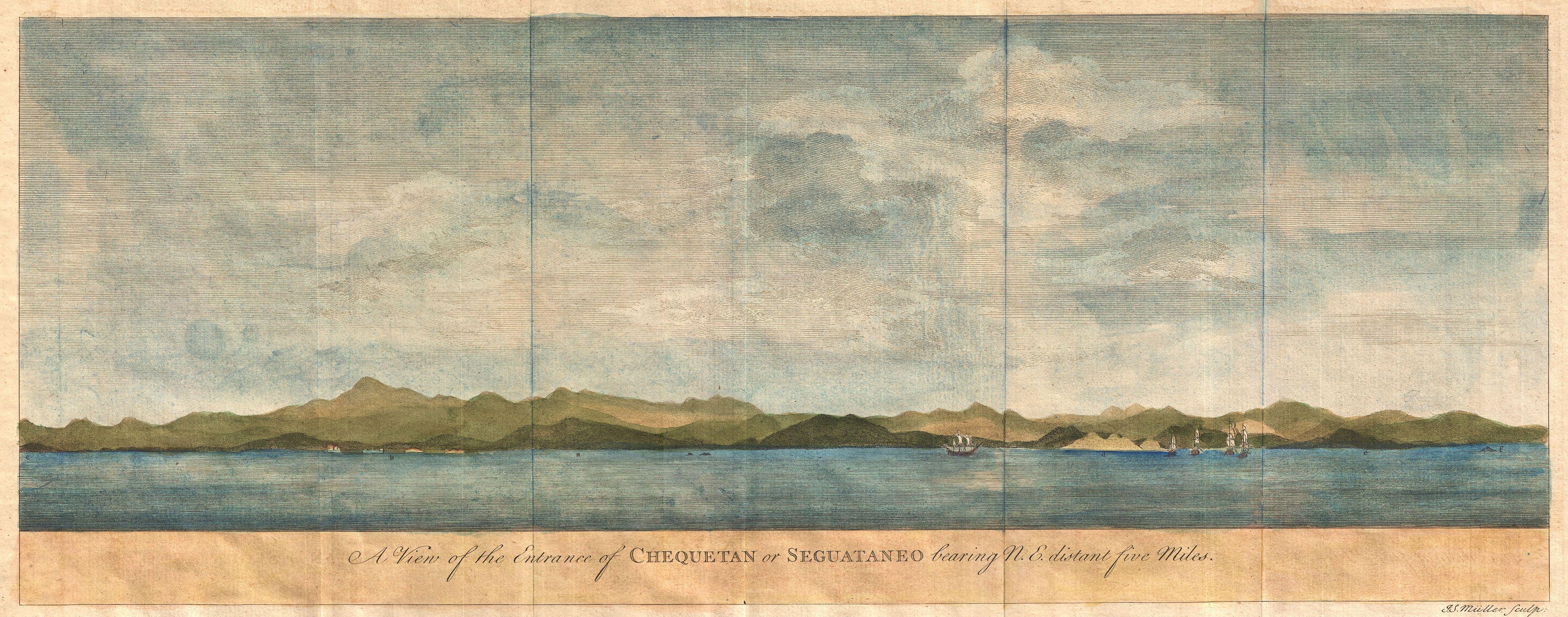
Long before the Spanish arrived, the area was part of a tributary province conquered by the Aztecs under Ahuizotl in 1497. The first Spaniard to reach this coast was reportedly Gonzalo de Umbria, sent by Hernan Cortes to look for gold. The conquest drove most of the native population away -- where they went remains unknown. Those who stayed paid tribute to the Spanish crown in cotton shawls and decorated conch shells, goods the Mexican highlands prized. When the original Spanish shipyards at Zacatula burned in the second half of the sixteenth century, new ones were built at Zihuatanejo. The protected bay made it a natural harbor, and the surrounding haciendas used it to ship wood and minerals. Pirates visited during the colonial period, though this apparently subsided over time. By the eighteenth century, English mariners knew the place as Chequetan or Seguataneo, names that hint at the difficulty foreign tongues had with the original.
The Fisherman's Path
The heart of modern Zihuatanejo is the Paseo del Pescador, the waterfront walkway locals also call the malecon. Restaurants line it with seafood, shops sell rugs and handcrafts, and a small shell market trades in the same kind of marine goods that once served as Aztec tribute. In the evening, the walkway fills with people socializing -- a nightly ritual that predates any tourism board. The town spreads around its bay and inland toward the Sierra Madre del Sur. Since the 1970s, it has been developed alongside the modern resort of Ixtapa, just five kilometers away, but Zihuatanejo has held onto its character. A long-standing community of Swiss and Italian immigrants adds an unexpected layer. Each March, the Zihuatanejo International Guitar Festival, running since 2004, brings musicians from across the world to perform at venues throughout town, with free public concerts in the main plaza.
A Ring of Beaches
Zihuatanejo Bay shelters a crescent of beaches, each with its own personality. The Municipal Beach sits in front of the town center beside the fishing port. A cement and sand walkway leads from there to Playa Madera -- Wood Beach -- lined with bay-view restaurants, bungalows, and hotels. On the opposite side of the bay, Playa Las Gatas -- Cats Beach -- faces the bay entrance at Punta del Rey, where a coral reef and a man-made stone barrier moderate the ocean swells. Fifteen kilometers of beach wrap around the bay and beyond. Every morning fishermen motor to the docks with their catch, and on the first weekend of May the International Sailfish Tournament fills the harbor with hundreds of boats chasing sailfish, marlin, and dorado. The bay also serves as a cruise ship port, drawing vessels whose passengers come primarily for the beaches. In 2023, Zihuatanejo earned the Pueblo Magico designation from the Mexican government, formal recognition of what visitors had already figured out.
Six Rooms of Deep Time
At the southern end of the municipal beach, the Museo Arqueologico de la Costa Grande documents the deep history of this coastline in six rooms. Artifacts from Olmec and Toltec civilizations appear alongside local finds from the Tierras Prietas site. The collection moves chronologically: early coastal settlements, the Cerro de la Madera ceramics, agricultural techniques using the bajareque method of interwoven branches and clay, the introduction of ball games around 200 to 750 CE, the Aztec period when the province of Cihuatlan paid tribute in shells, chocolate, basketry, and textiles, and finally the colonial era when Zihuatanejo and Acapulco served as key navigation points for Spanish ships seeking maritime routes westward. The museum is small but dense with meaning, a reminder that tourism is only the latest chapter in a story stretching back thousands of years.
From the Air
Located at 17.64N, 101.55W on Mexico's Pacific coast, approximately 240 km northwest of Acapulco along the Costa Grande. The protected Bay of Zihuatanejo is clearly visible from altitude, a sheltered crescent of water backed by the Sierra Madre del Sur. Ixtapa-Zihuatanejo International Airport (MMZH) is the nearest facility, located between the two towns. The modern resort strip of Ixtapa is visible 5 km northwest along the coast.