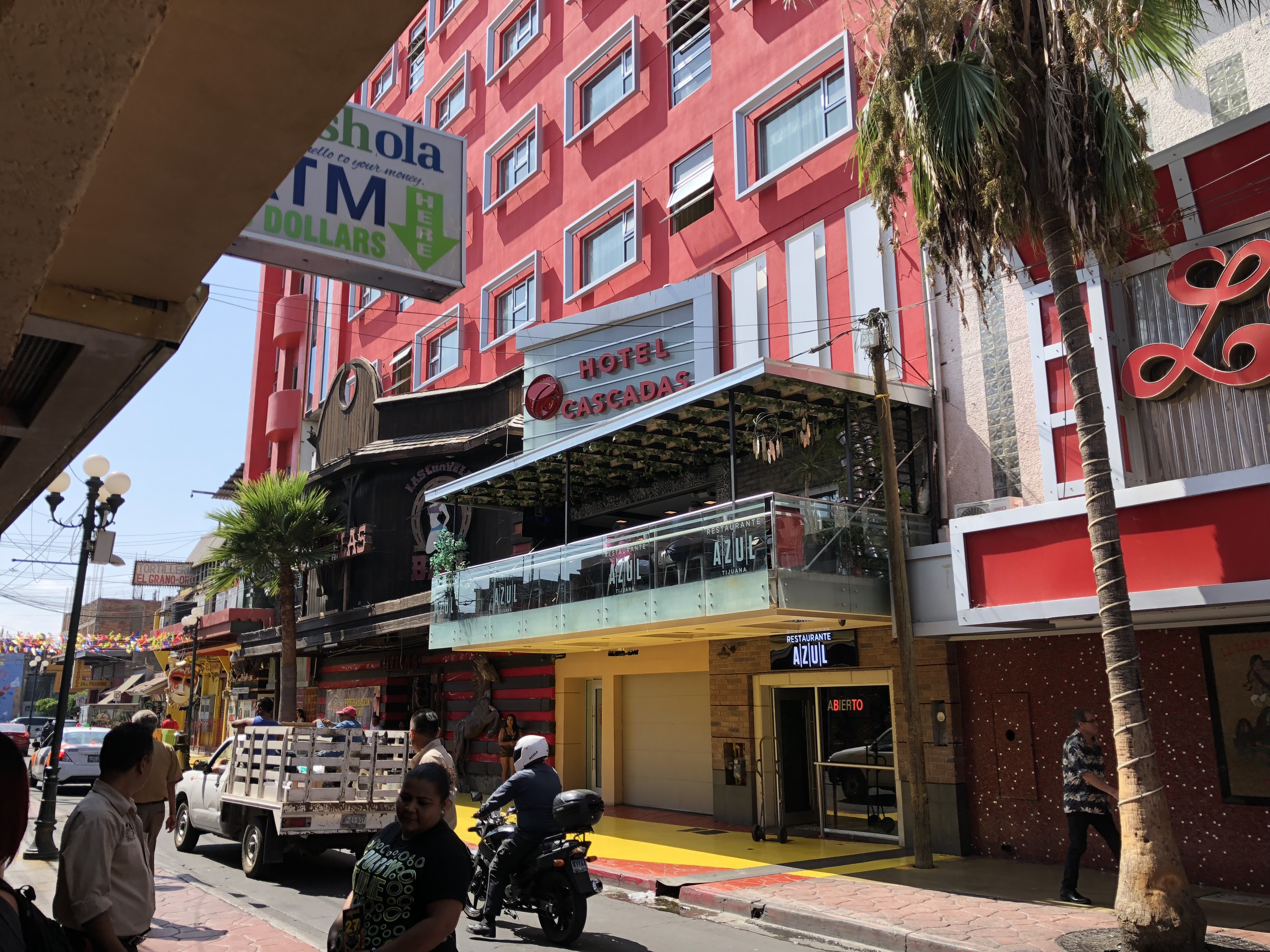
Zona Norte, Tijuana
Zona Norte is Tijuana's red-light district — a few square blocks just south of the US border where legal sex work, bars, and drug activity coexist within a complicated framework of permits, regulation, and urban marginality.
The Zona Closest to the Line
Walk south from the San Ysidro Port of Entry, cross into Mexico, and within a few minutes you can find Zona Norte. It is close to the border by design: the district grew up precisely because it served people who crossed for a short time and wanted easy access to things that were more restricted or expensive on the American side.
The neighborhood is also called 'La Coahuila' after Calle Coahuila, its main commercial street. The blocks around it are dense with bars, clubs, hotels, pharmacies, and street vendors. The signage is in Spanish and sometimes English. The clientele has historically included American tourists, Mexican nationals, and cross-border workers whose lives are defined by proximity to the international boundary.
The Zona de Tolerancia
Zona Norte functions as a zona de tolerancia — a zone of tolerance — where sex work is legal and regulated under municipal permits. Sex workers in the zona are required to register with local health authorities and carry documentation of regular health screenings. The system is meant to reduce disease transmission and provide workers with some framework of protection, though advocacy organizations have long noted that enforcement is uneven and the workers themselves operate with significant precarity.
The model of the zona de tolerancia is not unique to Tijuana — it exists in various forms in other Mexican cities — but Tijuana's proximity to the United States border gives Zona Norte an unusual character. The cross-border dynamic shapes the economy and the population of the district in ways that differ from inland cities.
Beyond the Surface
Zona Norte is frequently written about from the outside — by journalists, filmmakers, and tourists who pass through and render it as spectacle. The people who live and work there have a different relationship to the place. For some residents, it is simply a neighborhood. For sex workers, it is a workplace with its own hierarchies, economies, and social networks. For the bars and pharmacies and food vendors, it is a business district.
Drug activity is also present in the zona, as it is in many border neighborhoods on both sides of the international line. Tijuana has been affected severely by cartel violence over the past two decades, and Zona Norte is not insulated from that reality. The proximity to the border crossing makes the area a pressure point for smuggling networks, and law enforcement from both Mexico and the United States maintains some presence in the vicinity.
A Mirror at the Border
Zona Norte is often invoked in discussions about border policy, sex work, drug enforcement, and the economics of vice. Critics of American drug and migration policy sometimes point to places like Zona Norte as evidence of what prohibition creates just across a line — demand that doesn't disappear but migrates.
The people most affected by Zona Norte's contradictions are rarely the ones asked to explain them. The sex workers, the migrant men who sometimes end up there, the residents of surrounding streets who have little say in what their neighborhood is known for — they live with the consequences of policies made elsewhere and of a geography that places them at the meeting point of two countries and two very different legal systems.
Zona Norte exists because the border exists. Its particular shape reflects decades of cross-border economics, policy, and human desire. It is not the whole of Tijuana, but it is one of the places where the border's logic is most clearly visible.
From the Air
Zona Norte lies immediately south of the San Ysidro border crossing, one of the busiest land crossings in the world. From the air, the urban density of northern Tijuana is clearly visible just south of the border infrastructure. The crossing itself — with its parallel lanes, inspection booths, and waiting queues — is a striking aerial landmark. KSAN (San Diego International Airport) is approximately 13 miles to the northwest.