Zong Massacre
The insurance claim was for cargo. Specifically, for 132 units of cargo that had been jettisoned from the slave ship Zong in late November 1781, somewhere in the waters between West Africa and Jamaica. The cargo was human beings. Enslaved Africans, shackled below decks on a vessel owned by the William Gregson syndicate of Liverpool, had been thrown alive into the Caribbean Sea by the ship's crew over the course of several days. When the ship finally limped into port at Black River, Jamaica, her owners did not report a mass killing. They filed a claim with their insurers for lost merchandise.
A Voyage of Miscalculation
The Zong began life as the Dutch slave ship Zorg, captured by the British during the Fourth Anglo-Dutch War in February 1781. Renamed and handed to Luke Collingwood, a ship's surgeon with no command experience, the vessel departed the coast of present-day Ghana with 442 enslaved Africans crammed into a hold designed for far fewer. Collingwood's inexperience proved catastrophic. Through navigational errors, the ship overshot Jamaica entirely, adding weeks to an already brutal voyage. Disease spread through the overcrowded hold; dozens of enslaved people and several crew members died. Water supplies ran dangerously low. Whether the shortage was genuine or exaggerated later became the crux of a legal battle, but aboard the Zong, Collingwood reached a calculation rooted not in survival but in finance: enslaved people who died of illness could not be claimed on insurance, but cargo jettisoned to preserve the ship could.
The Killing
Beginning on 29 November 1781, the crew of the Zong began throwing enslaved Africans overboard. The killing continued over several days. On the first day, 54 women and children were forced through the cabin windows into the sea. The next day, 42 enslaved men, some of whom were shackled together, were thrown from the deck. A third group of 36 followed. Ten more enslaved people, witnessing what awaited them, chose to jump rather than be seized by the crew. In all, more than 130 people were murdered. First mate James Kelsall later claimed the ship had only four days' water remaining, but evidence at trial suggested this was false. Rain fell during the days of the killings, and when the Zong finally reached Black River, Jamaica, 420 gallons of water remained in its hold. The enslaved people thrown overboard did not need to die for the ship to survive. They died because their deaths were worth more to the ship's owners than their lives.
The Courtroom
The Gregson syndicate filed its insurance claim with confidence. Under British maritime law, jettisoning cargo to save a ship was covered, and the courts had long treated enslaved people as property. When the insurers refused to pay, the case of Gregson v. Gilbert reached the courts in 1783. The first jury sided with the slavers. Lord Chief Justice Mansfield, presiding over the appeal, acknowledged that the case was legally identical to throwing horses overboard. But new evidence complicated matters: testimony that water had been mismanaged, that rain had fallen, that the killings were driven by financial calculation rather than genuine emergency. Mansfield ordered a retrial, though he was careful to preserve the legal principle of jettison itself. No crew member was ever charged with murder. Olaudah Equiano, a formerly enslaved man living in London, brought news of the case to the abolitionist Granville Sharp. Sharp spent years trying to secure criminal prosecution and failed, but his public campaign ensured the Zong would not be forgotten.
What the Zong Changed
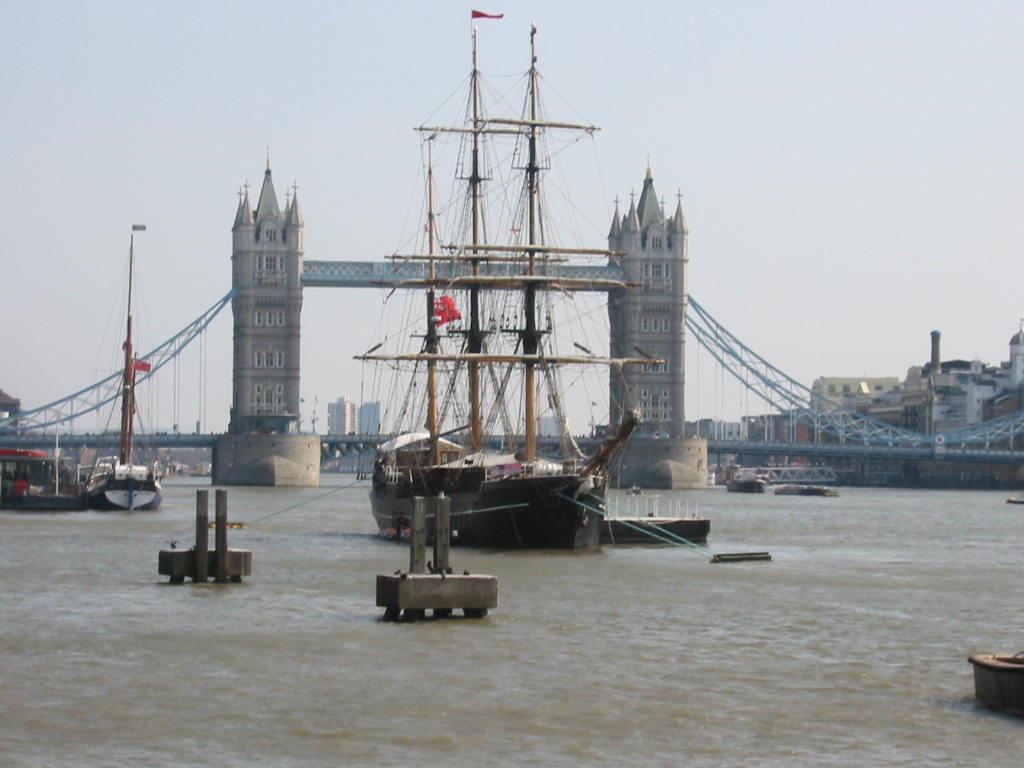
Sharp wrote letters to newspapers, bishops, and the Prime Minister. Portland and the Admiralty never replied. But the Zong case lodged in the public consciousness in ways that dry parliamentary debates about trade regulation could not. Here was the logic of the slave trade stripped bare: human beings reduced to cargo, their murder calculated as a financial transaction, their deaths litigated not as a crime but as a contract dispute. The Society for Effecting the Abolition of the Slave Trade was founded in 1787, and Parliament passed the Slave Trade Act of 1788, its first legislation regulating the number of enslaved people a ship could carry. Full abolition of the British slave trade came in 1807, and J. M. W. Turner's 1840 painting The Slave Ship, inspired in part by the Zong killings, ensured the massacre endured in cultural memory. In 2007, a memorial stone was erected at Black River, Jamaica, near where the Zong had landed. A ship representing the Zong sailed to Tower Bridge in London to mark the 200th anniversary of abolition.
A Name in the Water
The waters off Jamaica's southern coast give no sign of what happened here. The Caribbean is the same improbable blue it has always been, indifferent to history. But the Zong massacre endures in literature, art, and law because it crystallized a truth the system's architects preferred to keep abstract. Fred D'Aguiar's 1997 novel Feeding the Ghosts imagines a survivor. M. NourbeSe Philip's 2008 poetry collection Zong! deconstructs the legal transcript, scattering its words across the page like bodies across the sea. Giles Terera's play The Meaning of Zong, first staged at Bristol Old Vic in 2022, returned to the courtroom. More than 130 people were killed here, and their names were never recorded. The ship's log counted them as units. The insurance claim valued them at thirty pounds each. The sea, at least, took them without a price.
From the Air
Located at approximately 18.0N, 77.9W, near Black River on Jamaica's southern coast. The Zong massacre took place in Caribbean waters en route to this port. Black River is visible from altitude as a coastal town on the southern shore of Jamaica, east of the parish of Westmoreland. Nearest airports: Ken Jones Aerodrome (MKJP), Norman Manley International (MKJP) in Kingston approximately 120km east, and Sangster International (MKJS) in Montego Bay approximately 100km northwest. The southern Jamaican coastline and Cockpit Country's distinctive karst landscape to the north provide visual navigation references.