Zuiderzee Museum
The Zuiderzee no longer exists. On May 28, 1932, the Afsluitdijk dam severed this shallow inlet from the North Sea, transforming salt water to fresh and ending a way of life that had sustained Dutch fishing communities for centuries. In Enkhuizen, once called "Haringstad" - Herring Town - the Zuiderzee Museum preserves what the dam erased: the boats, the buildings, the costumes, and the rhythms of villages that lived by the tides of a vanished sea.
When the Sea Became a Lake
Enkhuizen thrived for centuries as a herring port. The closure of the Afsluitdijk ended that era overnight. Salt-water fish like herring and anchovy gave way to freshwater species - eel, smelt, and perch. Today even the eels are rare, victims of pollution, commercial fishing of young "glass eels" during their migration from the Sargasso Sea, and hungry cormorants. The museum began with an exhibition around 1930, but World War II delayed formal establishment. In the summer of 1949, the first display appeared in the Drommedaris, a 16th-century defensive tower in the harbor. Success led to expansion into warehouses on the Wierdijk, including the historic Peperhuis, acquired for the symbolic price of one guilder.
A Spy's Sailing Vessel
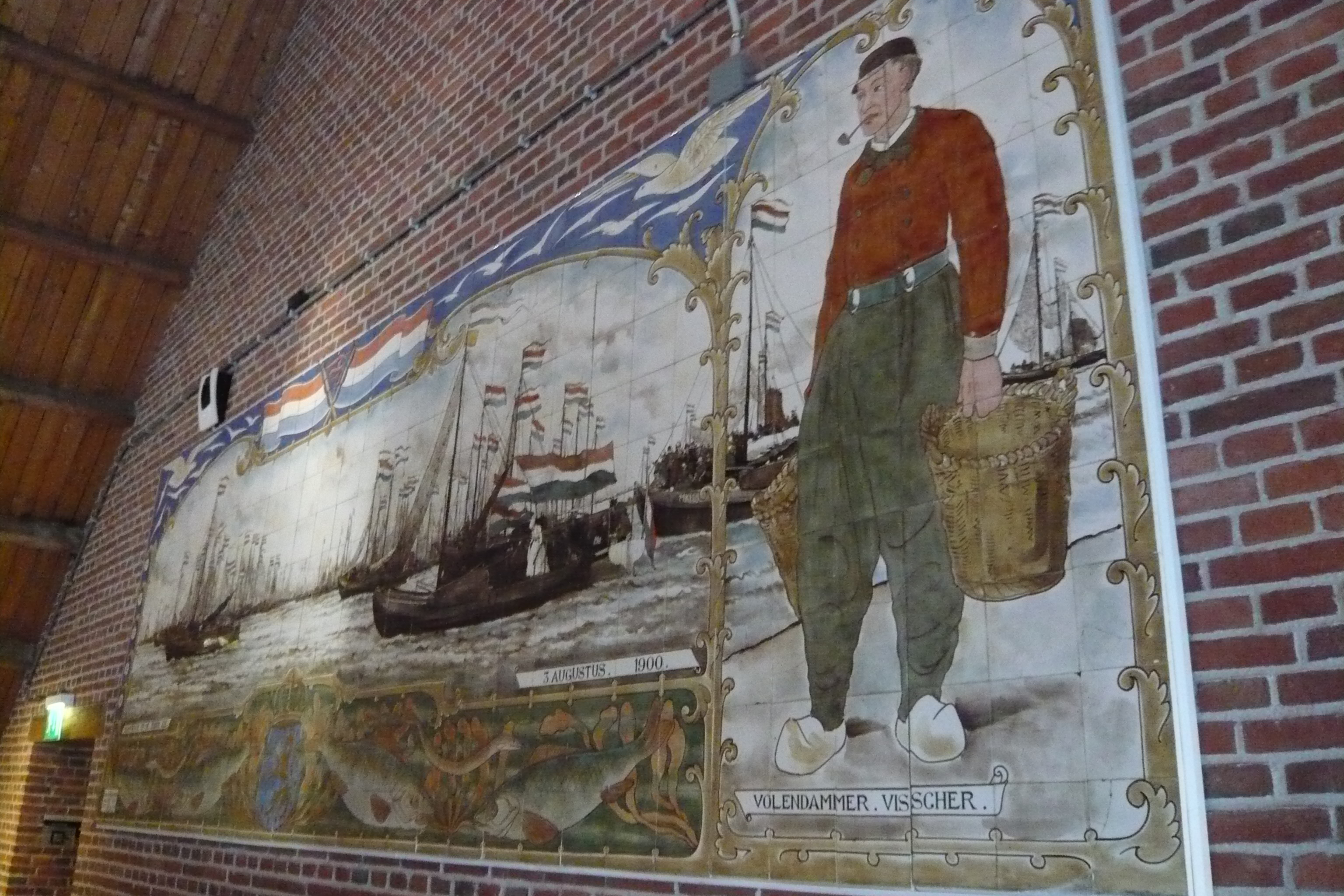
The indoor museum, opened July 1, 1950, fills 17th-century buildings once used by the Dutch East India Company. The Schepenhal - ship's hall - displays fishing vessels and recreational craft from the Zuiderzee's maritime past. Among them is the Sperwer, a traditional "boeier" with an extraordinary history: English adventurer Merlin Minshall sailed this boat from England down the Danube to the Black Sea in the 1930s for his honeymoon. He later made the same journey again, this time as an agent for British intelligence. The museum also shows paintings, furniture, and traditional regional costumes - the "klederdracht" that identified each village.
Villages Reconstructed
Queen Beatrix opened the outdoor museum on May 6, 1983. Here, entire buildings have been transported from communities around the former Zuiderzee - some moved whole in steel frames, others painstakingly reconstructed as replicas. The architecture spans from Groningen in the north to Wieringen island in the west. A "dijkhuis" (dike house) from Hindeloopen waited 32 years in storage before finding its place along the museum's dike, where it now houses a pub. The harbor replicates the layout of Marken before that island's expansion. Visitors encounter a windmill, lime kilns, a fish-smoking house, a steam laundry, and craftspeople demonstrating rope-making, cooperage, basket weaving, and herring smoking.
Living History at the Water's Edge
From Easter to late October, the outdoor museum comes alive with demonstrations of traditional Dutch skills. Visitors can watch old games, try building clog boats, and observe craftsmen practicing trades that once sustained Zuiderzee communities. In the reconstructed village of Urk, actors portray life around 1905 through role play. The first building ever displayed - the Gasthuiskapel (hospital chapel) from Den Oever - arrived in 1971. Both museum sections include restaurants in National Heritage buildings: the Hindeloopen pub, the Amsterdam house, and the Pepper House on the Wierdijk serve visitors in spaces that once served entirely different purposes.
Gateway to a Lost World
Enkhuizen train station connects to Amsterdam Centraal in under an hour. From there, a ferry runs every 30 minutes to the indoor museum, and visitors can transfer to the outdoor section by ferry or on foot. The museum preserves not just objects but an entire ecosystem of culture - the interdependence of fishing, boat-building, smoking, trading, and the distinctive clothing that marked each community. What was once the Zuiderzee is now the IJsselmeer to the south and the Waddenzee to the north, fresh water replacing salt. The museum stands as memory of the sea that made these communities, and the dam that unmade their world.
From the Air
Located at 52.707N, 5.300E in Enkhuizen on the western shore of the IJsselmeer. The museum complex is visible as a concentration of historic buildings along the waterfront, with the outdoor section's reconstructed village distinctly separate from the town. Nearest airports: Amsterdam Schiphol (EHAM) approximately 60 km southwest, Lelystad (EHLE) approximately 30 km south. The Afsluitdijk dam is visible to the north, and the characteristic pattern of polders in Flevoland lies to the southeast.