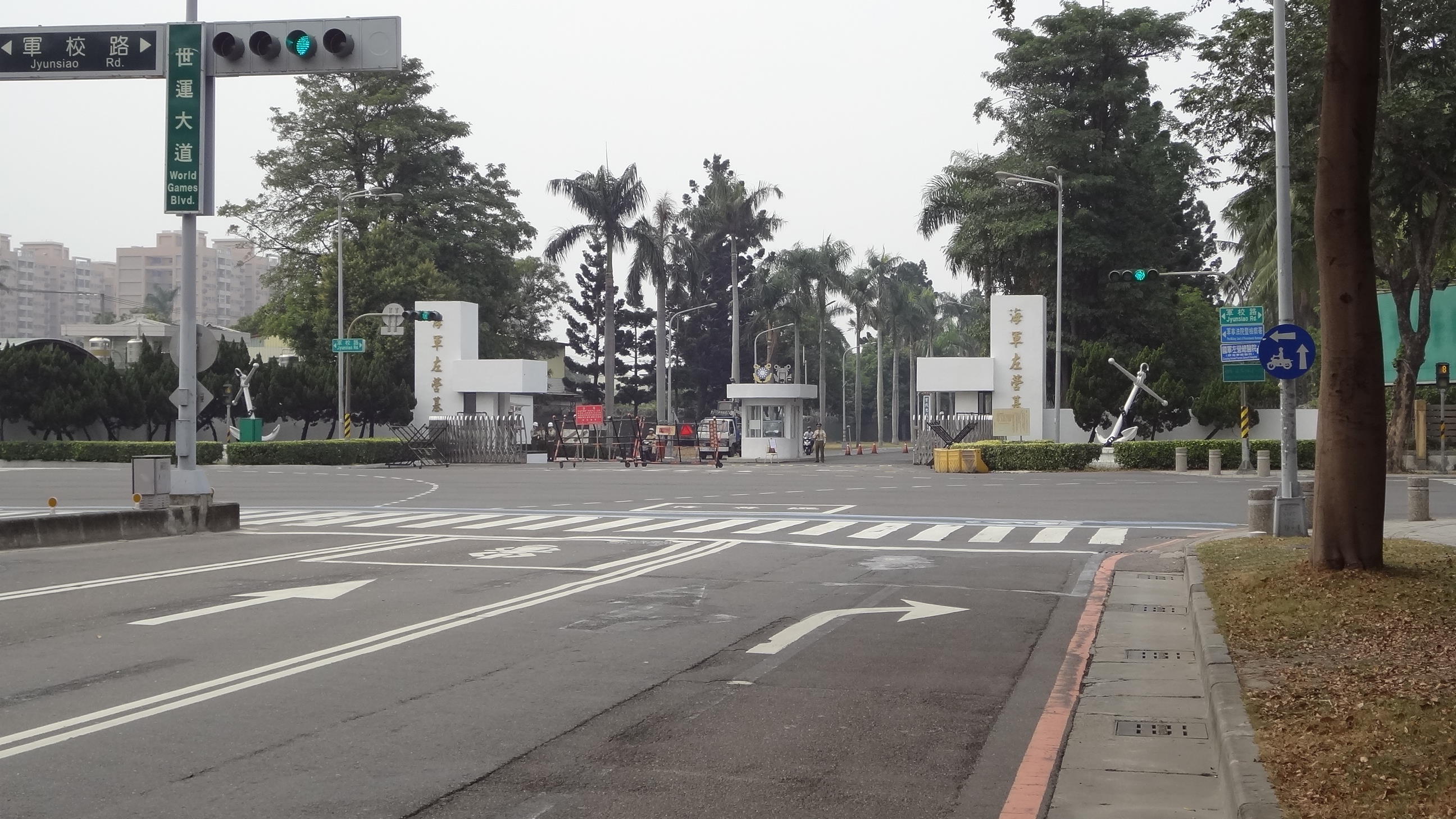
Zuoying Naval Base
On the morning of July 1, 2016, a Hsiung Feng III supersonic anti-ship missile launched itself. No one had ordered it to. A Republic of China Navy vessel anchored off Kaohsiung accidentally fired the missile toward the Penghu Islands, where it struck a fishing boat, killing one crew member and injuring three. The incident -- known simply as the Hsiung Feng III missile mishap -- made international headlines and brought sudden, unwelcome attention to Zuoying Naval Base, the largest naval installation in Taiwan. Most of the time, the base operates in relative obscurity despite being the operational heart of an island nation's maritime defense.
From Magong to Kaohsiung
Zuoying's naval history predates Taiwan's current government. Japan originally chose Magong in the Penghu Islands as the site for a major naval headquarters, relocating local residents to make room. But Magong proved vulnerable. Allied air raids during World War II heavily damaged the Penghu facilities, and in 1943 the command center of the Garrison Office moved to Kaohsiung's Zuoying district. When the Kuomintang government retreated to Taiwan after losing the Chinese Civil War in 1949, it inherited a functioning naval port and kept it. Today Zuoying hosts the naval airfield, the naval yard, and serves as the primary operating base for the Republic of China Navy. The Republic of China Marine Corps runs its Amphibious Reconnaissance and Patrol Unit training program here -- a notoriously grueling course profiled by the Japan Times as one of Asia's most brutal military bootcamps.
The Villages Behind the Fence
Adjacent to the base sit the military dependents' villages -- clusters of single-story houses uncommon in Taiwan's densely vertical cities. These villages were first populated by Kuomintang soldiers who arrived from mainland China in 1949, drawn from provinces scattered across a country they would never return to. The Republic of China government provided them with modest single-story housing within areas controlled by the navy. Entry required military permission. The isolation was both a restriction and a preservation mechanism. Cut off from the broader cultural currents of Taiwan, the villages became time capsules of mainland Chinese provincial life -- the accents, cooking, and customs of Sichuan, Shandong, Fujian, and Guangdong surviving in a coastal Kaohsiung neighborhood. As the original residents aged and their children moved into Taiwan's modern economy, the villages became subjects of nostalgia and historical preservation rather than active military communities.
Billion-Dollar Ambitions
In 2017, the Taiwanese government launched the Weihai Project, a major expansion of Zuoying Naval Base with a budget exceeding one billion US dollars. The investment reflects Taiwan's strategic calculus: an island 180 kilometers from mainland China whose security depends fundamentally on naval capability. The base has continued to grow in strategic importance. In 2025, Taiwan and the United States signed an agreement to conduct naval training at Zuoying, a significant step in military cooperation between the two countries. The base regularly hosts frigates, patrol ships, mine hunters, and fast combat support ships. S-70C helicopters operate from the facility, conducting anti-submarine warfare exercises with sonobuoy drops. In 2024, a Ching Chiang-class patrol ship ran aground on a sandbar off the base -- a minor embarrassment that resolved itself within hours but illustrated the constant naval activity in these waters.
Anchor Point
Zuoying Naval Base occupies a peculiar position in Kaohsiung's geography. It sits between the Old City of Zuoying -- a Qing-era walled settlement with first-class historic gates -- and the spiritual spectacle of Lotus Pond's temples. The military dependents' villages add another layer: mid-twentieth-century exile communities wedged between ancient fortifications and modern warships. For the sailors and marines who train here, the base is a workplace. For the shrinking population of elderly mainlanders in the adjacent villages, it is the backdrop to a lifetime spent in a place they never chose. And for Taiwan, Zuoying is the physical answer to an existential question: how an island of 23 million people maintains sovereignty across one of the most contested waterways on Earth.
From the Air
Zuoying Naval Base is located at 22.698N, 120.268E on the coast of Kaohsiung. The naval facilities, including piers, drydocks, and the airfield, are clearly visible from altitude. Note: this is an active military installation -- exercise caution and maintain appropriate altitude. The base sits between Lotus Pond to the east and the Taiwan Strait to the west. Nearest civilian airport is Kaohsiung International Airport (RCKH), approximately 12 km south. Do not overfly at low altitude without clearance.