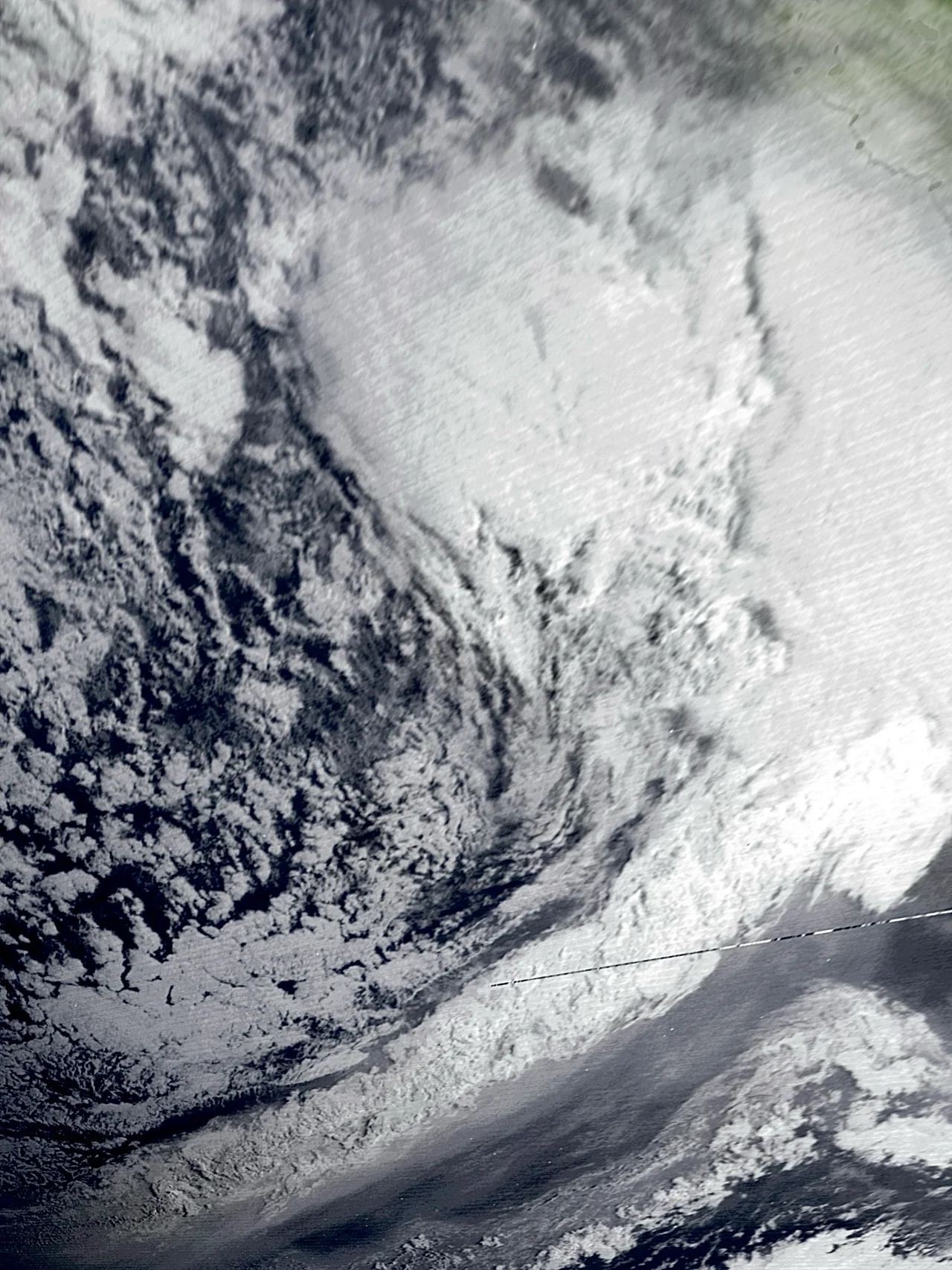

1979 Fastnet Race
By the afternoon of 13 August 1979, the leading yachts in the Fastnet Race were on course to break a record. By the morning of 14 August, fifteen sailors were dead. The storm came faster and harder than the forecasts had said it would, a small Atlantic depression named low Y that intensified explosively as it tracked toward Ireland and met the racing fleet in the middle of the Celtic Sea. Wave heights reached 50 feet from conflicting directions. Wind gusts touched 60 knots. The Met Office assessed maximum winds at Force 10 on the Beaufort scale; most of the sailors who survived it said Force 11. Twenty-one people died that night: fifteen competitors, plus six observers aboard two yachts shadowing the race. Their names are carved into stone memorials in Cowes and on Cape Clear Island.
The Race They Started
The Fastnet has been sailed since 1925, a 605-nautical-mile course from Cowes on the Isle of Wight, west around the Fastnet Rock off the southwest tip of Ireland, then back south of the Isles of Scilly to finish at Plymouth. In 1979 it was the climax of the five-race Admiral's Cup. Three hundred and three boats started on 11 August. The BBC Radio Shipping Forecast at 13:55 that day predicted southwesterly winds force four to five, increasing to force six to seven for a time. By 13 August the actual winds had reached Force 6 and forecasters were calling Force 8. The two leading boats, Kialoa and Condor of Bermuda, were neck and neck and on course to break the eight-year-old course record. Nobody knew yet what was forming over the Atlantic to the west.
How a Small Depression Became Catastrophe
Low Y was not unusually deep on paper. Its lowest recorded central pressure was 979 hPa, which is a strong but unexceptional depression by North Atlantic standards. What made it deadly was the speed of its development and the place where it found the fleet. The system underwent explosive cyclogenesis on 13 August, deepening rapidly as it turned northeast toward Ireland, and by the early hours of 14 August the centre was over Wexford. The strongest winds were out at sea, exactly over the race area, with little or no advance warning. The smaller boats, those at the back of the fleet, took the worst of it. Wave heights of 50 feet built quickly in seas already running heavy, and they came from conflicting directions, which is what shatters hulls and rolls boats end over end.
The Long Night
From late on 13 August through 14 August, the fleet came apart. At least 75 yachts capsized. Twenty-four were abandoned, five of them lost and believed sunk. Sailors went over the side, some in life jackets and some without. The boat Ariadne was abandoned; Bonaventure of Britain, Camargue, Charioteer (sunk), Hestral, Magic (sunk), Polar Bear (sunk), Trophy, Tiderace IV: the list of names from that night reads like a small fleet by itself. Crews used heaving-to as a survival tactic, fore-reaching slowly against the wind, and Lin Pardey would later write that none of the yachts that hove to capsized or suffered serious damage, though the official inquiry was more cautious. On Grimalkin, three crew were trapped below; two left in liferafts and were rescued, but two more were lost. Two sailors died on Trophy. Names that became remembered: Paul Baldwin, Robin Bowyer, SLt Russell Brown, David Crisp, Peter Dorey, Peter Everson, Frank Ferris, William Le Fevre, John Puxley, Robert Robie, David Sheahan, SLt Charles Steavenson, Roger Watts, Gerrit-Jan Willerink, Gerald Winks. Six observers on the shadowing yachts Bucks Fizz and Tempean also died: Olivia Davidson, John Dix, Richard Pendred, Peter Pickering, Denis Benson, David Moore.
The Largest Peacetime Rescue
What followed was the largest peacetime rescue operation that had ever been attempted in the area. Four thousand people coordinated it: Royal Navy ships, RAF Nimrods from Kinloss and St Mawgan, the Dutch warship HNLMS Overijssel acting as the race guardship, the entire Irish Naval Service, an American submarine tender at Holy Loch, civilian tugs and trawlers and tankers. Fifteen Royal Navy helicopters flew 62 sorties from RNAS Culdrose and RNAS Prestwick: Westland Sea Kings logged 110 hours 45 minutes, Lynxes 20 hours 55 minutes, Wessexes 62 hours 35 minutes. Six RNLI lifeboats, including the Guy and Claire Hunter from the Isles of Scilly and the Solomon Browne from Cornwall, spent 75 hours at sea in 60-knot winds. They rescued 136 crew members from roughly 80 vessels. Of 303 starters, only 86 finished. The handicap winner was Tenacious, designed by Sparkman and Stephens and skippered by Ted Turner. Condor of Bermuda, with Peter Blake at the helm, took line honours after setting a spinnaker in survival conditions, breaking the course record by nearly eight hours. Below the gold and silver and the broken hands and broken ribs, the families of fifteen sailors were beginning the part of the story that has no finish line.
What the Sea Forced Us to Learn
The Fastnet disaster changed offshore yachting. Race organisers tightened qualification requirements. Stability standards for racing yachts were rewritten so that boats designed for speed could not capsize so easily and stay capsized. Liferaft design improved. Personal flotation requirements became stricter. Weather forecasting and onboard communication received serious investment. The Fastnet Race Memorial at Holy Trinity Church in Cowes was dedicated in 2009 and originally listed the 19 names that were widely known. The memorial at Cape Clear Island harbour, first created in 2003, was updated in 2015 to list all 21, after the observers from Tempean were finally added when their names had become more widely known. The race continues to be sailed every two years. It is still hard. It is no longer this dangerous. That is the work of the 4,000 people who came that night, and the cost of the 15 sailors and 6 observers who did not come back.
From the Air
The 1979 Fastnet storm centred over the Celtic Sea, with the worst of the disaster occurring midway between Land's End and Fastnet Rock at approximately 50.55N, 6.97W, roughly 80 nm west-northwest of the Isles of Scilly. Best viewed at 10,000-15,000 ft AGL for context across the Celtic Sea. The Fastnet Rock itself lies 4.5 nm off the south coast of County Cork, Ireland. Nearest UK airport is Land's End (EGHC); Cork (EICK) and Shannon (EINN) lie to the north. RNAS Culdrose (EGDR) coordinated much of the rescue. The memorials are at Holy Trinity Church, Cowes (Isle of Wight) and at Cape Clear Island harbour, Cork.
Nearby Stories
- Torrey Canyon Oil Spill 29 km away
- Norrard Rocks 50 km away
- Sevenstones Lightship 56 km away
- West Cork Oil Spill 88 km away
- HMHS Glenart Castle 96 km away
- Wolfpack Prien 107 km away
- Alfred Lämmerhirt 127 km away
- Tower of Hercules 770 km away