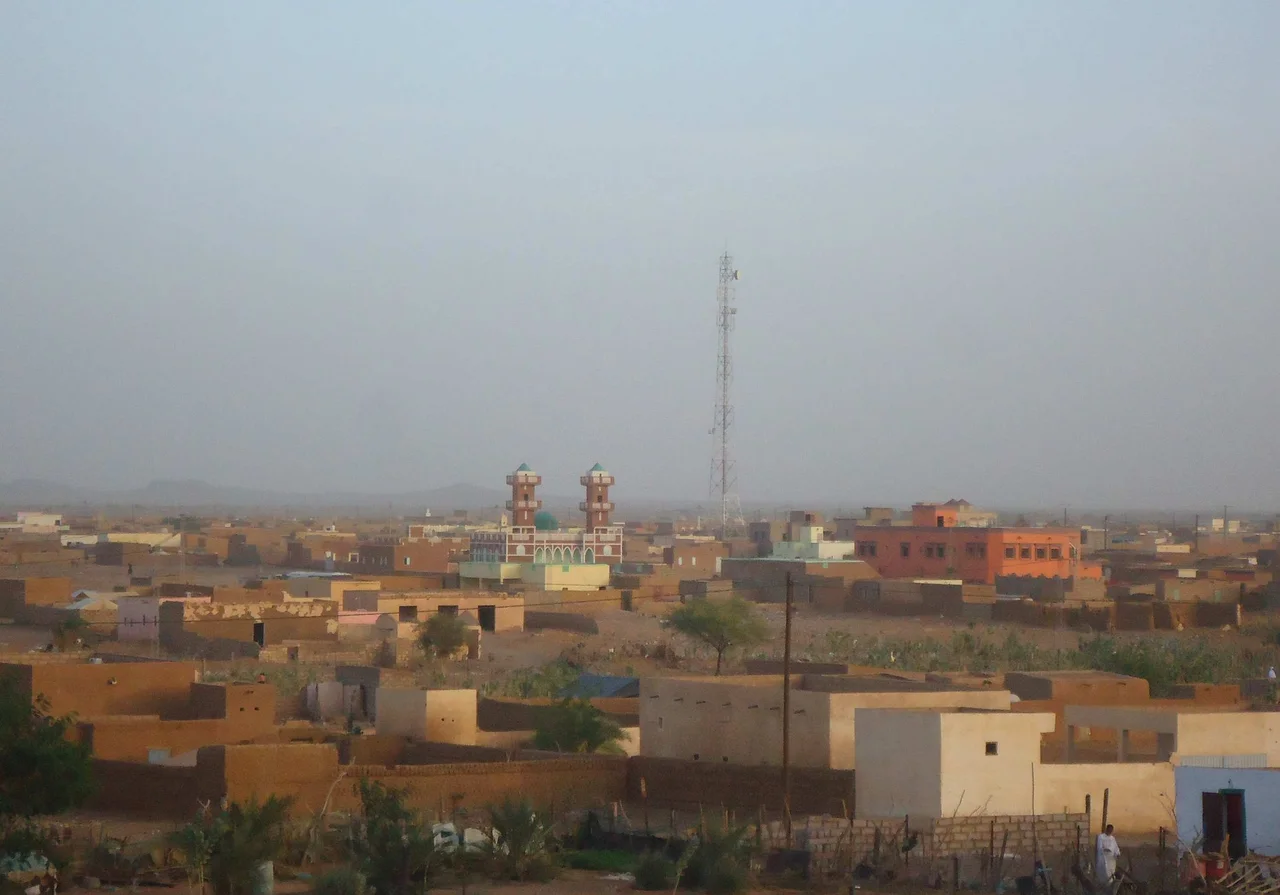

Akjoujt
The name is a promise the desert can barely keep. Akjoujt means "wells" in the local tongue, an oasis word for a place where water is the rarest thing of all and summer temperatures climb to a punishing 50 degrees Celsius. Yet people have been coming to this scrap of western Mauritania for three thousand years, and not only for water. They came for what lies under it: copper first, and much later gold, in ground that has tempted miners since the Bronze Age.
Three Thousand Years of Digging
Long before Mauritania was a country, Akjoujt was a mine. Archaeologists have found that as early as 1000 BC, people here were smelting copper, melting ore into metal under the desert sun. The archaeologist Nicole N. Lambert read those ancient slag heaps and furnace traces as evidence of something larger: a link between this early Saharan metallurgy and the movement of Berber peoples into the western Sahara and the Sahel. It is a remarkable thought. The same instinct that draws engineers to Akjoujt today, the certainty that there is metal in this ground worth the effort, drew their distant predecessors to the very same hillsides, working with charcoal and bellows instead of crushers and trucks.
When the Gold Turned Bitter
In 1992 the town's exhausted copper mine was given a second life as a gold mine, run by a government-backed company called Mines d'Or d'Akjoujt, or MORAK. The new venture leaned hard on volatile chemicals, and the desert began to register the cost. Livestock and other animals in the area started to die. Toxic runoff was held in a plastic-lined pond perilously close to the town's water supply, and despite warnings that the rains could spread the poison, the mining went on for four years. MORAK handed out free drinking water and ringed its site with fences, but the town's unease did not lift. The mine closed in 1996.
The Doctor Who Spoke Up
The hardest part of Akjoujt's gold story is not the chemistry but the silence around it. The government was accused of suppressing what it knew about the mine's dangers, and MORAK of firing workers who reported their illnesses. When the town's director of health proposed something as basic as medical screenings for the miners, he was reassigned to the distant capital, Nouakchott, his question answered by removal rather than reply. The people who paid the price were ordinary residents and laborers, breathing and drinking what the mine left behind, their warnings treated as inconveniences. By 2011 the authorities were finally planning to rebuild and expand the water system the mine had once endangered.
Capital of the Inchiri
For all its troubles, Akjoujt remains the beating heart of its region, the capital and only true city of the Inchiri. It is also a place that has sent one of its sons to the top of the nation: Mohamed Ould Abdel Aziz, a former president of Mauritania, was born here. Life is not easy. The heat alone would defeat most settlements, and the surrounding desert offers little. But Akjoujt endures the way desert towns do, organized around the search for what the ground will yield, water and copper and gold, each pulled from the same stubborn earth that gave the town its hopeful, thirsty name.
From the Air
Akjoujt sits at 19.74 degrees north, 14.38 degrees west, roughly 250 km northeast of Nouakchott in the desert interior of western Mauritania. From the air it reads as a compact grid of low buildings and mine workings set against open Saharan terrain, the disturbed ground of old copper and gold operations visible nearby. Nearest major airport is Nouakchott (GQNN) to the southwest; Nouadhibou (GQPP) lies farther northwest on the coast. Expect excellent visibility most of the year, punctuated by dust and haze; midday heat shimmer can blur detail, so morning light gives the clearest view.
Nearby Stories
- Erg Amatlich 14 km away
- Terjit 69 km away
- Maaden El-Irvane 73 km away
- Tasiast Gold Mine 98 km away
- Chami 134 km away
- Portendick 176 km away
- Ksar el Barka 200 km away