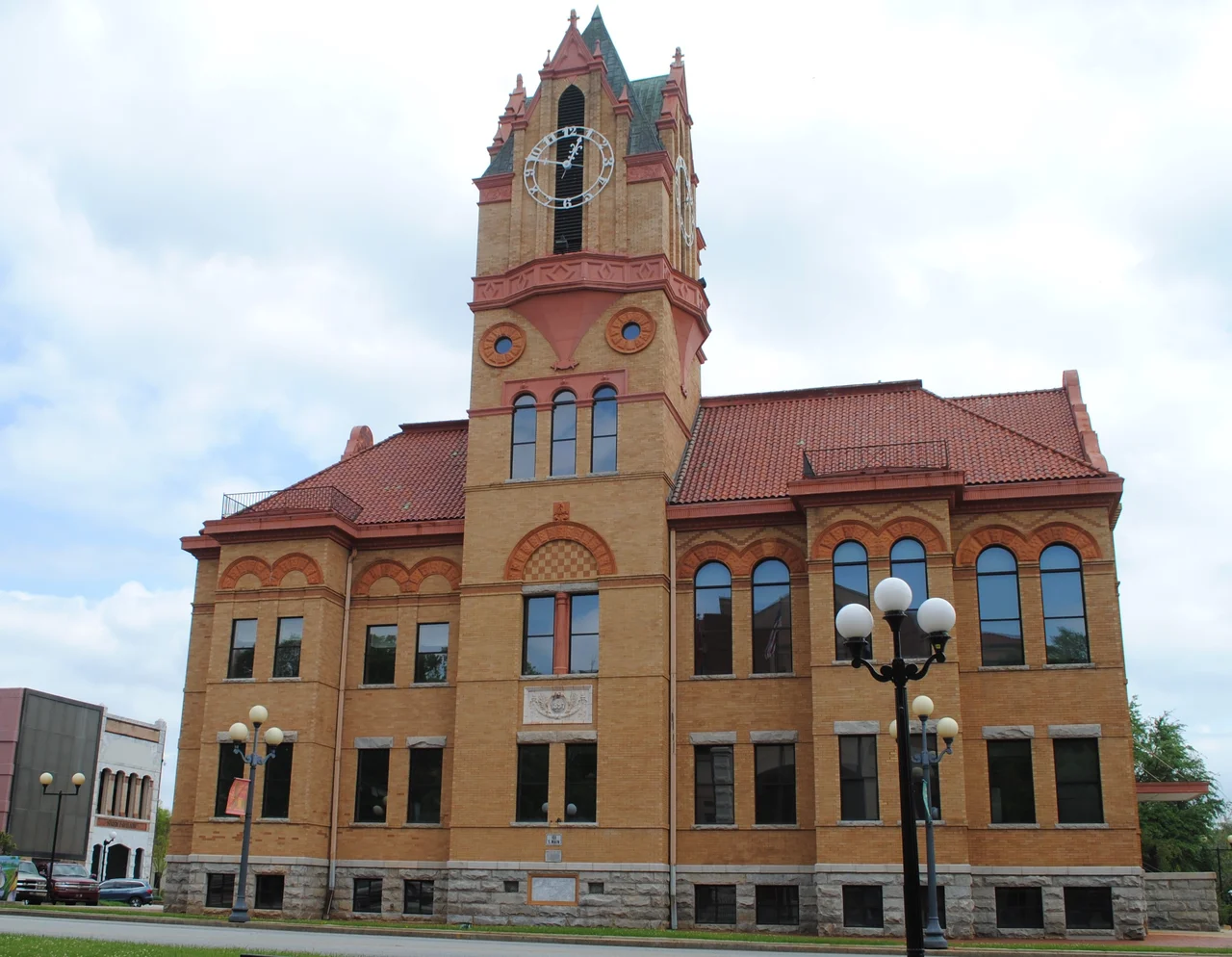

Anderson County, South Carolina
The county got its name from a soldier who never saw it on a map. Robert Anderson fought through the Southern campaign of the American Revolution, surviving battles like Cowpens and Eutaw Springs, and when South Carolina carved a new county out of the old Pendleton District in 1826, it took his name. He had owned land here. The territory he helped take from the Cherokee with rifle and treaty became Anderson County in northwestern South Carolina, where the Piedmont begins its slow rise toward the Blue Ridge. Today it is the kind of place where Bosch and Michelin run plants, BMW counts twenty-seven suppliers in the upstate, and Lake Hartwell's nearly 1,000 miles of shoreline draw fishermen, pontoon parties, and Clemson tailgaters every weekend.
How the Pendleton District Broke Apart
Before 1826 there was no Anderson County. The whole northwestern corner of South Carolina was the Pendleton District, a sprawling administrative unit that had been carved out of land ceded by the Cherokee in 1777 under the Treaty of DeWitt's Corner. The Cherokee had supported the British in the Revolution; the price of that choice was most of their upcountry hunting grounds. By the 1820s the district had grown too large to govern from one courthouse. The General Assembly split it two ways in 1826: Anderson County took the southeastern portion, Pickens took the northwest. Oconee came along a generation later in 1868, carved from Pickens County. Anderson named its county seat after itself, and both took the name of Robert Anderson, the general who had fought the Cherokee here in the war and helped settle the country he had helped clear.
Cotton, Confederacy, and a Famous Ammunition Plant
Cotton built the county's nineteenth century, with mills strung along every creek that could turn a turbine. During the Civil War the textile infrastructure was repurposed for the Confederacy, and Anderson became a center of ammunition production for the Confederate States Army. The Union army never reached this corner of South Carolina during the war, which preserved a lot of antebellum buildings that other regions lost. After the war, cotton came back, and the mills ran hard right through the Great Depression and into the postwar period. Then the same currents that hollowed out textile towns across the Carolinas reached Anderson, and by the 1990s the question was what would replace it. The answer, improbably, was Germany.
The Upstate Auto Cluster
BMW opened its Spartanburg plant in 1994. The decision to put a German luxury automaker in upstate South Carolina rather than Detroit or Tennessee changed everything within an hour's drive. Suppliers followed. Anderson County now hosts eleven automotive suppliers and 27 plastic-industry companies inside its borders alone; the broader upstate counts 27 BMW suppliers and 244 plastic firms across the ten northwestern counties. Bosch and Michelin both have major operations here. So does Glen Raven, which makes Sunbrella fabrics for boat covers and outdoor furniture seen on every dock from Lake Hartwell to Long Island. The 2022 county GDP was 9.1 billion dollars, around 44,670 per capita. The unemployment rate has hung around 3 percent for several years running.
A Lake That Doesn't Belong
Lake Hartwell wasn't supposed to be there. The U.S. Army Corps of Engineers dammed the Savannah River in 1962, drowning farmland, roads, churches, and graveyards across the South Carolina-Georgia line. What emerged was a 56,000-acre reservoir with almost 1,000 miles of shoreline, much of it now in Anderson County. The lake supplies hydropower, flood control, and one of the more popular recreational waters in the Southeast. Bass tournaments draw thousands. Clemson football Saturdays draw a fleet of pontoons that anchor in the coves below Memorial Stadium. Beneath the surface, the foundations of pre-1962 farmsteads still sit in the dark, and old roads run off into the water as if they expected to come back out somewhere.
Republican by Rote, Diversified by Necessity
Anderson County has voted Republican in every presidential election since 1984. Politically it is a reliable upstate red county, but economically it has been forced to think globally for thirty years. With twenty-two international companies inside the county lines, the dialect at the local plants includes German engineering, French rubber, and Japanese automotive supply chains. Anderson University, a private school with about 4,000 students, anchors the higher education scene. AnMed Health is the dominant medical employer. The county seat of Anderson itself sits at the heart of all this, but the place's character is not really urban. It's a fast-growing, manufacturing-tied, lake-adjacent stretch of the upstate where the past keeps showing up in the present: Revolutionary War general on the courthouse seal, Cherokee place names on the highway exits, German factories on the interstate.
From the Air
Located at approximately 34.52 degrees N, 82.64 degrees W in northwestern South Carolina, bordering Georgia along the Savannah River. County area 756 square miles. Recommended viewing altitude 5,000 to 8,000 feet AGL for the full sweep of Lake Hartwell and the Piedmont foothills. KAND (Anderson Regional Airport) sits southwest of the county seat. KCEU (Oconee County Regional / Clemson) is just northwest in adjacent Pickens County. Greenville-Spartanburg International (KGSP) lies about 30 nm northeast. Lake Hartwell to the west and southwest is the dominant visual landmark.
Nearby Stories
- Georgia Guidestones 11 km away
- Pickens County, South Carolina 12 km away
- 1988 Oakland Elementary School Shooting 13 km away
- Battle of Lindley's Fort 16 km away
- Camp Wadsworth 30 km away
- Tree That Owns Itself 36 km away
- Dahlonega, Georgia 61 km away
- Great Smoky Mountains National Park 90 km away