
Anderson Regional Airport
She landed on November 14, 1931, and a thousand people were waiting. Amelia Earhart had just flown into Anderson County Airport, a grass field used mostly for emergency landings and air mail, and the town of Anderson had decided to show up for her. She toured the streets, met with civic leaders, posed for photographs, and left within hours. The crowd dispersed. But within a year, the city had bought new land three miles from downtown and started building a proper airport. The visit became one of the most consequential afternoons in the airport's history, the kind of moment civic boosters spend decades trying to manufacture on purpose.
Grass, Mail, and a Small-Town Dream
Aviation came to Anderson County in 1927 with a grass strip designated as an emergency landing field. The location was practical: it sat along the air mail route between Atlanta and the eastern seaboard, and pilots needed somewhere to put down if weather or mechanical trouble forced them out of the sky. The strip began handling occasional air mail deliveries, and the people of Anderson got used to the idea that there was now a place where airplanes lived. It wasn't much of a place yet. No tower, no terminal, no runway lights worth speaking of. Just a flat patch of upstate grass with a windsock and someone keeping the cows out. Then Earhart landed.
Earhart's Afternoon
Why she stopped is the kind of question with a frustratingly mundane answer; she was traveling and Anderson was on the way, and the civic leaders of a small upstate town managed to get her to spend an afternoon with them. The thousand-person welcome was the local reaction. She walked the downtown, shook hands with the mayor and the chamber of commerce, met with women's groups, and made the kind of remarks famous aviators were expected to make about progress and the future of flight. By 1932, that future had a name and a budget. The city bought land three miles from downtown and started building. The civilian pilot training program of the Army Air Force was conducted at the new field during World War II, and students from Clemson College participated in the flight training program. Earhart vanished over the Pacific in 1937. The airport she had inspired kept growing without her.
Two Runways, No Tower
Today's Anderson Regional Airport covers 704 acres and has two paved runways. Runway 5/23 runs 6,002 feet of asphalt with the main approach used by jets; it was extended a thousand feet in 2007 to handle larger aircraft. Runway 17/35 is 4,996 feet. Two concrete helipads sit nearby. The airport still has no control tower and no scheduled airline service, but it is one of the busier general aviation fields in upstate South Carolina, drawing over 14,000 visitors a year and generating more than 13 million dollars annually. The old 1970-era terminal was demolished after a 6.71-million-dollar facelift announced in 2018 produced a new ADA-compliant general aviation terminal in its place. New Prospect Elementary School sits across the road. The school mascot is the Jets.
The Air Show and Its Crowd
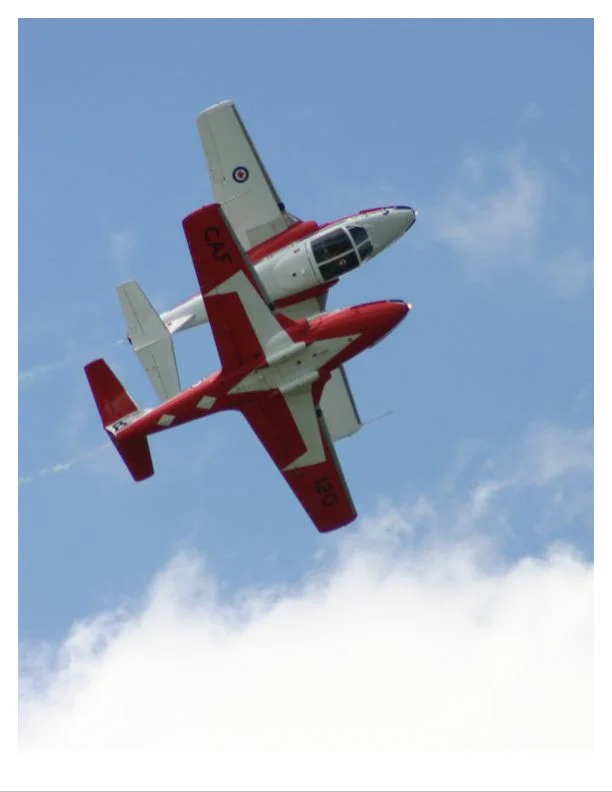
From 2009 to 2020, Anderson hosted an annual airshow that drew approximately 50,000 visitors a year across its Saturday-Sunday weekend. Admission was free. The Canadian Forces Snowbirds performed there. The crowds were the kind that small-airport managers dream about: families spread out on lawn chairs, military jets streaking low, vintage warbirds making slow passes overhead. The show ran for eleven years and then ended; the pandemic-era hiatus turned into a quieter decision not to bring it back. Eastern Airlines had served the airport with scheduled service starting in 1947, when DC-3s made the regional milk runs of the postwar era, but commercial service had been gone for decades by the time the airshow started. The Snowbirds were the closest the field would get to that kind of crowd.
The Other Stories the Airport Carries
Every general aviation field carries memories that are harder to celebrate. On December 9, 2004, a Diamond DA40 inbound to Anderson Regional was diverted by poor visibility; the airport's instrument landing system had been turned off during a runway extension project. The aircraft crashed en route to a neighboring airport, killing all three on board. On April 27, 2012, a Cirrus SR22 crashed on final approach about 600 yards short of the runway, killing the pilot and injuring his passenger. These are the kinds of incidents that small airports remember without monuments. The Anderson County Civil Air Patrol is headquartered here. Civil Air Patrol crews fly the same kind of search-and-rescue missions that have, on occasion, been launched for accidents at fields like this one. The airport keeps running, the runway gets used, and the school across the road still calls its kids the Jets.
From the Air
KAND, Anderson Regional Airport, sits at 34.4949 degrees N, 82.7090 degrees W in Anderson County, South Carolina, about 3 nm southwest of the city of Anderson. Field elevation 782 feet MSL. Two runways: 5/23 at 6,002 by 150 feet asphalt (primary), 17/35 at 4,996 by 150 feet asphalt. Two concrete helipads. CTAF/UNICOM 122.7. No control tower. Recommended pattern altitude 1,800 feet MSL. Nearest commercial airport is Greenville-Spartanburg International (KGSP) about 27 nm northeast. Oconee County Regional (KCEU) at Clemson is about 12 nm northwest. Lake Hartwell sits just west of the field, the dominant visual reference for any arrival from the west.
Nearby Stories
- Georgia Guidestones 11 km away
- Pickens County, South Carolina 12 km away
- 1988 Oakland Elementary School Shooting 13 km away
- Battle of Lindley's Fort 16 km away
- Camp Wadsworth 30 km away
- Tree That Owns Itself 36 km away
- Dahlonega, Georgia 61 km away
- Great Smoky Mountains National Park 90 km away