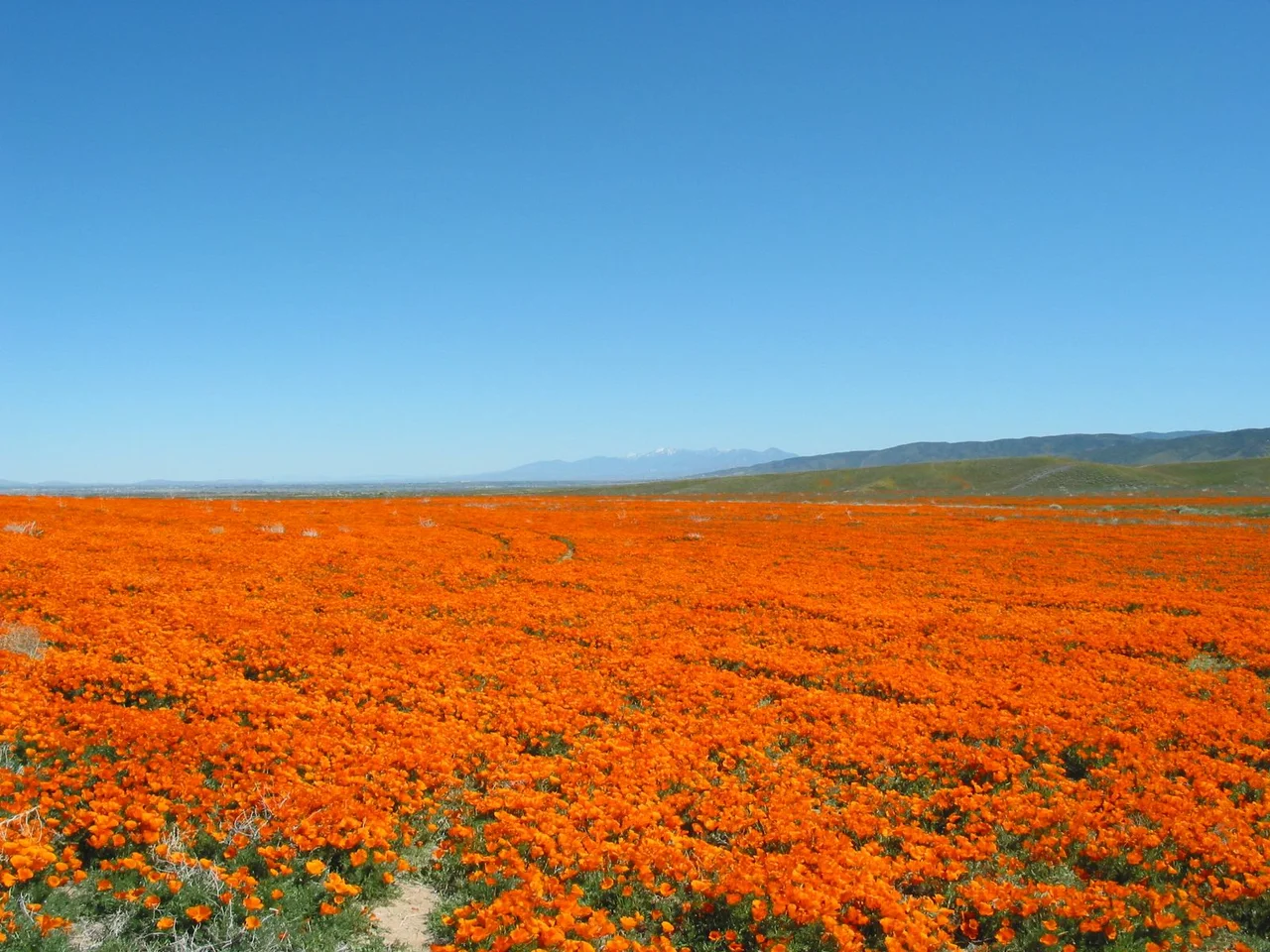

Antelope Valley California Poppy Reserve
The California poppy does not bloom on command. It blooms when the winter rains have come at the right time, in the right amounts, to saturate the soil of these high desert hillsides and trigger the chemistry the seeds have been waiting for. In good years — and there are good years, years when the conditions align — the hills west of Lancaster turn the color of fire from mid-February through mid-May, a blanket of orange-gold that is visible from the air and draws visitors from across the state. The reserve was created to protect the place where this reliably, if unpredictably, happens.
The Reserve
The Antelope Valley California Poppy Reserve lies 15 miles west of Lancaster, on the rural western edge of the Antelope Valley in northern Los Angeles County, just south of the Kern County line. Elevation ranges from 2,600 feet to higher on the reserve's ridgelines — high enough to accumulate meaningful winter rainfall while remaining within the Mojave Desert climate zone, where precipitation is scarce but concentrated in the winter months. The California Department of Parks and Recreation administers the reserve, which holds eight miles of trails, including a paved section for wheelchair access. The poppy fields are left entirely to nature: the park service does not water or fertilize the flowers, does not seed them, does not intervene in any way. Sheep and cattle, which once grazed the western Antelope Valley buttes into the early 1970s, are excluded.
The Poppy and What Grows Beside It
Eschscholzia californica — the California poppy — is the state flower, and this reserve was established specifically to protect the most consistent concentration of it anywhere in the state. The poppy shares the hillsides with other wildflowers: Owl's Clover, Lupine, Goldfields, Cream Cups, Coreopsis. In exceptional bloom years, the variety of color on the slopes can be striking — the orange of the poppies interrupted by swaths of purple lupine or the gold of Goldfields across wide patches of hillside. Pronghorn grazed these same valleys long before Europeans arrived; the valley itself was named for them, and they were gone by the 1880s, mostly to hunting. The poppy remains.
Reading the Season
The blooming forecast — whether a given year will produce a superbloom or a modest showing — depends almost entirely on the previous winter's rainfall. A wet winter, arriving after a dry fall that allowed the soil to absorb rain without runoff, typically produces the best displays. The reserve operates a phone hotline during bloom season with updates on current conditions, and the Jane S. Pinheiro Interpretive Center offers exhibits on the reserve's natural history. Visitors who arrive expecting a superbloom and find a sparse showing are experiencing the same uncertainty that the plants navigate every year: the desert gives what the winter gave it, and not one poppy more.
From the Air
Located at 34.7275°N, 118.395°W in the western Antelope Valley, approximately 15 miles west of Lancaster. The reserve sits on elevated desert terrain at approximately 2,600-3,000 feet MSL. Palmdale Regional Airport (KPMD) lies approximately 20 miles to the southeast. In spring bloom season, the orange hillsides are visible from altitude and can serve as a striking navigation landmark. The Antelope Valley's flat desert terrain provides good visibility except when strong Santa Ana or northerly desert winds create blowing dust.
Nearby Stories
- Fillmore and Western Railway 9.7 km away
- Placerita Canyon State Park 16 km away
- The Desert Tortoise Natural Area: Where the Slow Survive 39 km away
- Bakersfield: The Oil Town Where Country Music Got Its Sound 47 km away
- San Bernardino Train Disaster 53 km away
- Amgen 60 km away
- The Trona Pinnacles: California's Most Alien Landscape 80 km away
- Calico: The Ghost Town Walter Knott Saved 87 km away