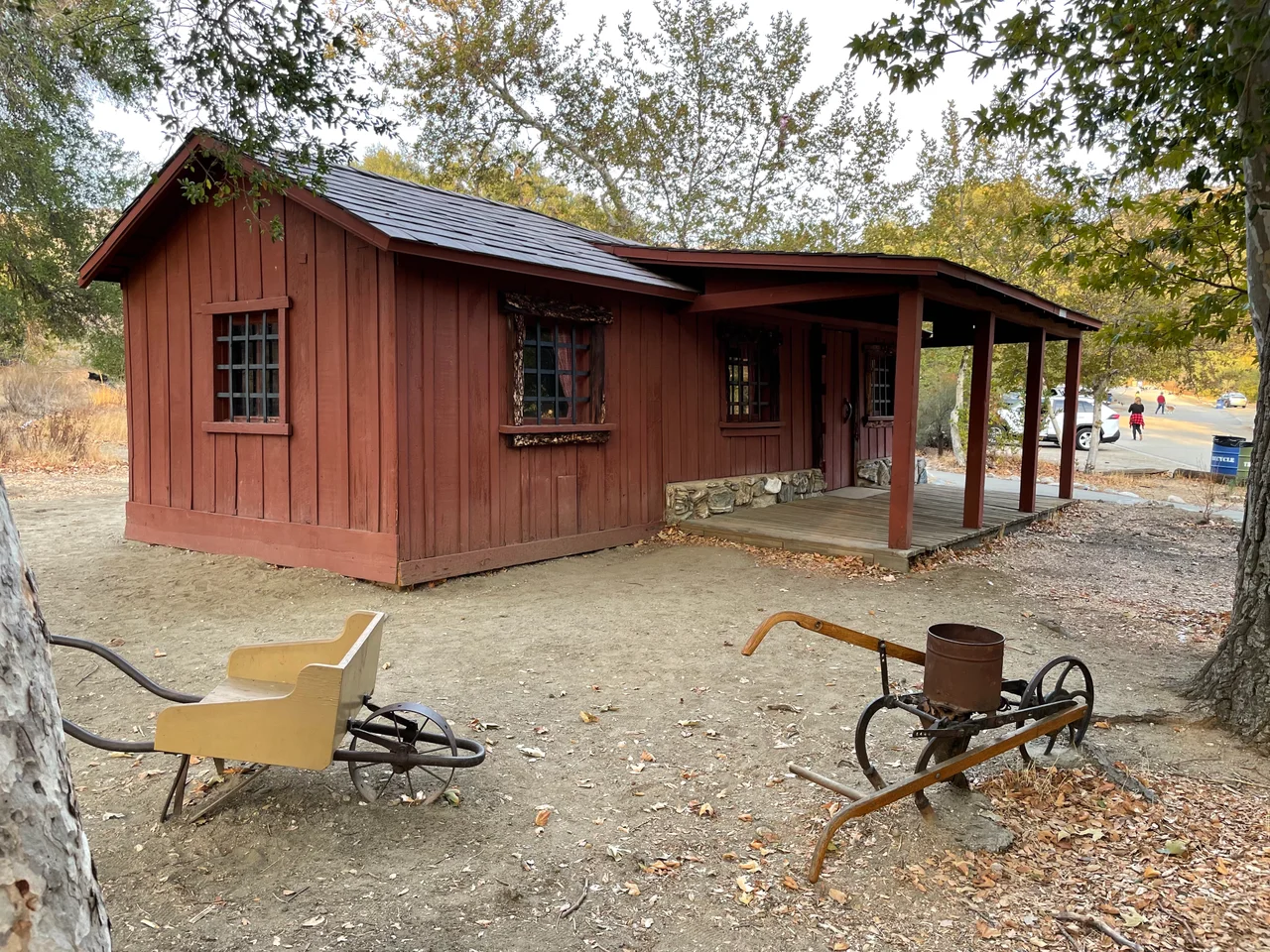

Placerita Canyon State Park
Francisco Lopez was digging wild onions under an oak tree in Placerita Canyon on March 9, 1842, when he found something in the roots. The flakes were gold. The discovery predated James Marshall's find at Sutter's Mill by six years, and it set off a modest rush of its own — Mexicans and Californios working the canyon and surrounding hillsides before the find was largely overtaken by the larger events of California's statehood and the 1848 Gold Rush that followed. The oak tree where Lopez made his discovery still stands in the canyon. It is called the Oak of the Golden Dream.
The Tataviam and the Canyon
The Tataviam people lived in the Placerita Canyon area and throughout the Santa Clarita Valley since time immemorial. Their presence in these mountains predates any written record by thousands of years — a fact worth holding alongside the more celebrated history of what a Mexican ranchero found in the roots of an oak one spring morning. The canyon sits on the north slope of the western San Gabriel Mountains, where the terrain transitions from chaparral hillsides to live oak woodland along the canyon floor. The area was part of Rancho San Francisco, a Mexican land grant, in 1842, and became part of the United States eight years later with California statehood. Oil was discovered in the canyon in 1900, adding another chapter to the resource history of a place where the ground has repeatedly surprised the people who worked it.
The Park Today
Placerita Canyon State Park preserves the canyon and its historic sites across several hundred acres of the western San Gabriel Mountain foothills. Seven miles of trails lead from the canyon floor into the mountains above, connecting to the larger network of San Gabriel Mountain routes. The Nature Center near the canyon entrance offers exhibits on the natural and cultural history of the area, including the 1842 gold discovery. The park is managed jointly by California State Parks and Los Angeles County Parks and Recreation. Just to the west of the park, Melody Ranch — a historic film studio that has served as a Western backlot since the 1920s — has operated under various names through the Hollywood era, giving the surrounding area an unusual density of history in a short stretch of foothill canyon.
What the Oak Remembers
The Oak of the Golden Dream is a California live oak, a species that can live for several centuries. Whether the specific tree that stood over Francisco Lopez in 1842 is the same tree visitors see today — or whether the monument marks the approximate location of an oak long since replaced by its successor — is less important than what the designation represents: a specific place where the ground gave something up, and where the history of California turned, quietly, six years before the event everyone remembers. The canyon is quiet on most days, the trail shaded by oaks, the creek running through it in wet years. The mountains above are the same mountains the Tataviam climbed, and the same mountains Lopez walked out of carrying gold.
From the Air
Located at 34.3758°N, 118.446°W on the north slope of the western San Gabriel Mountains, near the city of Newhall in the Santa Clarita Valley. The canyon entrance lies along Placerita Canyon Road east of Highway 14. Whiteman Airport (KWHP) lies approximately 18 miles to the south; Van Nuys Airport (KVNY) approximately 20 miles to the south. Terrain rises sharply in all directions — the San Gabriel Mountains to the south and east, the Santa Susana Mountains to the west. Maintain adequate altitude when flying in this area.
Nearby Stories
- Hollyhock House 0.6 km away
- Fillmore and Western Railway 8.5 km away
- War Eagle Field 10 km away
- Silverado Fire 41 km away
- San Bernardino Train Disaster 47 km away
- Channel Islands: The California That Cars Never Reached 54 km away
- Bakersfield: The Oil Town Where Country Music Got Its Sound 85 km away
- Calico: The Ghost Town Walter Knott Saved 90 km away