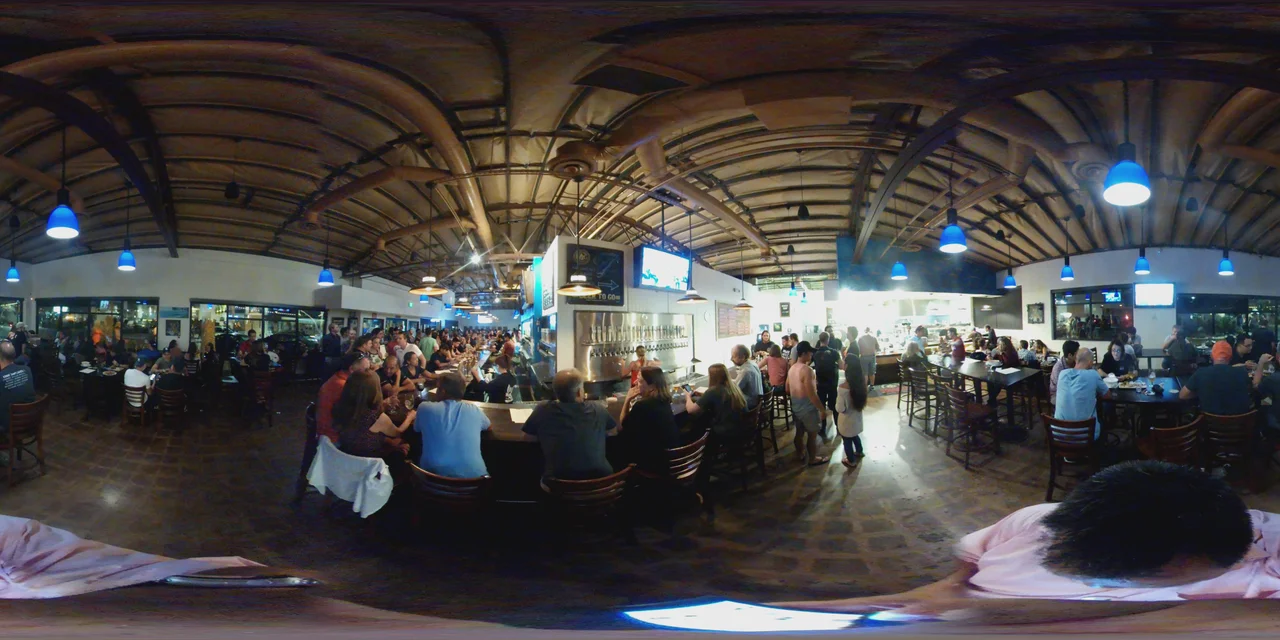

Ballast Point Brewing Company
In 1992, Jack White opened Home Brew Mart in a San Diego strip mall. He was selling ingredients and equipment to people who wanted to make beer at home. Four years later, he started making beer himself. The brewery he built — Ballast Point — would be acquired in 2015 for one billion dollars by Constellation Brands, the company that distributes Corona in the United States. The price was, at the time, the largest acquisition of a craft brewery in history.
A Shop That Became a Brewery
Home Brew Mart opened in Linda Vista, a neighborhood in the Mission Valley area of San Diego, with the straightforward purpose of supplying home brewers. The craft beer movement in the early 1990s was still finding its footing — the country had fewer than 500 breweries total when White opened his shop, compared to the thousands that would follow in the next two decades. The leap from supply store to production brewery came in 1996, when Ballast Point Brewing Company launched. The name came from Ballast Point, the peninsula at the entrance to San Diego Bay where Spanish ships once took on ballast — and where the USS San Diego struck a mine in 1918. The brewery's early beers were straightforward; its later ones would become nationally recognized.
Sculpin and the IPA Era
Ballast Point's Sculpin IPA, introduced in 2005, became the brewery's signature beer and one of the defining West Coast IPAs of its generation. Named for the sculpin fish common to San Diego's coastal waters — a species known for its venomous spines — the beer was bright, citrusy, and aggressively hopped in the manner that came to define the San Diego style. It won medals. It appeared on best-of lists. It entered wide distribution. The brewery expanded its facility on Home Brew Mart Lane in Linda Vista, added a tasting room, and became a destination. By the early 2010s, Ballast Point was producing tens of thousands of barrels annually and distributing across most of the country. San Diego had become a recognized capital of craft brewing, and Ballast Point was among its most prominent ambassadors.
The Billion-Dollar Sale
In November 2015, Constellation Brands acquired Ballast Point for approximately one billion dollars — roughly ten times the brewery's annual revenue. The price shocked the craft beer industry. Constellation, a large beverage alcohol company, was making a strategic bet that premium craft beer had room to grow alongside its existing portfolio of wine and imported lagers. For Ballast Point's founders and investors, the sale was a remarkable return on what had begun as a home-brew supply store. For craft beer purists, it raised familiar questions about independence and authenticity — questions the industry had been wrestling with since large companies began acquiring small breweries. Ballast Point continued operating under its name, but its independent status was gone.
After the Acquisition
The years after the acquisition were difficult. Constellation opened new Ballast Point taprooms in several cities, including Chicago, New York, and Walt Disney World. Sales declined. The craft beer market grew more crowded and more local — consumers were drinking beer made close to home rather than craft brands distributed nationally. In 2019, Constellation sold Ballast Point to Kings & Convicts Brewing for significantly less than the original purchase price. Further changes followed. By the early 2020s, Ballast Point had transitioned away from large-scale production and operated primarily as a contract brewer. The strip mall in Linda Vista where Jack White had opened his home-brew supply store in 1992 remained. The arc from home-brew shop to billion-dollar acquisition to contract brewer is a compressed version of the entire craft beer boom and its aftermath.
From the Air
Located at 32.899°N, 117.111°W in the Linda Vista neighborhood of San Diego, near the intersection of Morena Boulevard and the I-8 corridor. Mission Valley runs to the south; San Diego Bay and Lindbergh Field (KSAN) are approximately 6 miles to the southwest. The Linda Vista mesa — a broad, flat neighborhood plateau — is visible from the air between the valley cuts of Mission Valley and Rose Canyon.
Nearby Stories
- Fort Rosecrans National Cemetery 0.7 km away
- Antique Gas and Steam Engine Museum 1.2 km away
- Rancho Valle de San José (Portilla) 3.3 km away
- Barrett Dam 4.9 km away
- Inaja Band of Diegueno Mission Indians 9.2 km away
- Laguna Art Museum 36 km away
- Catalina Casino 67 km away
- USS Higbee 207 km away