
Battle of Iruya
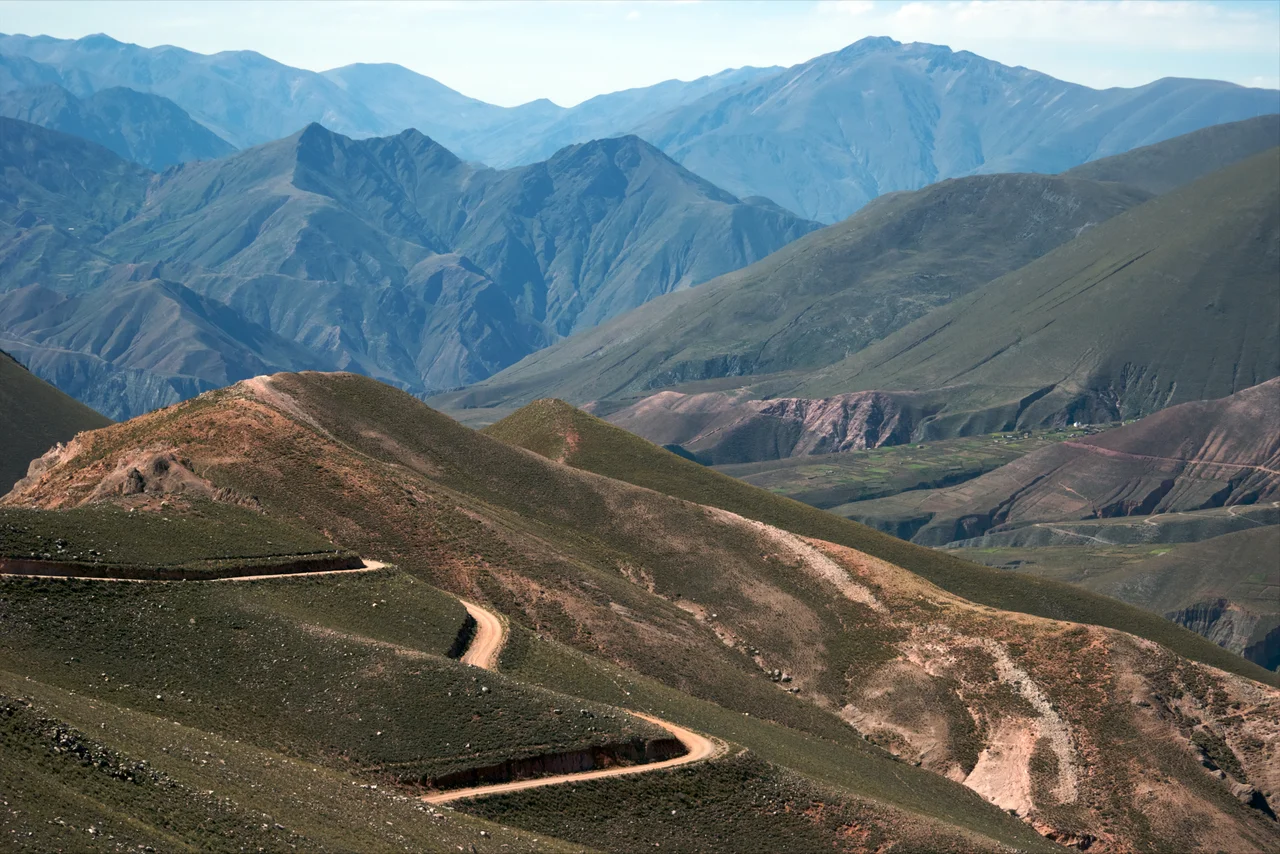
Iruya is hard to reach even now. The village clings to a fold in the mountains east of the Quebrada de Humahuaca, at the end of a road so steep and switchbacked it is famous in its own right. In June of 1838, that same difficult ground decided a battle. An Argentine column marched on the village expecting to flank an enemy army from behind. Instead the terrain slowed them, the defenders dug in, and after four hours of repeated, exhausting assaults, the attackers had spent their ammunition and their strength and could do nothing but withdraw. The Battle of Iruya was small, remote, and brief. For the men who fought it, it was four hours that felt like a lifetime.
A War Over a Border
The fight at Iruya belonged to a larger conflict, the Tarija War. It had begun in 1837 when Juan Manuel de Rosas, handling the Argentine Confederation's foreign affairs, declared war on Marshal Andrés de Santa Cruz, the ruler of the Peru-Bolivian Confederation, over disputed territory and Santa Cruz's support for Rosas's domestic enemies. By 1838 Peru-Bolivian forces had pushed into northern Argentina. In May, General Alejandro Heredia assembled an army of 3,500 men in three divisions to drive them out. The plan was a pincer: one division would pin the enemy at the border while another swung around to strike from behind. Iruya sat squarely on the path of that second, encircling blow.
The Long March In
Colonel Manuel Virto drew the task of leading the flanking column. He gathered his force - the Libertad Battalion, the Restauradores under Colonel Esteban Iriarte, fifty infantrymen of Jujuy under Captain Bernardo Lagos, and a company of Voltígeros - and set out from San Andrés on June 5, climbing toward the high pass of the Abra de Zenta. By June 10 they were near Iruya. Scouts sent ahead came back with discouraging news: the roads toward the village were treacherous, too difficult for splitting the force into two columns as a proper encirclement would require. Virto made a hard call. He kept his men together in a single mass and pressed on, giving up the maneuver the whole plan had depended on.
Four Hours Against the Trenches
At dawn on June 11 the column halted about 1,200 meters from Iruya, held by Colonel Timoteo Raña's garrison. After a failed parley, Virto ordered the attack, and at 7:30 in the morning the firing began. The opening rush went well - his infantry overran the defenders posted on the road, who fled toward the village throwing down their weapons, and the cavalry joined the pursuit to the parapets ringing the town. There the advance stalled. The defenders held entrenched positions, and Virto's men threw themselves against the trenches again and again, each assault costing more than it gained. The pressure told - the defenders pulled back to fallback positions - but the line never broke.
When Courage Is Not Enough
After four hours, Virto faced the arithmetic of exhaustion. His soldiers had charged the entrenchments repeatedly, and their ammunition was nearly gone. The risks of each new assault now plainly outweighed any ground it might win. He ordered the firing to stop and pulled his men back as best he could toward San Andrés. The defenders did not pursue. There was no rout, no slaughter at the end - only tired men, on both sides, lowering their weapons over a village that the attackers could not take. It counted as a Peru-Bolivian victory, won less by maneuver than by the simple fact that one side could endure the mountain and the other could not.
The Cost and the Consequence
The failure at Iruya had a long shadow. Days later, the other Argentine division under Colonel Gregorio Paz met disaster at Tarija, and the broader campaign defeat came at the Battle of Montenegro on June 24, 1838, which effectively settled the location of Bolivia's southwestern border. Northern Argentina lay open, its defenders unable to mount effective resistance. The soldiers who fought at Iruya - the conscripts of Jujuy, the men of the Libertad and Restauradores battalions, and the defenders behind the parapets - were not statistics in a border dispute. They were highland men sent to fight over a remote village, and many of them did not come home from a battle that, in the end, changed little for them and much for the maps.
From the Air
The Battle of Iruya was fought at the mountain village of Iruya, at 22.79°S, 65.22°W, in the rugged highlands of northern Salta Province near the Jujuy border, northeast of the Quebrada de Humahuaca. The village sits high - well above 2,700 m - among steep, deeply incised valleys, terrain that shaped the 1838 battle and still makes the famously winding access road a landmark in itself. From the air the area reads as tightly folded mountains cut by narrow ravines, with Iruya tucked into a fold above a river. Best viewed 10,000-14,000 ft AGL in the dry season (May-October) when skies are clear; the extreme relief demands careful terrain awareness and generous clearance. Nearest major airport: Gobernador Horacio Guzmán International, San Salvador de Jujuy (SASJ), about 120 km southwest; Martín Miguel de Güemes International at Salta (SASA) lies roughly 200 km south. Afternoon convection and reduced visibility are common in the November-April wet season.
Nearby Stories
- Baritú National Park 21 km away
- Quebrada de Humahuaca 24 km away
- Salinas Grandes 69 km away
- Cerro Tuzgle 162 km away
- El Rey National Park 186 km away
- Sol de Mañana 207 km away
- Laguna Colorada 266 km away
- Filadelfia 481 km away