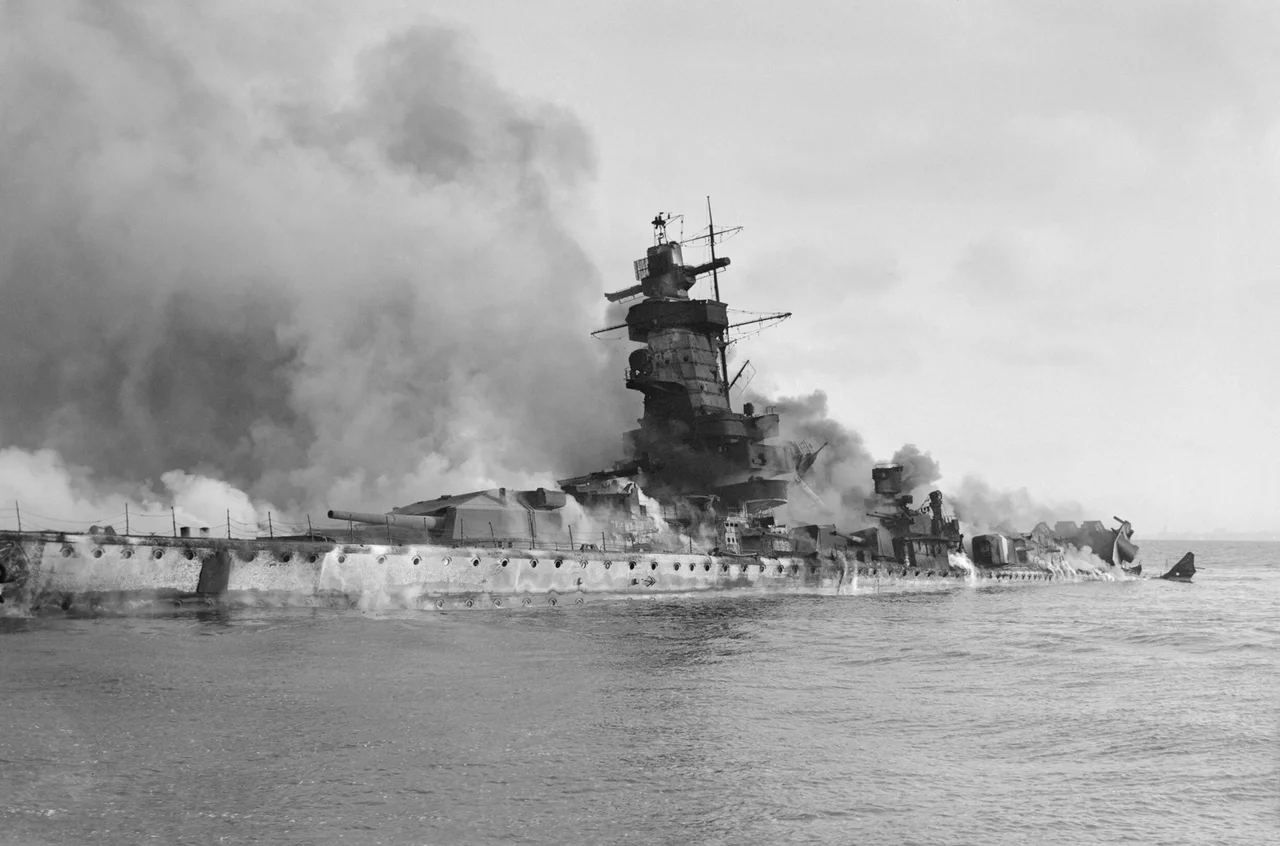

Battle of the River Plate
Just before dawn on 13 December 1939, lookouts aboard the German pocket battleship Admiral Graf Spee spotted masts on the horizon and assumed they belonged to destroyers guarding a fat merchant convoy. Captain Hans Langsdorff turned to attack. He was wrong about what he was seeing. Those masts belonged to three Royal Navy cruisers, and the decision he made in that gray light off the River Plate would, within four days, cost him his ship and, within a week, his life. This was the opening naval clash of the Second World War, fought in the brown tidal waters where the Río de la Plata separates Argentina from Uruguay.
The Gentleman Raider
Langsdorff was not the caricature of a Nazi commander. Sent into the South Atlantic in August 1939, before war was even declared, he spent the autumn hunting Allied merchant ships and sank nine of them, more than fifty thousand tons of shipping, without killing a single sailor. His method was deliberate: stop the vessel, take the entire crew aboard the Graf Spee or her supply ship, and only then send the empty hull to the bottom. Prisoners later spoke of being treated with courtesy. It was commerce raiding waged almost as a point of honor, by a captain who seemed to believe a war could be fought without slaughter. The reckoning came at dawn, when three British cruisers caught up with him at last.
Ninety Minutes of Fire
The Graf Spee opened up first, her six eleven-inch guns hammering the heavy cruiser Exeter from nearly eleven miles out. The smaller British ships, Ajax and Achilles, the latter crewed largely by New Zealanders, darted in close to split the German gunner's attention. Exeter took the worst of it. Within minutes a shell wrecked her bridge, killing or wounding nearly everyone on it; the ship was steered for the rest of the action by sailors passing orders hand to hand through a chain of messengers. Yet a single eight-inch shell from the battered Exeter found the one wound that mattered, punching through two decks and destroying the system that processed the German ship's fuel. By the time the guns fell silent, 108 men lay dead across both fleets, 36 of them aboard the Graf Spee. The German ship had won the battle on points, and lost the war in an instant. She could no longer make the long voyage home.
The Trap of Montevideo
Crippled, the Graf Spee limped into Montevideo, capital of neutral Uruguay, to seek repairs. It was the wrong harbor. Uruguay leaned toward the Allies, and international law gave Langsdorff only seventy-two hours before he would have to leave or be interned. British diplomats, chief among them Eugen Millington-Drake, worked the rules and the rumor mill brilliantly, planting the impression that a powerful fleet was massing just over the horizon to finish the job. In truth, only the damaged Ajax and Achilles waited outside. Langsdorff could not know that. Convinced he was sailing his nine hundred surviving men into a slaughter, he refused to spend their lives on a hopeless run for the open sea.
A Captain's Choice
On the evening of 17 December, with a crowd estimated at twenty thousand lining the Montevideo waterfront, the Graf Spee moved out into the roadstead carrying only Langsdorff and about forty men. They set the scuttling charges, took to the boats, and watched their ship erupt in flame and settle into the shallow estuary. Three days later, in a Buenos Aires hotel room, Langsdorff lay down on the ship's battle ensign and shot himself. He had written first to his family and his superiors, accepting responsibility alone. Many of his crew never went home; they married, raised families, and grew old in Montevideo and across the river in Argentina, helped by local communities of German descent. The German dead still rest under simple crosses in Montevideo's Cementerio del Norte.
What the Estuary Holds
The wreck never fully disappeared. For decades after the scuttling her superstructure broke the surface, and even now the tip of a mast still shows above the muddy water of the Plate. Pieces of her have been raised over the years, an anchor, a secondary gun mount, a great two-meter bronze eagle clutching a swastika, hauled up in 2006 with the emblem discreetly covered as it cleared the water out of respect for those who remembered what it stood for. German veterans long objected to disturbing the site, regarding it as a war grave that should be left in peace. Far from here, four peaks in New Zealand's Southern Alps carry the names Achilles, Exeter, Ajax, and Graf Spee, a quiet memorial to the morning the war first came to the South Atlantic.
From the Air
The battle was fought in the South Atlantic approaches to the Río de la Plata estuary, centered roughly near 34.5°S, 50°W and trending northwest toward Montevideo at 34.9°S, 56.2°W. The wreck of the Graf Spee lies in shallow water in the estuary off Montevideo, where a mast tip remains visible. The estuary itself is an enormous brown-water funnel between Argentina and Uruguay, an unmistakable visual landmark from altitude where the muddy Plate meets the blue Atlantic. Nearest major airports: Carrasco International, Montevideo (SUMU) on the Uruguayan shore; Aeroparque Jorge Newbery (SABE) and Ezeiza (SAEZ) across the estuary at Buenos Aires. Recommended viewing altitude FL100 or above for clear weather over the river mouth; sediment plumes are most striking in good light. Memorials to the battle, including the Graf Spee anchor, stand in Montevideo's port.
Nearby Stories
- Praia do Cassino 297 km away
- Taim Ecological Station 321 km away
- Lagoa do Peixe National Park 331 km away
- Cabo Polonio 388 km away
- La Paloma 471 km away
- Santa Catarina Island 689 km away
- German Submarine U-513 754 km away
- South Georgia Island 2413 km away