
Battle of Tullich
Charles II was a king without a country. Three years after his coronation army was destroyed at Worcester, he was wandering the continent on borrowed money while Oliver Cromwell's Commonwealth governed Scotland with garrisons and gunpowder. The Highlands had not accepted this. Through the winter of 1653, a Royalist rising under William Cunningham, 9th Earl of Glencairn, had been moving through the eastern glens, gathering chiefs and harrying Cromwell's troops. On 10 February 1654, the Commonwealth general Robert Lilburne caught up with them near a pass close to Tullich, four miles east of Ballater. Holding the pass that day was a young Highland chief named Ewen Cameron of Lochiel. He had perhaps a few hundred clansmen, and his orders were simple: do not let the Commonwealth through.
After Worcester
The Battle of Worcester in September 1651 broke the last Royalist field army of the British Civil Wars. Charles II escaped via the famous oak tree at Boscobel and weeks of disguised flight to the continent. The Parliament of England then moved to absorb Scotland into the new Commonwealth - a project resisted, sometimes openly and sometimes covertly, across the country but most fiercely in the Highlands. In early 1653, the exiled king made William Cunningham, 9th Earl of Glencairn, temporary commander of Royalist forces in Scotland until Major-General John Middleton could cross from the Dutch Republic with arms and instructions. Glencairn's commission was not to hold ground - he had no ground to hold - but to keep the cause alive by guerilla campaign, drawing chiefs and clansmen into a network of resistance that could survive until a real army could be raised.
Ewen Cameron of Lochiel
Among the chiefs who joined the rising was Ewen Cameron of Lochiel, head of Clan Cameron, one of the most warlike clans of the Western Highlands. By February 1654, Glencairn's force was in the Eastern Highlands, harrying Commonwealth occupation troops along the Dee. Ewen and his Camerons had been positioned as a screen near Tullich - a small settlement that sat on the natural east-west route through Royal Deeside, where the road squeezed through ground that favoured a defender. Their job was to protect Glencairn's main army from a surprise attack from the east. When Robert Lilburne's Commonwealth column appeared, pursuing Glencairn after a long march, Ewen sent a warning back to the main body and prepared to hold the pass alone.
Holding the Pass
The Commonwealth troops outnumbered the Camerons substantially. They struck the pass and were thrown back; they attacked again and again, and were repulsed each time. The terrain favoured the Highlanders - narrow ground that prevented the Commonwealth from bringing its weight to bear, broken country that made flanking moves slow and predictable. Lilburne's men tried to work around the Royalist position, but the attempts failed. Hours passed. The Camerons inflicted heavy losses on attackers who could not maintain momentum. Eventually Ewen received orders to retreat. He withdrew, opening the pass - but by then the Commonwealth column was too depleted and exhausted to advance any further. Lilburne fell back toward Inverness. Ewen, judging the moment, switched from defender to pursuer. The Camerons harassed the retreating column for several miles, turning what had been a defensive stand into a small triumph.
Deliverer of the Highland Army
When Ewen returned to Glencairn's camp, the army hailed him as 'The Deliverer of the Highland Army.' A letter of personal praise eventually reached him from Charles II in exile - a small but real reward in a war that offered very few. The wider rising was less fortunate. By 1655 Cromwell's commander George Monck had broken Glencairn's coalition through a mix of military pressure and political division among the chiefs. Charles II did not regain his throne until 1660, after Cromwell's death and the collapse of the Protectorate. By then the Battle of Tullich was already passing into the kind of Highland memory that lives in songs and family papers rather than national histories. Ian Mitchell's later book On the Trail of Queen Victoria in the Highlands carries an unusual dedication - 'to the Unknown Soldiers of Cromwell's Republic who fell in the Battle of Tullich near Ballater in 1654.' The unknown dead of every battle have at least this much: they fought for what they believed in, and somebody, somewhere, remembered.
From the Air
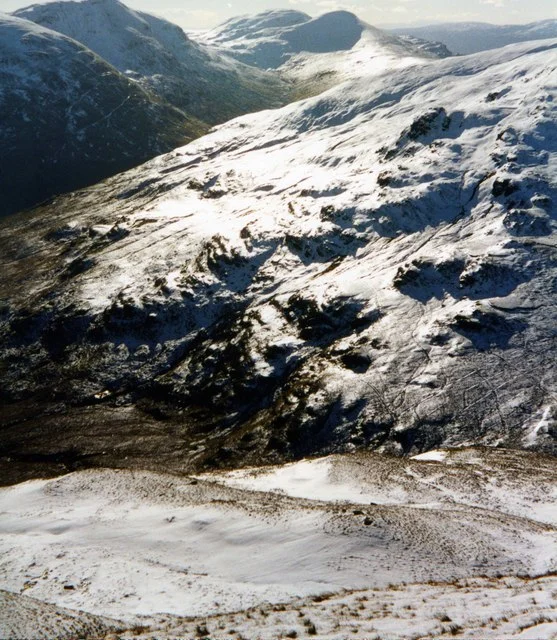
Coordinates 57.0597N, 3.0454W. The battle site is near Tullich, about 4 miles east of Ballater along the Dee in Royal Deeside. Recommended viewing altitude 3,500-5,500 ft AGL. The historical pass ran through ground where the river valley narrows between rising slopes. From the air, look for the village of Tullich on the north bank of the Dee, with the A93 following the valley east-west. The site sits between Ballater (west) and Aboyne (further east). The ruined chapel of Tullich, with its Pictish symbol stones, is nearby. Nearest ICAO: Aberdeen (EGPD) 40 nm east; Inverness (EGPE) 70 nm northwest. Mountain weather in Royal Deeside changes quickly - low cloud and rain showers are typical year-round.
Nearby Stories
- Crathes Castle 2.6 km away
- Battle of Harlaw 3 km away
- Grantown-on-Spey 6.2 km away
- Edradour Distillery 14 km away
- Auchindoun Castle 14 km away
- Dunnichen Stone 16 km away
- Bell Rock Lighthouse 39 km away