
Battle of Unison
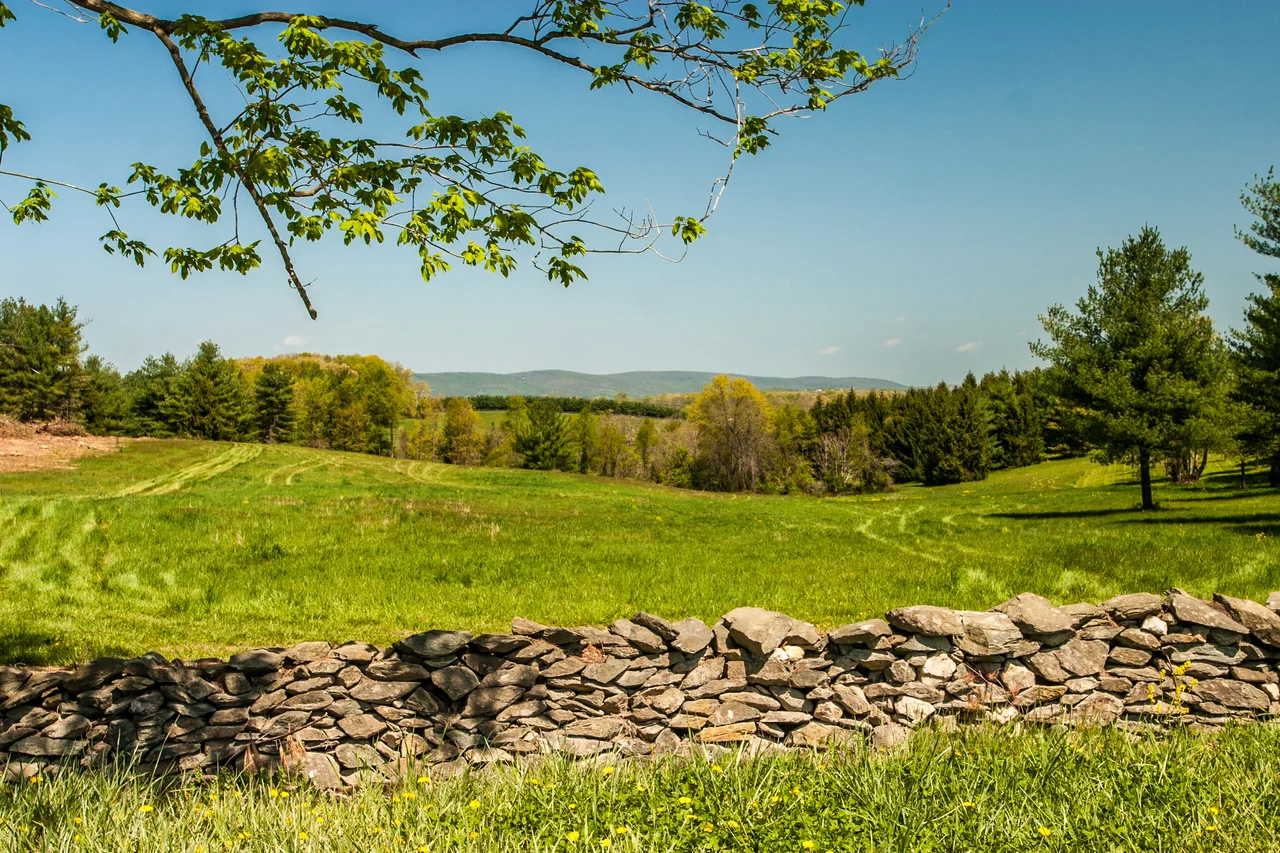
There is a particular kind of fighting that happens in stone-wall country, and Loudoun Valley in the autumn of 1862 was made for it. The fields are small and rectangular. The walls are chest-high. Horsemen who try to charge across them either jump or die, and the men crouched behind them can fire all afternoon. For three days in early November, J.E.B. Stuart used those walls to do what cavalry are not generally supposed to do - hold ground against an entire army. He was buying time for Robert E. Lee, who was trying to slip the Army of Northern Virginia south of the Rappahannock before George McClellan could pin him against it. Stuart bought the time. He also lost the ground. Riding with him through the fight was a young scout from Powhatan County who had never seen this part of Virginia before. His name was John Mosby, and he was paying close attention.
After Antietam
The bloodiest single day in American history had ended six weeks earlier on a creek in Maryland. Lee had escaped back across the Potomac. For most of October 1862, the Army of Northern Virginia rested and refitted in the Shenandoah Valley while McClellan, characteristically cautious, watched from the north bank. On October 10, Stuart led 1,800 cavalry around the Federal army for the second time in a year, riding all the way to Chambersburg, Pennsylvania, and bringing back nearly 1,200 captured horses. It was a humiliation McClellan could not quite recover from. On October 27 he finally moved, crossing the Potomac near Berlin, Maryland, and Harpers Ferry, then easing south down the Loudoun Valley. Lee shifted east of the Blue Ridge to meet him. Stuart's job was to keep McClellan blind and slow - to fight just hard enough to delay him, then slip away to fight again the next day.
Three Days of Running Fights
On October 31, Stuart and Brigadier General Fitzhugh Lee crossed the Blue Ridge into Loudoun and bivouacked at Bloomfield. The next day they rode the Snicker's Gap Turnpike toward Mountville, where they surprised about a hundred Federals, killed or captured nearly all of them, and chased the rest east toward Aldie. At Aldie they ran into a much larger force. Union artillery on the heights west of town drove them back. Stuart refused to leave. He brought up Major John Pelham's horse artillery - Pelham was 24 years old, blond, and so deadly with a gun that Lee would later call him the gallant Pelham - and Pelham's batteries outdueled the Federal guns until the Union force pulled out. Then a false report arrived: Federals coming up Stuart's rear. He turned to meet the threat, found nothing, and finally retired to Bloomfield with pickets posted east and west. The next morning his eastern pickets at Philomont were attacked. Stuart pulled back to Unison.
Stone Walls at Unison
Unison sits at a country crossroads, and on November 2 it became, for one long day, the seam between two armies. Stuart positioned himself there to keep Federal cavalry away from D.H. Hill's infantry at Upperville. The Federals declined to press the attack that day. By eight the next morning they had reconsidered. Union infantry, cavalry, and artillery came at Stuart's position together. He dismounted his troopers and put them behind the stone walls that quartered the fields around Unison, and he placed Pelham's guns on the heights west of town. From that position a Confederate cavalry brigade held off most of a Federal corps for the better part of a November day. The walls and the artillery did the work. Stuart's troopers, fighting on foot for once, did not flinch. When darkness came and a concerted Federal push finally broke the line, Stuart pulled back to Upperville, leaving his seriously wounded behind because he could not carry them fast enough.
What Mosby Learned
Stuart planned to renew the fight the next morning. His scouts soon reported that the whole of the Federal army was bearing down on him, so he crossed the Blue Ridge at Ashby's Gap to rejoin Stonewall Jackson in the Shenandoah Valley. He had lost the field at Unison. He had also accomplished his mission. Lee's army was safely south of the Rappahannock. McClellan, who had spent five days moving twelve miles, was relieved of command within the week. The Federal march from Antietam had been so slow that even Lincoln had run out of patience. Riding through it all with Stuart was a young scout and staff officer named John Singleton Mosby. He had grown up in Powhatan County and never seen Loudoun. Now he watched the country - the stone walls, the wooded gaps, the farmhouses and barns where partisans could vanish - and he filed it away. Within a year he would be operating in this same county on his own. The Loudoun Valley would become Mosby's Confederacy. The lessons of Unison were the foundation.
From the Air
The village of Unison sits at 39.04 degrees N, 77.79 degrees W in western Loudoun County, Virginia, between the Bull Run Mountains and the Blue Ridge. The Snicker's Gap Turnpike survives as Route 734. From 3,500 to 5,000 feet AGL the stone-wall fields and the Blue Ridge escarpment to the west show clearly in low light. Nearby airports include Leesburg Executive (KJYO) about 12 miles east and Winchester Regional (KOKV) 20 miles west across the Blue Ridge. Watch for Class B airspace from Dulles to the east.
Nearby Stories
- Battle of Fairfax Court House (1861) 3 km away
- Warrenton Training Center 13 km away
- Great Falls, Virginia 13 km away
- Antietam: The Day America Lost 23,000 Men 15 km away
- Luray Caverns: The Cave Where Rocks Make Music 22 km away
- Literary Hall 40 km away
- Gettysburg: The Three Days That Decided America 49 km away
- Gravity Hill 73 km away