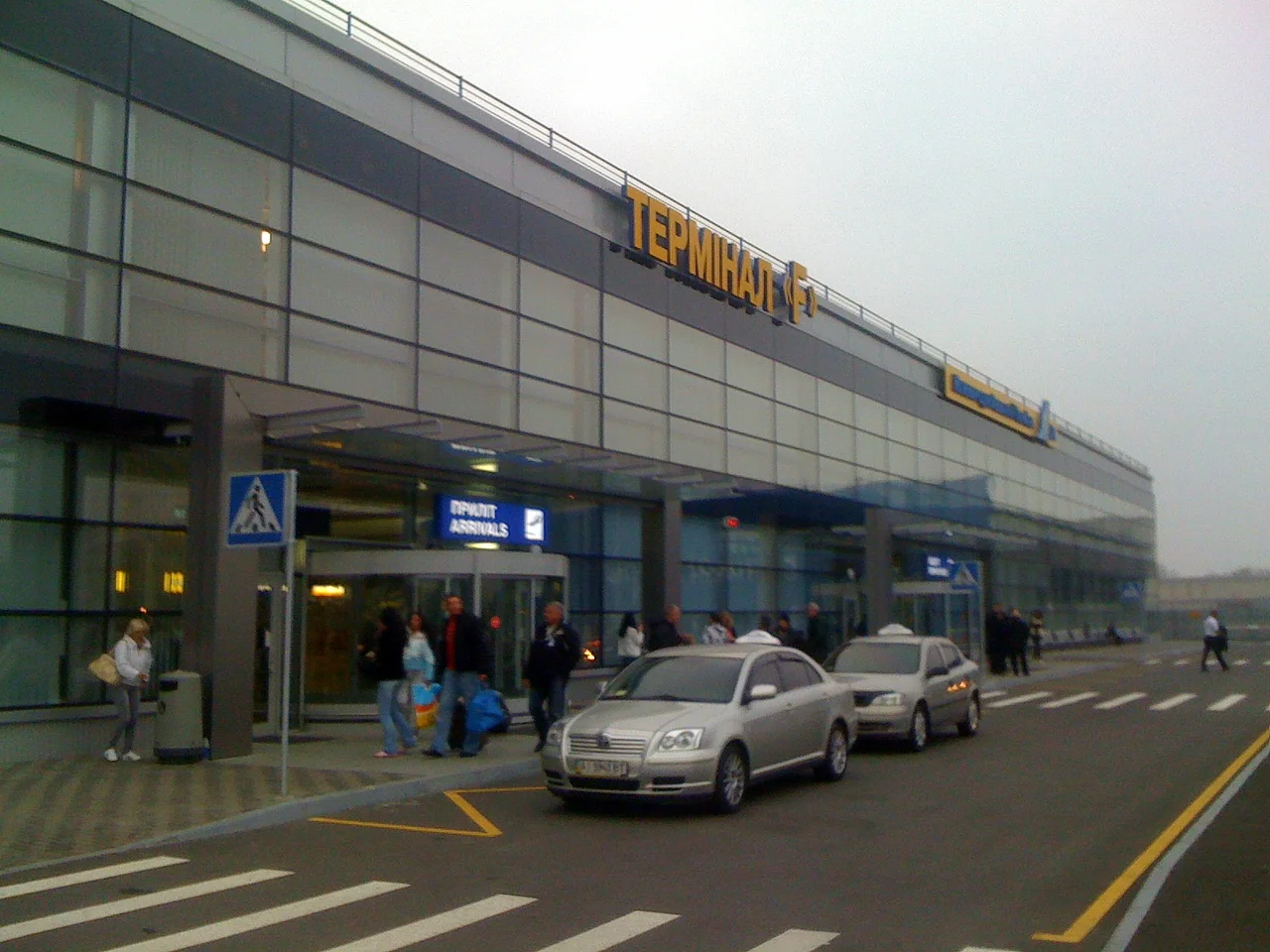

Boryspil
Most travelers know Boryspil for a single reason: it is the last place their feet touch the ground before they reach Kyiv, or the first after they leave. Ukraine's largest and busiest airport carries the city's name, and millions pass through it without ever seeing the town beyond the runways. But Boryspil is far older than any airport. Its name may reach back a thousand years to a prince named Boris, murdered in the dynastic bloodshed that followed the death of Vladimir the Great, or it may echo the Greek name for the great river that shaped this land. Either way, the field where it stands has been fought over, ruled, starved, and occupied for a millennium - and it produced the man who gave Ukraine the words of its national anthem.
Borys's Field
The story of the name begins in blood. When Vladimir the Great died, his sons turned on one another in the internecine wars of 1015 to 1019, and two of them - Boris and Gleb - were murdered. Official sources hold that the city takes its name from Prince Boris. The historian Petro Tronko recorded a local tradition: that the place was once called Borysove pole, Borys's field, after the prince died there in 1015 at the hands of hired assassins as he returned from a campaign against the Pechenegs. Others argue the name is Greek, stitched from Borysthenes, the ancient name for the Dnieper, and polis, the word for city. The settlement is first mentioned in those same violent years of 1015, then again in the 12th century as part of Kyivan Rus. History and legend have blurred together here for a very long time.
Crowns, Cossacks, and a Coat of Arms
After the Mongol invasion, this land became part of the Grand Duchy of Lithuania, and later, following the Union of Lublin, passed to the Polish Crown. In 1596 King Sigismund III Vasa turned Boryspil into a royal estate, and that same year it received Magdeburg rights - the self-governing charter of a real town - and built a ratusz, a town hall. Its coat of arms bore the image of Saint Stanislaus. The town changed hands among Cossack seniors and Polish noble families, held for a time by the Zolkiewski family until the great Khmelnytsky Uprising of 1648 swept the old order away. A century later, in 1752, the Hetman Kyrylo Rozumovsky granted the town in eternal possession to his brother-in-law, a Kyiv colonel. Boryspil was, for centuries, a prize passed between the powerful.
Hunger, Occupation, and a Poet
The 20th century pressed hard on Boryspil. During the Holodomor, the Soviet-organized famine, official figures alone record 5,739 deaths in a single year between 1933 and 1934 - among them 266 infants under a year old, a number that hints at grief far beyond any statistic. During World War II, the German army occupied the town from 1941 to 1943, and the airfield of what is now Boryspil International Airport was used as a camp for prisoners of war. Fierce fighting marked both its capture and its liberation. Yet this same town gave the country something enduring: Pavlo Chubynsky, born here in 1839, wrote the poem that became the Ukrainian national anthem. Boryspil finally received official city status in 1956, and today its runways make it the front door to the capital.
From the Air
Boryspil lies at about 50.35 N, 30.95 E, just east of Kyiv. From the air its defining feature is unmistakable: Boryspil International Airport (UKBB / KBP), Ukraine's largest, with its long parallel runways and terminals southeast of the city center. Look also for the modernized motorway threading between Kyiv and the airport, and the Saints Boris and Gleb Church in town. This is controlled airspace - the airport is the primary landing point for the region.
Nearby Stories
- Lysa Hora 4.7 km away
- Zalissia National Nature Park 19 km away
- Trakhtemyriv 21 km away
- Bila Tserkva 48 km away
- 1995 Borodianka Mid-Air Collision 49 km away
- Nizhyn 50 km away
- Cherkasy 79 km away
- Kruty Heroes Memorial 88 km away