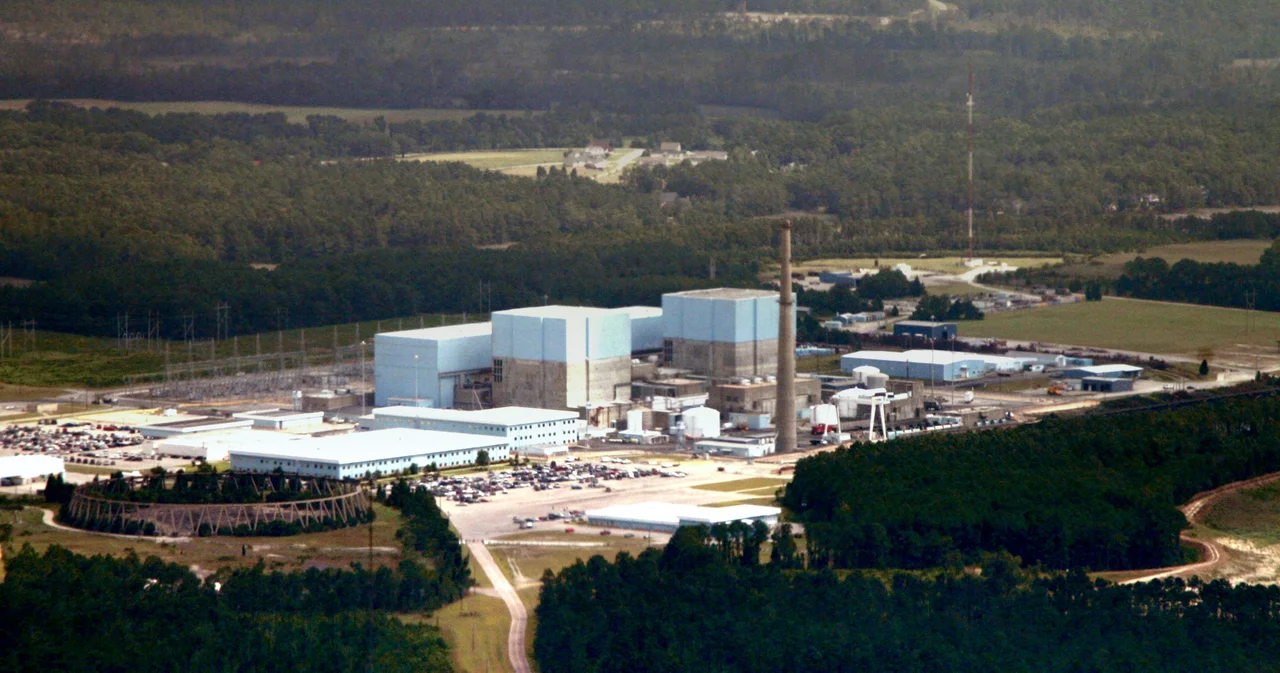

Brunswick Nuclear Generating Station
The concrete foundation of the unfinished cooling tower is a parking lot. That is the most Brunswick Nuclear Plant detail there is. Engineers started two towers, then realized the Cape Fear River and the Atlantic Ocean would do the cooling for them. So they stopped. The Brunswick plant opened in 1975 with two General Electric boiling water reactors, sitting on 1,200 acres about five miles from the ocean, twenty feet above sea level, adjacent to wetlands, woodlands, and the city of Southport. The cooling system pulls water from the Cape Fear River, runs it through the reactors, and pushes it five miles east through a canal that passes beneath the Intracoastal Waterway before discharging into the Atlantic off Oak Island.
The Geography Solved Its Own Problem
Boiling water reactors need cooling, and most American nuclear plants solve that with massive hyperboloid cooling towers, the iconic shapes that show up in stock photos of the industry. The original Brunswick design called for two. Construction of the foundations began. Then the engineers looked at the site and noticed something obvious: they were five miles from an ocean. Why build cooling towers when the Atlantic is right there? The plan changed. The plant draws cooling water from the tidal Cape Fear, runs it through a filtration system that removes fish, crustaceans, and debris, sends it through the reactor cooling loop, and pushes it east through a five-mile canal. The canal passes under the Intracoastal Waterway via a culvert, then opens into the Atlantic. One cooling tower foundation became a parking lot.
Two Reactors, Two Owners
Brunswick contains two General Electric boiling water reactors. Duke Energy Progress is the majority owner at 81.7 percent and operates the plant. The North Carolina Eastern Municipal Power Agency owned the remaining 18.3 percent until 2015, when Duke completed the purchase of that share. Duke Energy itself was the result of a 2012 merger with Progress Energy, which is why the operating subsidiary still carries the Progress name. The plant is licensed by the Nuclear Regulatory Commission and remains one of two nuclear stations in North Carolina, the other being McGuire near Charlotte. Together they provide a substantial fraction of the state's baseload power.
Living Next to a Reactor
The Nuclear Regulatory Commission defines two emergency planning zones around each plant: a ten-mile plume exposure pathway zone and a fifty-mile ingestion pathway zone. The 2010 U.S. population within ten miles of Brunswick was 36,413, up 105.3 percent in a single decade as Brunswick County boomed. The fifty-mile population was 468,953, up 39.6 percent since 2000. Wilmington, eighteen miles from the city center, is the largest population within the zone. Most residents within ten miles do not think about the plant most days. The cooling canal is a recognizable strip on satellite images. The reactor buildings are visible from boats on the Cape Fear, blocky and pale against the marsh.
Earthquakes and Hurricanes
The Nuclear Regulatory Commission's August 2010 study estimated the annual risk of an earthquake intense enough to cause core damage at Brunswick at 1 in 66,667. Hurricanes are the more present concern. On September 13, 2018, Duke Energy shut down both Brunswick reactors ahead of tropical-storm-force winds from Hurricane Florence. Brunswick was the only one of nine nuclear plants in Florence's path that shut down. The storm dumped historic rainfall on southeastern North Carolina, and the planned shutdown allowed plant operators to ride out the weather without dealing with grid disturbances or transmission damage. The reactors restarted afterward without incident. The hurricane preparedness procedure has been used multiple times in the decades since the plant opened.
The Education Center
In 2023, Duke Energy opened the Brunswick Energy and Education Center at 8520 River Road SE in Southport, on the plant grounds. The center features exhibits on nuclear science, electricity, carbon-free energy, and the operation of the Brunswick Nuclear Plant. Scheduled visitors can take demonstrations, watch films, and have career discussions with plant staff. It is Duke Energy's fourth such center, after facilities in Huntersville, New Hill, and Seneca, South Carolina. The center reflects an industry trying to rebuild public engagement after decades of suspicion. Whether the message lands depends on the visitor. The parking lot, sitting on a never-built cooling tower foundation, is unlikely to be on the tour.
From the Air
The Brunswick Nuclear Plant sits at 33.96 degrees N, 78.01 degrees W, about five miles north of Southport along the west bank of the Cape Fear River. Cape Fear Regional Jetport (KSUT) is six miles southwest on Oak Island; Wilmington International (KILM) is 15 miles north. From cruising altitude, look for the two large reactor buildings, the absence of cooling towers, and the long, straight cooling canal running east toward the Atlantic through marsh and pine. Active FAA restrictions apply to overflight: a temporary flight restriction is generally in effect around nuclear power plants and pilots should consult NOTAMs. Maintain at least 2,000 feet AGL within 5 nautical miles and avoid loitering.
Nearby Stories
- Lake Waccamaw, North Carolina 11 km away
- Ocean Isle Beach house fire 14 km away
- Topsail Beach, North Carolina 25 km away
- Marine Corps Base Camp Lejeune 35 km away
- HMT Bedfordshire 63 km away
- Huntington Beach State Park 67 km away
- Atalaya Castle 114 km away
- Mercury-Redstone 4 707 km away