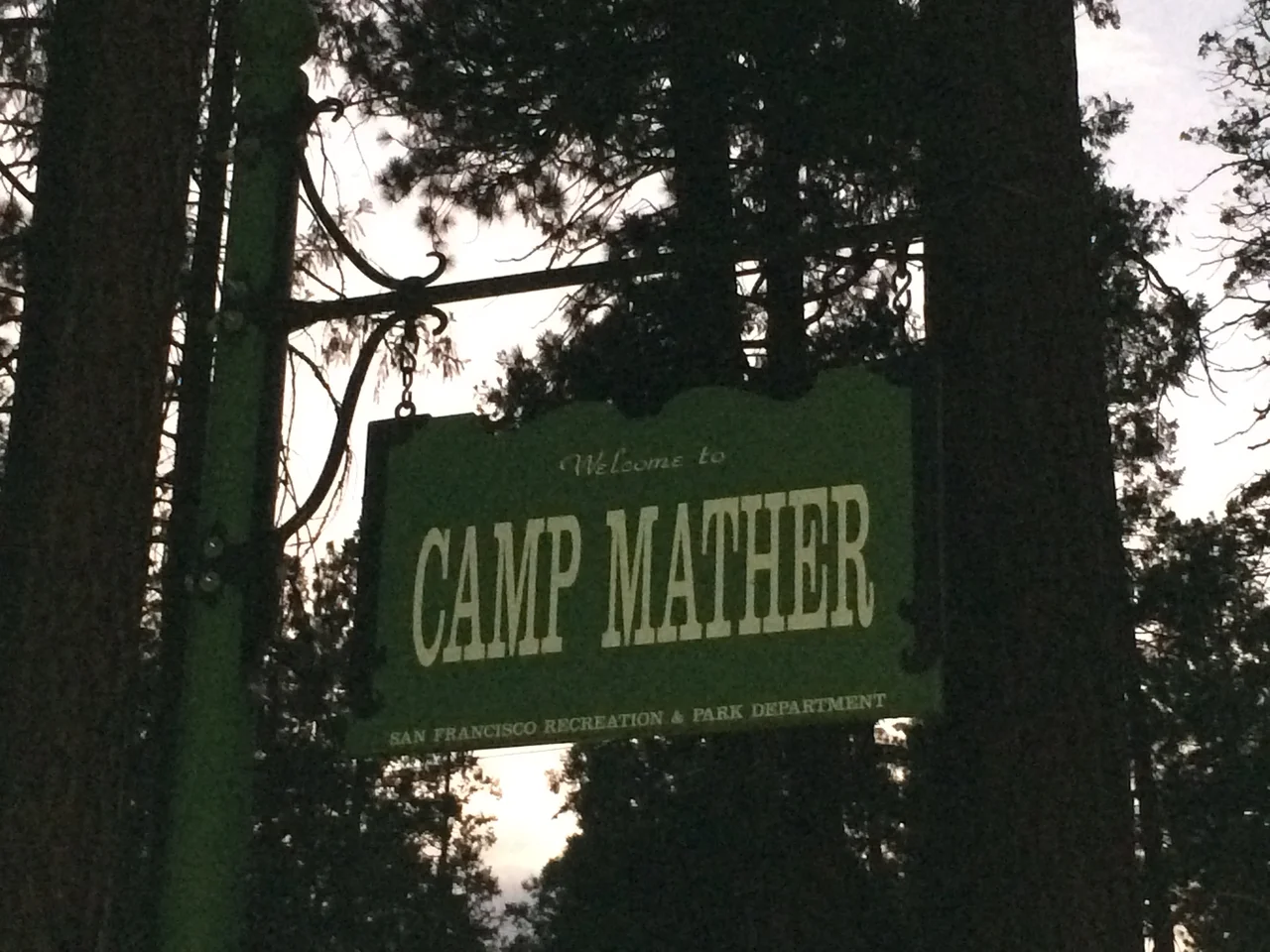

Camp Mather
The first cabins at Camp Mather were San Francisco polling booths. Someone had the idea to haul them 170 miles into the Sierra Nevada, set them among the pines at 4,520 feet, and call them summer housing. It was 1924, the camp had opened on July 5 with 35 repurposed structures from a defunct sawmill operation, and improvisation was the founding philosophy. A century later, Camp Mather still belongs to San Francisco - 337 acres of Sierra forest run by the city's Recreation and Parks Department, welcoming nearly 10,000 campers each summer for week-long stays that feel more like a family reunion than a municipal program. The camp celebrated its 100th birthday on July 5, 2024, and the waiting list for reservations remains so long that securing a spot feels like winning a modest lottery.
Hog Ranch and the Dam Builders
Long before it was a camp, this land belonged to the Miwok people. Dozens of acorn mortar sites scattered across the property suggest a connection stretching back somewhere between 2,000 and 10,000 years. The first European settlers arrived in the 1850s: brothers Cyrill and Dorilas Smith, who purchased the land from the federal government for $1.25 per acre and ran sheep between their Merced lowlands and this Sierra property each summer. The hogs and bacon they sold at the ranch gave it a name that stuck - Hog Ranch. Cyrill built a log cabin that still stands. When the City of San Francisco went looking for a reliable water supply in 1909, it bought the Smith properties for $550 per acre and began transforming the pastoral ranch into an industrial staging ground. The Hetch Hetchy Railroad reached the site in late 1917, and Hog Ranch became a lumber mill and railway station feeding the construction of O'Shaughnessy Dam. A large gravel pit was dug for the project. When the construction crews left, the pit filled with water on its own. They named it Birch Lake, and children still swim in it.
Margaret Morgan's Deadline
The camp exists because Mary Margaret Morgan would not accept delay. In 1923, Morgan - the first woman on the San Francisco Playgrounds Commission - argued that the city should offer its residents a Sierra summer camp, just as Berkeley and Oakland already did for theirs. Other commissioners saw merit in studying the idea further. Morgan insisted the camp open the following summer. She won. The camp first bore the name Margaret Maryland Playground before adopting the name of its railroad station: Mather. The 328-acre camp opened with those 35 sawmill-era cabins, and when San Francisco determined that its new reservoir would allow no recreational water activities, the tourism lodge that had been operating nearby collapsed. The city took over the Hetch Hetchy Lodge's lease, adding 22 more cabins to the inventory. The Carnegie Cabin arrived in 1926, built for botanist Harvey Monroe Hall, who was studying how plants grew at different elevations - Camp Mather's 4,610-foot altitude served as one of his three test sites.
Fire, Virus, and Resilience
Camp Mather has a talent for survival. The 1996 Ackerson Fire burned large areas to the north and east, closing the camp in mid-August. The 2013 Rim Fire - one of the largest in Yosemite's recorded history - burned to the camp's very edges, destroying only one building while sparing the historic Carnegie Cabin and Hog Ranch Cabin. The Ferguson Fire disrupted operations in 2018. Between the fires came viral outbreaks: a suspected norovirus hit campers and staff in 2011, and another outbreak struck in 2018. The COVID-19 pandemic shut the camp entirely in 2020 and 2021, and staff outbreaks cost three full weeks of the 2022 season. Smoke from the Washburn Fire claimed part of another week that same summer. Through it all, the camp has reopened each time, repaired what burned, cleaned what sickened, and posted the next summer's reservation calendar. The pattern of disruption and return has become part of the camp's identity - a place that persists because the families who come here will not let it go.
Lanyards, Talent Shows, and Birch Lake
What happens at Camp Mather is deliberately simple. Campers make lanyards, tie friendship bracelets, tie-dye shirts, and compete in talent shows that draw crowds from across the camp. Naturalists lead hikes through the surrounding forest. A ropes course offers daily challenges. The swimming pool and Birch Lake - that repurposed gravel pit - are staffed with multiple lifeguards during all open hours. Three meals a day are served in the dining hall, and the rhythm of communal eating shapes the social life of each week. A horse corral offered rides on a concession basis through 2023. The camp runs Senior Camp for older adults at the bookends of the season and an Inclusion Week designed to welcome people with disabilities. Free and reduced-cost camping has been offered to lower-income San Francisco residents, keeping the camp true to its public-park origins. Having operated for a century, many families now count three or four generations of Camp Mather alumni.
Strawberry Fields and Saturday Departures
For three decades, Camp Mather's biggest cultural event was not a parks department program but a music festival. The Strawberry Music Festival drew 7,000 people to each of its two annual long weekends - Memorial Day and Labor Day - from 1982 until 2013, when the Rim Fire ended its run. Festival-goers did not use the cabins; they spread across the grounds in tents and RVs, transforming a family camp into a bluegrass-and-folk gathering that became a Northern California institution. The festival's departure left a quieter camp but did not diminish demand. The seven-night camp week was shortened to six nights in 2016, shifting arrivals from Saturday to Sunday. Camps 1 through 9 were relocated between 2018 and 2019. Two new staff dormitories went up in 2019. The changes are incremental, practical, almost invisible - which is exactly how Camp Mather has always evolved. A century of polling-booth cabins, gravel-pit lakes, and multigenerational loyalty has proven that a city camp in the Sierra does not need to be grand. It just needs to keep opening.
From the Air
Located at 37.88°N, 119.86°W in the Sierra Nevada foothills, east of San Francisco. The camp sits at an elevation of 4,520 feet near the western boundary of Yosemite National Park. Birch Lake is visible as a small body of water within the camp grounds. Best viewed at 3,000-5,000 ft AGL. Nearby landmarks include O'Shaughnessy Dam and Hetch Hetchy Reservoir to the east. Nearest airports: Pine Mountain Lake Airport (E45), approximately 20 miles west; Columbia Airport (O22), about 30 miles southwest. The former Hetch Hetchy Railroad grade may be traceable as a linear clearing through the forest.
Nearby Stories
- New Exchequer Dam: The Wall That Buried a Town 4.6 km away
- Tuolumne City Memorial Museum 9 km away
- Pioneer Yosemite History Center 9.8 km away
- Bodie Ghost Town 16 km away
- Mono Lake: Where Salt Towers Rise From Dying Water 21 km away
- Indian Grinding Rock State Historic Park 47 km away
- The Bristlecone Pines: The Oldest Living Things on Earth 92 km away
- Gold Country 100 km away