
Cardiff-by-the-Sea
J. Frank Cullen filed the subdivision plat. His wife Esther named it. Esther Cullen had been born in Cardiff, Wales, and when she looked at the low coastal bluffs and the sea views of the new Southern California development her husband was planning, she saw something familiar enough. The town has been Cardiff-by-the-Sea ever since — a name that announces its origins and its aspirations in the same breath, honoring one seaside city while claiming membership in the company of another.
Kumeyaay Land, Then a Subdivision
Long before the Cullens arrived, the coastal corridor between what is now Encinitas and Solana Beach was Kumeyaay territory. The Kumeyaay people had inhabited the San Diego coastal region for thousands of years, moving seasonally between the coast and inland areas, harvesting the abundant marine resources of the lagoons and the kelp forests offshore. European contact, the Spanish mission system, and subsequent waves of American settlement progressively displaced the Kumeyaay from their coastal lands. By the late nineteenth century, the coast here was being surveyed for agricultural development — tomatoes, flowers, and avocados would become significant local industries. The Cullen subdivision in 1911 was one node in a broader transformation of the coastal landscape from Native territory to agricultural land to beach town.
The Reef and the Waves
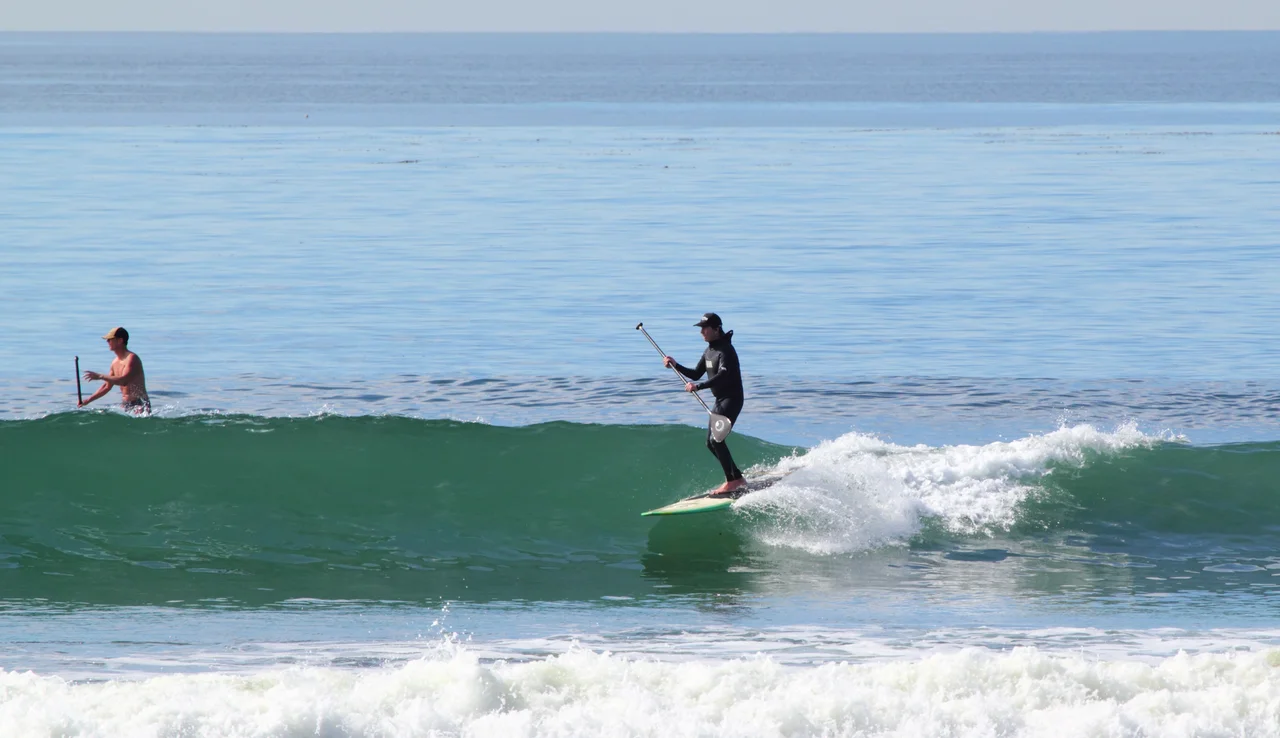
Cardiff Reef, the surf break that runs along the shoreline south of the San Elijo Lagoon, is one of the most consistent reef breaks on the Southern California coast. The reef is formed by a layer of relatively flat cobble and rock that produces waves with a particular quality — longer rides, more predictable breaks — that has made it a destination for surfers since the sport arrived in Southern California in the mid-twentieth century. Professional surfer Rob Machado, one of the most recognized figures in the world of surfing, grew up in Cardiff. The lagoon to the north, San Elijo, provides a protected tidal wetland that contrasts with the exposed reef to the south. Both are characteristic features of the coastal ecology here — the lagoon filtering runoff and nurturing bird life, the reef shaping wave energy into something surfable.
An Unincorporated Town
Cardiff-by-the-Sea is a community within the city of Encinitas, which incorporated in 1986 by merging Cardiff with four other coastal communities: Encinitas, Olivenhain, Leucadia, and New Encinitas. Before incorporation, Cardiff was an unincorporated community in San Diego County — a status that gave it a certain autonomy but left it without its own municipal government. The merger into Encinitas preserved the separate identities of the communities even while creating a unified city. Cardiff has its own zip code, its own school district, and — most importantly to its residents — its own name. The 'by-the-Sea' suffix distinguishes it from Cardiff proper in Wales and from any other Cardiff that might arise. It is a small place that takes its distinctness seriously.
Along the Coast Highway
Highway 101 — the old Pacific Coast Highway — runs through Cardiff along the water, passing surf shops, restaurants, and the Sea Wall, a popular gathering spot where locals watch sunsets and the day's last sets of waves. The San Elijo State Beach campground occupies the blufftop south of the lagoon, offering camping spots with direct views of the reef and the Pacific. The entire coastal strip from Cardiff south to Del Mar passes through landscapes that feel both highly developed and still partially shaped by their natural character — the lagoon, the reef, the cliff swallows that nest in the sandstone bluffs. Esther Cullen's choice of name turned out to fit. This stretch of coast has its own identity, and it has held it.
From the Air
Located at 33.021°N, 117.279°W along the Pacific coast, approximately midway between Del Mar to the south and Encinitas to the north. The San Elijo Lagoon — a tidal wetland clearly visible from the air — defines Cardiff's northern boundary. Cardiff Reef is visible as a dark underwater feature just offshore. The coastal railroad corridor (Amtrak's Pacific Surfliner) runs parallel to the coast through the community. San Diego International Airport (KSAN) lies approximately 21 miles to the south-southeast.
Nearby Stories
- Fort Rosecrans National Cemetery 0.7 km away
- Antique Gas and Steam Engine Museum 1.2 km away
- Rancho Valle de San José (Portilla) 3.3 km away
- Barrett Dam 4.9 km away
- Inaja Band of Diegueno Mission Indians 9.2 km away
- Laguna Art Museum 36 km away
- Catalina Casino 67 km away
- USS Higbee 207 km away