
Casa del Arte
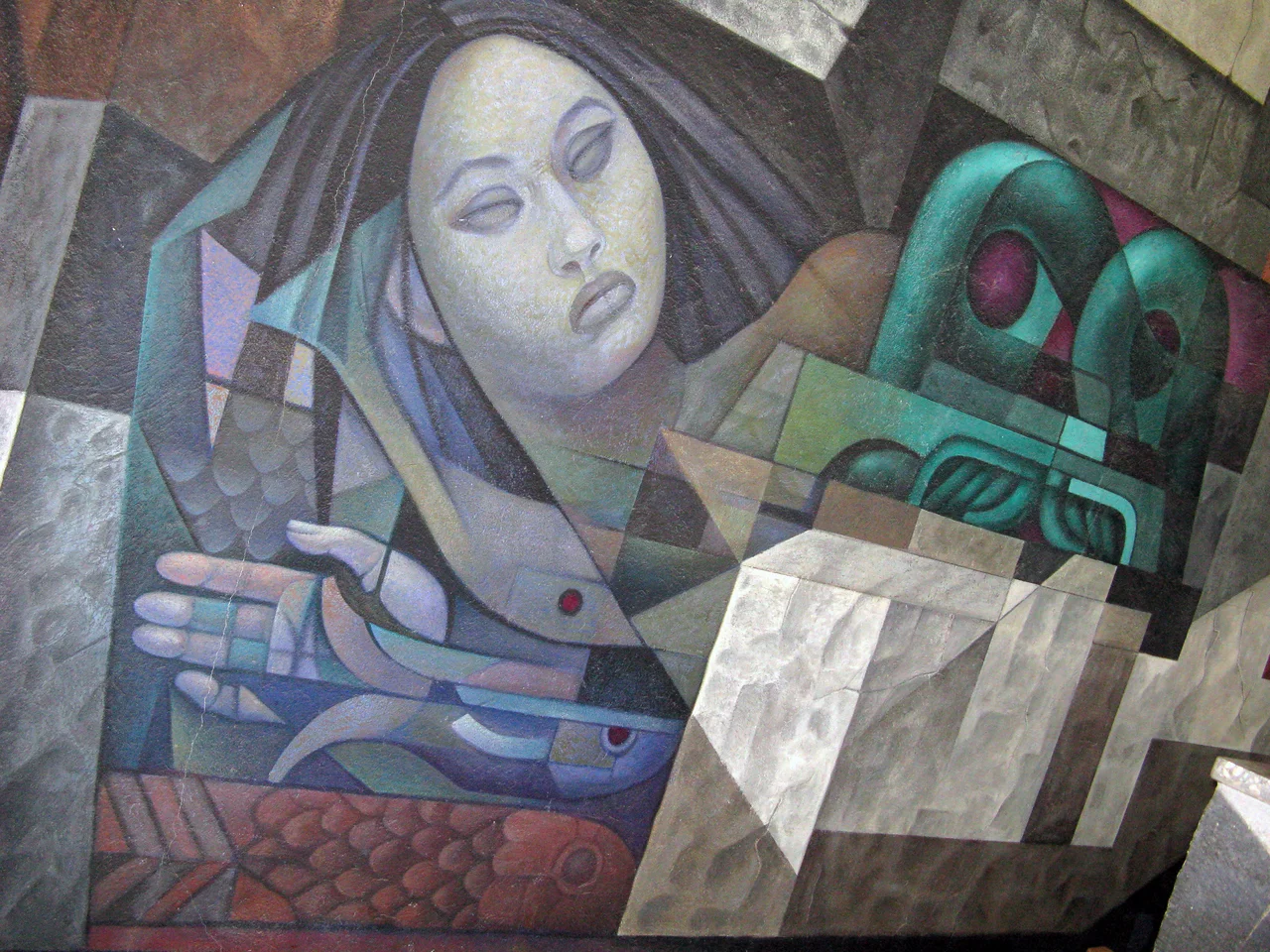
Most museums make you wait for the masterpiece. You wander past the lesser works, build anticipation, earn your way to the centerpiece in some far gallery. The Casa del Arte refuses that ritual. The moment you cross the threshold of this hexagonal building on the campus of the University of Concepción, the masterpiece is already on top of you, a 300-square-meter explosion of color and myth climbing the walls and curling up the staircase. This is the mural Presencia de América Latina, and it greets every visitor in the entrance hall before they have taken a second step. Behind it waits the largest and most complete collection of Chilean art anywhere outside Santiago.
Forty Years from Idea to Doors
The museum was a long time coming. When the University of Concepción was founded in 1919, its leaders already understood that students needed art, not just lectures. In 1929, the rector Enrique Molina Garmendia proposed an actual gallery, and through the 1950s an art professor named Tole Peralta kept the dream alive. The turning point came in January 1958, when the university acquired more than 500 Chilean paintings from the philanthropist Julio Vásquez Cortés. Suddenly there was a collection worthy of a home. Construction began in 1963 on a plot that had once held the university's dental school, partly wrecked by the colossal Valdivia earthquake of 1960, the most powerful quake ever recorded. Out of that damaged ground rose a house for art.
A Building Shaped Like Nothing Else
The Casa del Arte does not look like a typical museum, and that is by design. The building is hexagonal, presenting faces toward both the Plaza Perú and the wider campus, with an entrance atrium whose great window offers passersby a glimpse of the hall within. Its architecture is a deliberate hybrid: Art Nouveau curves in the front section, neoclassical restraint at the rear, a split that traces back to the disruptions of the 1960 earthquake. A skylight pours daylight into the exhibition hall. Beside the museum grows a redwood, one of the first trees ever planted at the university, now a living link to the institution's earliest years. Inside, antique chairs and tables sit beneath low, soft light, inviting visitors not just to look but to linger.
Eighteen Hundred Windows into a Nation
The collection earns its reputation: roughly 1,800 works, the most complete survey of Chilean art outside the capital, drawing some 75,000 visitors a year. The galleries are arranged so the evolution of Chilean painting unfolds as you walk. The Sala Generación del Trece honors the influential artistic movement of the same name, holding beloved canvases like Ezequiel Plaza's Pintor bohemio and Arturo Gordon's Velorio de un Angelito. Upstairs, the Sala de los Grandes Maestros gathers the masters, among them Alfredo Valenzuela Puelma's La ninfa de las cerezas, one of the most praised paintings in all of Chilean art. From this higher floor, you also gain a fresh vantage on the great mural below. Deeper still, a windowless basement gallery, the Sala CAP, swallows all outside light and asks visitors to simply meditate on contemporary work.
The Mural That Defines a City
Everything in the museum orbits the work in the entrance hall. Presencia de América Latina, completed in 1964 by the Mexican artist Jorge González Camarena, is so significant to the cultural identity of Concepción that the Government of Chile declared it a National Historic Landmark by decree on April 30, 2009. That same year, as the country prepared to celebrate its bicentennial in 2010, the mural was honored with a commemorative plaque recognizing its value to Greater Concepción and the Bío Bío Region. To the people of this city, the painting stands alongside the university's clock tower as a true emblem of who they are. The museum was built to hold a collection. It ended up holding a continent's story, told in acrylic across three towering panels.
From the Air
The Casa del Arte sits at 36.83°S, 73.04°W on the campus of the University of Concepción, at the corner of Chacabuco and Larenas facing the Plaza Perú, in central Concepción, Chile. The nearest airport is Carriel Sur International (ICAO: SCIE, IATA: CCP) in Talcahuano, about 8 km away and the principal air gateway for south-central Chile. From a viewing altitude of 5,000 to 9,000 feet in the region's clear, mild Mediterranean weather, the green quadrangles of the university campus stand out against the dense downtown grid, with the landmark campanile (clock tower) of the University of Concepción as the most recognizable navigation marker nearby. The Bío Bío River curves to the south and west; Santiago lies roughly 500 km to the north.
Nearby Stories
- Battle of El Roble 7.8 km away
- Chivilingo Hydroelectric Plant 18 km away
- Ninhue 18 km away
- Santa María Island, Chile 25 km away
- Tucapel 47 km away
- 2010 Chile Earthquake 49 km away
- Coal Mining in Chile 51 km away
- 1687 Peru Earthquake 2386 km away