
Choum
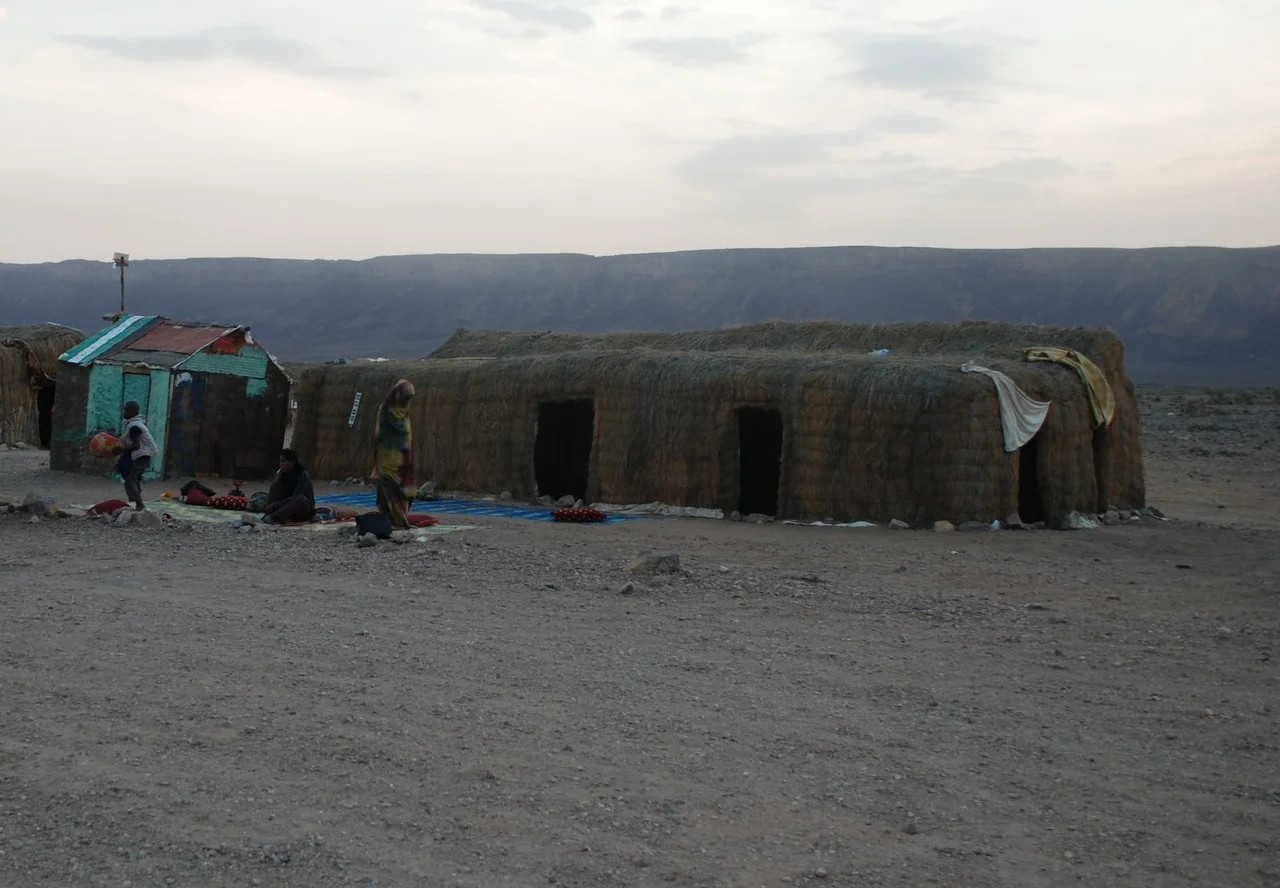
Say it aloud and it sounds like a sigh: shoom. Choum is barely a place at all, fifty-odd wooden shacks pinned to a grey-yellow-pink plain that stretches to every horizon. The whole district supposedly holds five thousand people, though you would never guess it from the sparse, sun-bleached sprawl. There is no telephone, no mobile coverage, no internet, no newspaper for sale. What Choum has is a railway, and on that thin steel thread the town's entire reason for existing depends. Twice a day, the longest train in the world rolls in out of the emptiness, and Choum comes briefly to life.
Where the Iron Train Stops
Choum's whole purpose is the boarding opportunity it offers onto the Iron Ore Train bound for the coast at Nouadhibou. These trains are reputed to be among the heaviest and longest on Earth: up to three kilometers of open hopper cars, hauling hematite the roughly 700 kilometers from the mines around Zouérat down to the Atlantic. Travelers climb aboard with the locals and merchants, perching atop the open ore cars for one of the planet's great rough journeys. Come prepared. There is no shade, no seat, and no comfort: just steel, ore dust, and the desert sliding past for hour after hour. To the northeast the line runs to Zouérat, the end of the track; to the west it runs to the sea.
Scars in the Sand
Choum once straddled a major camel caravan route across the Sahara, and it declined as that ancient trade withered. History has not always been gentle here. In 1977, French troops attacked the town, suspecting it of supporting the Polisario Front, the Sahrawi liberation movement that has fought for decades to free the neighboring Western Sahara from a long succession of colonial and foreign rulers. The border with that disputed territory runs arrow-straight just five kilometers to the west. Walk the desert around Choum and you can still find the evidence: shallow trenches, low berms, and old firing positions left over from the fighting, slowly filling with windblown sand.
Surviving the Heat
This is unforgiving country, and Choum tests anyone who lingers. Summer days routinely climb past 40°C and sometimes top 46°C. The air is so dry that your sweat evaporates before you ever feel wet, which makes dehydration sneak up quietly; plan on drinking around four liters a day. After dark the desert flips cold under a flawless star-filled sky, so the same pack should hold warm clothes. Food is scarce: a little camel meat with onions and couscous if you are lucky, and the ubiquitous foil-wrapped Laughing Cow cheese, half-melted in the heat. The nearest proper restaurant is a bumpy four-hour drive away in Atar.
Onward Into the Adrar
For most travelers, Choum is a transfer point rather than a destination. Arrive by train and you will likely find minibuses waiting by the tracks, ready to run passengers south down the paved road to Atar, gateway to the Adrar plateau with its oases, ancient caravan towns, and sculpted dunes. North lies the mining town of Fderîck, near the ruins of the old French Foreign Legion outpost of Fort Gouraud. The desert here is austere to the point of emptiness, with almost nothing to see. The point of Choum was never the staying. It was the leaving: by rail, into one of the last great wildernesses on Earth.
From the Air
Choum sits at 21.30°N, 13.07°W in Mauritania's Adrar region, about 5 km east of the demarcated border with Western Sahara and roughly 150 km north of Atar. The Iron Ore Train line and the scatter of shacks are the only landmarks in an otherwise featureless ochre plain. Clear, cloudless skies are the norm, broken occasionally by Saharan dust storms that can sharply cut visibility. Nearest airport is Atar (GQPA) to the south; Nouadhibou (GQPP) lies far to the west at the railway's coastal terminus.
Nearby Stories
- Zug, Western Sahara 50 km away
- Azougui 59 km away
- Agounit 63 km away
- Chinguetti Mosque 76 km away
- Chinguetti 105 km away
- Tourine Ambush 122 km away
- Akjoujt 166 km away
- Afonso Gonçalves Baldaia 325 km away