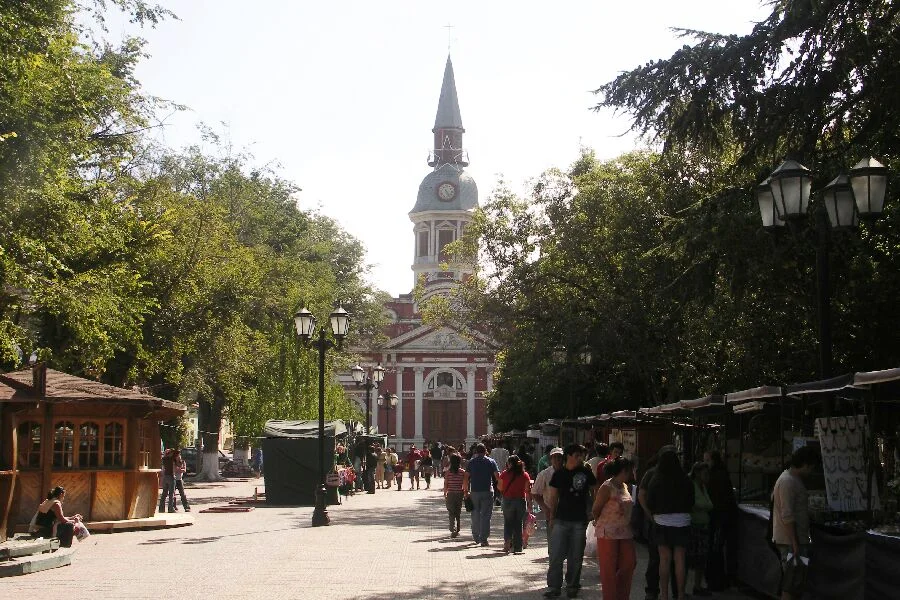

Constitución, Chile
It was the last weekend of summer, and the families came to the island. Orrego Island sits in the mouth of the Maule River, where it meets the sea at Constitución, and on the night of February 27, 2010, campers had gathered there for an end-of-season celebration, with fireworks promised over the water. At 3:34 in the morning the earth ruptured offshore, a magnitude 8.8 earthquake, one of the largest ever recorded. Then the ocean drew back, gathered itself, and returned as a wall of water perhaps fifteen meters high. Around 350 people died in Constitución that night, many of them on the island where they had come to mark the end of summer. This is a town that knows exactly what the sea can take.
The Fisherman Who Went Back
Among the people of Constitución that night was Pedro Muñoz, a fisherman with a small skiff. When the water came, he did not run. He rowed out to Orrego Island and ferried celebrants across to the riverbank, then turned around and went back for more, making the crossing twice against the chaos of the surging river. He was loading his boat a third time when the third wave came. It swamped his skiff and killed him. He saved the people he could reach and died trying to reach the rest. In a disaster measured in hundreds of lost lives, his is one name that survives because of how he spent his last hour, refusing to leave others behind when leaving would have saved himself.
Trained for This, and Still
The cruelty of that night was sharpened by how nearly the town was ready. Only two weeks earlier, residents had been trained for exactly this scenario: if the shaking was strong enough that you could not stay on your feet, head immediately for high ground, because a tsunami was likely to follow. Many heeded it and climbed the hills and lived. But the warning systems that should have confirmed the danger faltered in the hours after the quake, and on the low ground by the river, where the families were, there was no time. The earthquake had destroyed so much that restoring even electricity in the immediate aftermath proved impossible. Constitución had prepared as well as a town can prepare, and still it grieved by the hundreds.
The Stone Church by the Sea
The enduring image of Constitución is not the disaster but a rock. Along the city's coastal edge stands the Piedra de la Iglesia, the Stone of the Church, an immense arched formation some 150 meters long and nine meters high, sculpted by the Pacific into caverns and tunnels that can be explored at low tide. It is the great postcard of the Maule coast, the picture the city has carried for generations, and in 2007 it was declared a Nature Sanctuary by the Chilean state. Local legend holds that lovers who kiss beneath its stone arch are bound for eternity. That this serene landmark survived the same waves that devastated the town below it feels, somehow, like a small mercy: the stone church endured where so much else did not.
River, Rail, and Pulp
Long before the tsunami, Constitución was a working port and, before that, a summer escape. The Chango and Mapuche peoples fished and camped at this river mouth before Spanish galleons used it as a Pacific harbor, and the settlement that grew here was founded in 1794 as Nueva Bilbao, named for the Basque city in Spain. For a time it thrived as a seaside resort, until the rise of the paper and pulp industry, dominated by the great cellulose plant of Celulosa Arauco y Constitución, reshaped both the economy and the landscape into forests of planted eucalyptus and pine. The town is also the terminus of one of Chile's last branch railways, the historic Ramal that winds down the Maule valley from Talca, a slow and beautiful survivor of the country's railroad age.
From the Air
Constitución sits at 35.33 degrees south, 72.42 degrees west, at the mouth of the Maule River on Chile's Pacific coast in the Maule Region. From the air, look for the river meeting the sea, with Orrego Island in the estuary and the Piedra de la Iglesia and its companion sea-stacks studding the shoreline just south of the river mouth; the large cellulose plant and its surrounding plantation forests dominate the inland approach. The city is served by the small Quivolgo airfield nearby; the nearest major airport is Carriel Sur International (ICAO SCIE) at Concepción to the south, with the Talca-area fields and Chillán's airport (ICAO SCCH) inland to the east. Coastal cloud is common in the mornings, so a clear afternoon offers the best view of the river mouth, the island, and the famous arched rocks.
Nearby Stories
- Talca 4.9 km away
- Battle of Mataquito 12 km away
- Yerbas Buenas 14 km away
- Chanco, Chile 27 km away
- Vichuquén 38 km away
- Cobquecura 50 km away
- 2010 Chile Earthquake 79 km away
- 1687 Peru Earthquake 2239 km away