
Corrientes
The city is named for water that refuses to run straight. Where the Paraná River sweeps past, seven rocky peninsulas jut into the channel and twist the flow into eddies and crosscurrents - the siete corrientes, the "seven currents," that gave the place its name. When Juan Torres de Vera y Aragón planted a settlement on this eastern bank on April 3, 1588, he called it Ciudad de Vera — after his own lineage — in a location the local people called the Seven Currents. Over generations, the full name San Juan de Vera de las Siete Corrientes became associated with the city, then compressed down to a single word. The river, meanwhile, still does exactly what the founders described.
A Waypoint Becomes a City
Corrientes was never meant to be a destination - it was meant to be a stop. The Spanish founded it as a way station on the long river road between Asunción upstream and Buenos Aires far to the south, a safe harbor where boats could pause and trade. That traffic became its lifeblood. Goods, people, and yerba mate flowed through, and the town that began as a convenience grew into the capital of a province. Today it remains an eastern-bank river city, its old grid centered on the Plaza 25 de Mayo, its colonial bones still visible beneath the modern sprawl.
Where the Heat Lives
Corrientes is one of the hottest cities in Argentina, and the climate shapes daily life as surely as the river does. Summer afternoons turn heavy and humid, and the rhythm of the city bends around the sun - quieter at midday, alive again as the heat breaks. The Paraná offers relief. Locals gather at riverside beaches like Playa Arazaty, where the brown water that swirls past Punta San Sebastián is wide enough to feel like a moving lake. The waterfront, the costanera, is the city's true living room, busiest when the day finally cools.
Song of the Litoral
This corner of Argentina has its own sound, and Corrientes is one of its capitals. The chamamé - an accordion-driven music born of Guaraní rhythms and European immigrant traditions - carries the cadence of the river region, and the city has given the genre some of its most beloved voices. Ramona Galarza, born here in 1940, became known across the country as "la Novia del Paraná," the Bride of the Paraná, her recordings synonymous with the litoral's musical soul. Teresa Parodi, another daughter of Corrientes, carried that tradition into the songbook of modern Argentine folk.
A City of Many Lives
For its size, Corrientes has sent a remarkable variety of people into the world. Sebastián Crismanich grew up here before winning Olympic gold in taekwondo at London 2012. Carlos Espínola, a windsurfer turned politician, brought home four Olympic sailing medals. The city's football clubs - Huracán Corrientes, Boca Unidos, Deportivo Mandiyú - carry its name into competition. And in 1973, the place even slipped into world literature: Graham Greene set his novel The Honorary Consul in Corrientes, drawn to its border-country atmosphere of heat, river, and intrigue near the Paraguayan frontier.
From the Air
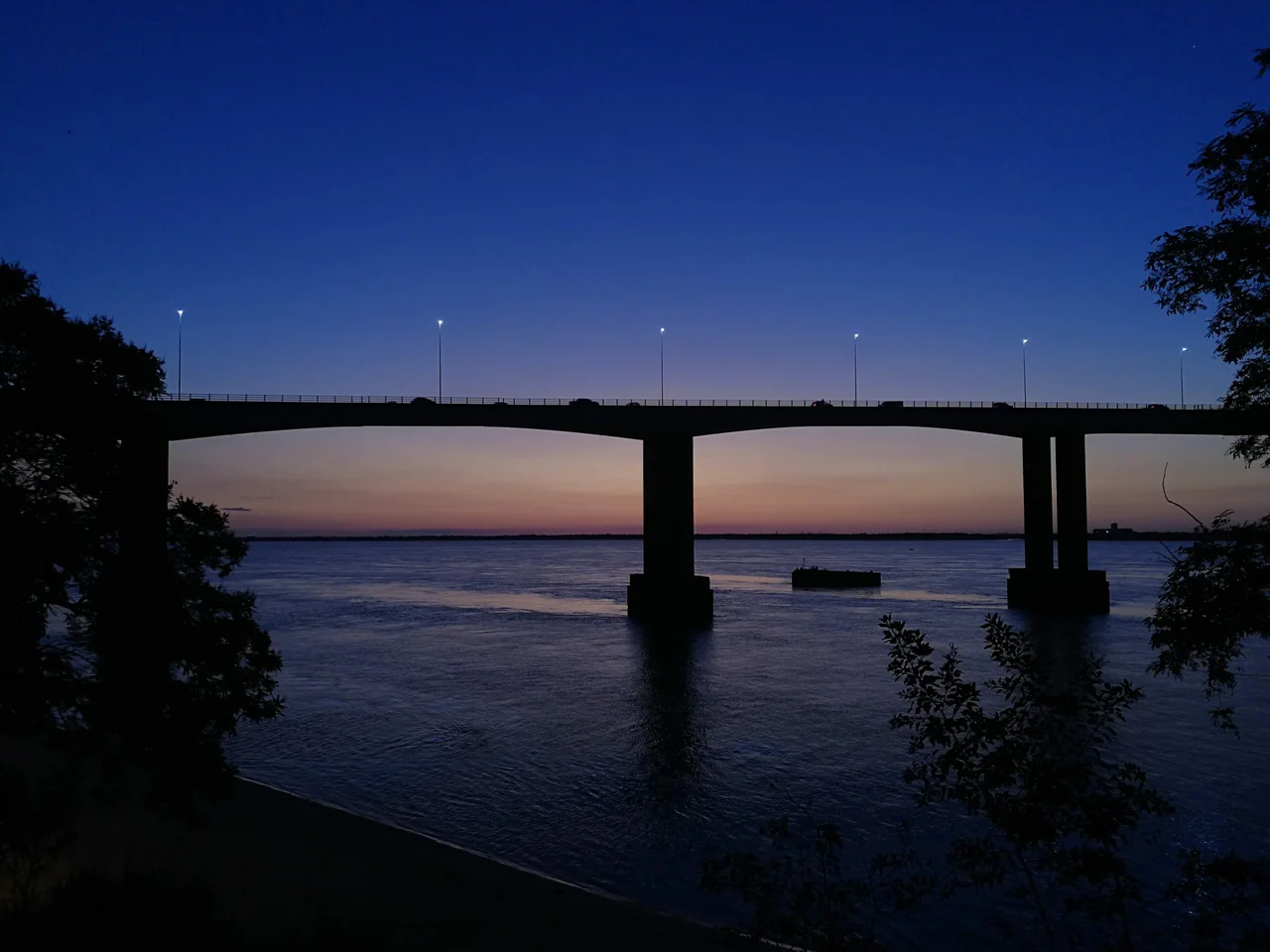
Corrientes sits at approximately 27.48 degrees south, 58.82 degrees west, on the eastern bank of the Paraná River in northeastern Argentina, directly across the water from its twin city of Resistencia. From the air, the two cities are linked by the long General Belgrano Bridge spanning the Paraná - an unmistakable navigation landmark. Corrientes International Airport, also called Doctor Fernando Piragine Niveyro International (ICAO: SARC, IATA: CNQ), lies on the city's northern edge. Resistencia International (ICAO: SARE) is minutes away across the river. Look for the broad braided channel of the Paraná with its peninsulas and sandbars; best visibility comes in the dry winter season from cruising altitude down to a few thousand feet.
Nearby Stories
- Battle of Tuyuti 34 km away
- Pilar, Paraguay 44 km away
- Chaco National Park 52 km away
- Battle of Estero Bellaco 59 km away
- Napalpí Massacre 95 km away
- Iberá Wetlands 106 km away
- Ibera National Park 162 km away
- 1973 San Justo Tornado 353 km away