
Chaco National Park
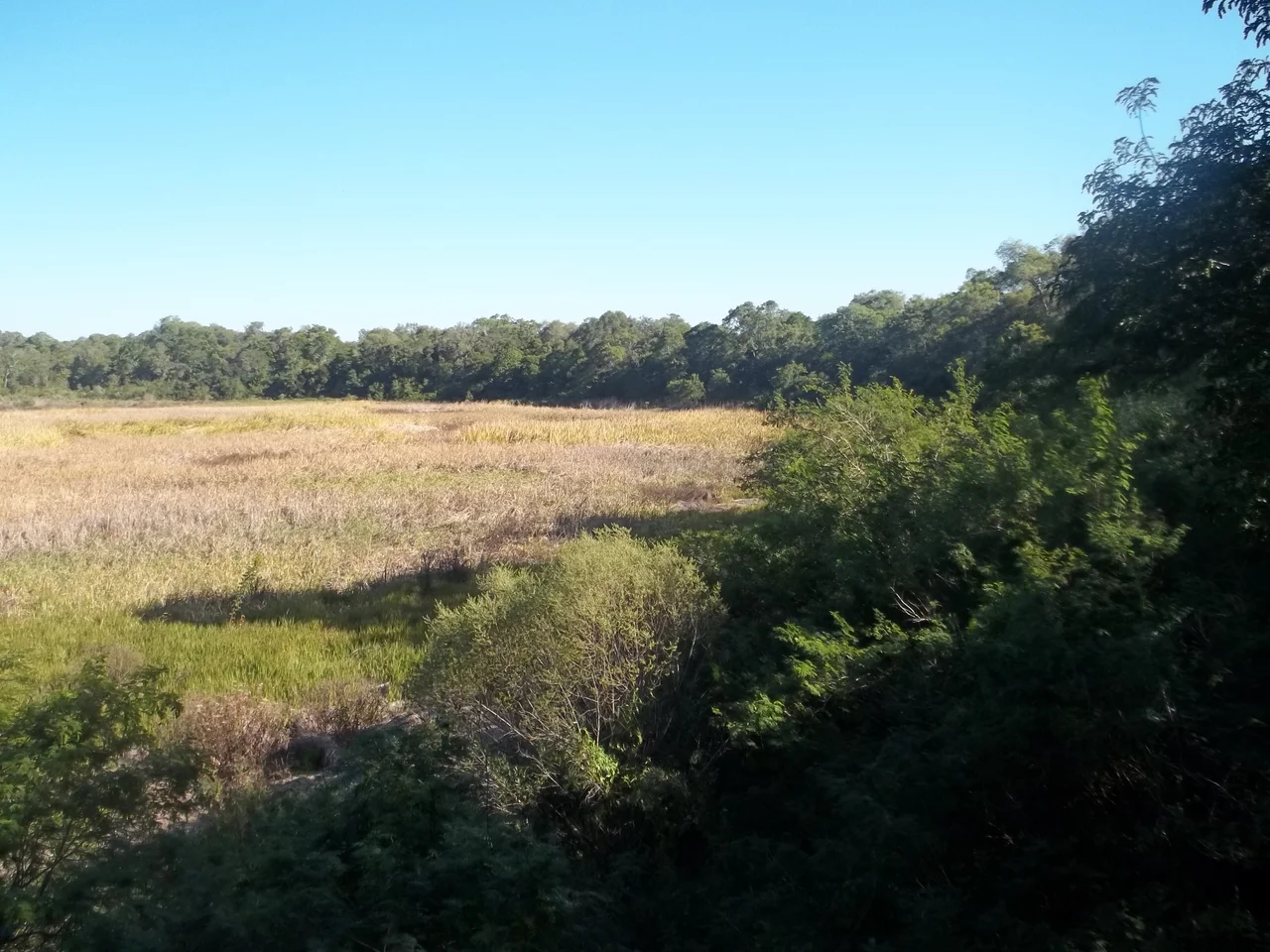
For a century, the forest here was worth more dead than alive. The quebracho colorado is an ironwood so dense it sinks in water, so rich in tannin that the entire global leather trade once depended on it, and across the eastern Chaco the axes never stopped. Then, in 1954, Argentina drew a line around 150 square kilometers of the lowlands and said: this much stays. Chaco National Park is what survival looks like - a green island of swamp, savanna, and red-trunked giants that the saws never reached.
The Tree That Built an Industry
Quebracho means "axe-breaker" in Spanish, and the name is not poetry. The wood of Schinopsis balansae turns the edge of a blade and resists rot for decades, but its real value lay hidden in its fibers: tannin, the compound that turns raw hide into leather. Through the late nineteenth and early twentieth centuries, the quebracho forests of Santa Fe and western Chaco were stripped to feed tanneries an ocean away. Whole rail lines were laid to haul the timber out. By the time anyone thought to protect a sample of the original woodland, most of it was gone. The park preserves not just trees but a memory of what the region looked like before the extraction began.
Water in a Thirsty Land
The Chaco is famous for heat - summers push the land toward drought and dust - yet this park is laced with water. The Negro River winds through it, swelling in the rainy months when 750 to 1,300 millimeters of summer rain feed the lagoons. Carpincho Lagoon takes its name from the capybara, the world's largest rodent, which wallows along its edges in unbothered herds. In the still water below, yacaré caimans lie like waterlogged driftwood until they move. The landscape shifts constantly between scrubland, open savanna, swamp, and shallow lake, and each zone carries its own cast of inhabitants.
Voices in the Canopy
Long before dawn, the forest announces itself. The black howler monkey produces one of the loudest calls of any land animal, a guttural roar that carries for kilometers and rolls across the canopy like distant thunder. Below the howlers move more than 300 species of birds, the secretive screen of armadillos, and the broad-footed South American tapir, the largest land mammal on the continent. Cougars hunt the margins. The plains viscacha, a burrowing relative of the chinchilla, keeps to the drier ground. For a place often dismissed as flat and forbidding, the Chaco hides an astonishing density of life.
The People Who Stayed
The Chaco was never empty land waiting to be discovered. The Mocoví and Toba peoples have lived across these lowlands for generations, and their communities remain within and around the protected area today. They knew the quebracho, the rivers, and the rhythms of flood and drought long before national parks existed - and they watched the same forests fall to the tannin trade that enriched distant cities. Their presence is a reminder that conservation here is not about restoring a wilderness without humans, but about safeguarding a living landscape that people have always called home.
From the Air
Chaco National Park sits at roughly 26.83 degrees south, 59.67 degrees west, in the province of Chaco in northeastern Argentina. From the air, look for a dark green block of forest standing out against the cleared agricultural land that surrounds it, threaded by the meandering Negro River and dotted with lagoons that flash silver after summer rains. The nearest major airport is Resistencia International (ICAO: SARE), about 80 kilometers to the southeast; Corrientes International (ICAO: SARC) lies just beyond it across the Paraná. Best viewing is from 3,000 to 6,000 feet in the clear, dry air of the winter months (June through August), when haze and afternoon storm cells are least likely to obscure the lowlands.
Nearby Stories
- Aerolíneas Argentinas Flight 707 27 km away
- Margarita Belen massacre 30 km away
- Concepcion de Buena Esperanza 50 km away
- Resistencia 73 km away
- Campo del Cielo 168 km away
- Ypoá National Park 177 km away
- Río Pilcomayo National Park 220 km away
- Rincón Bomba massacre 238 km away