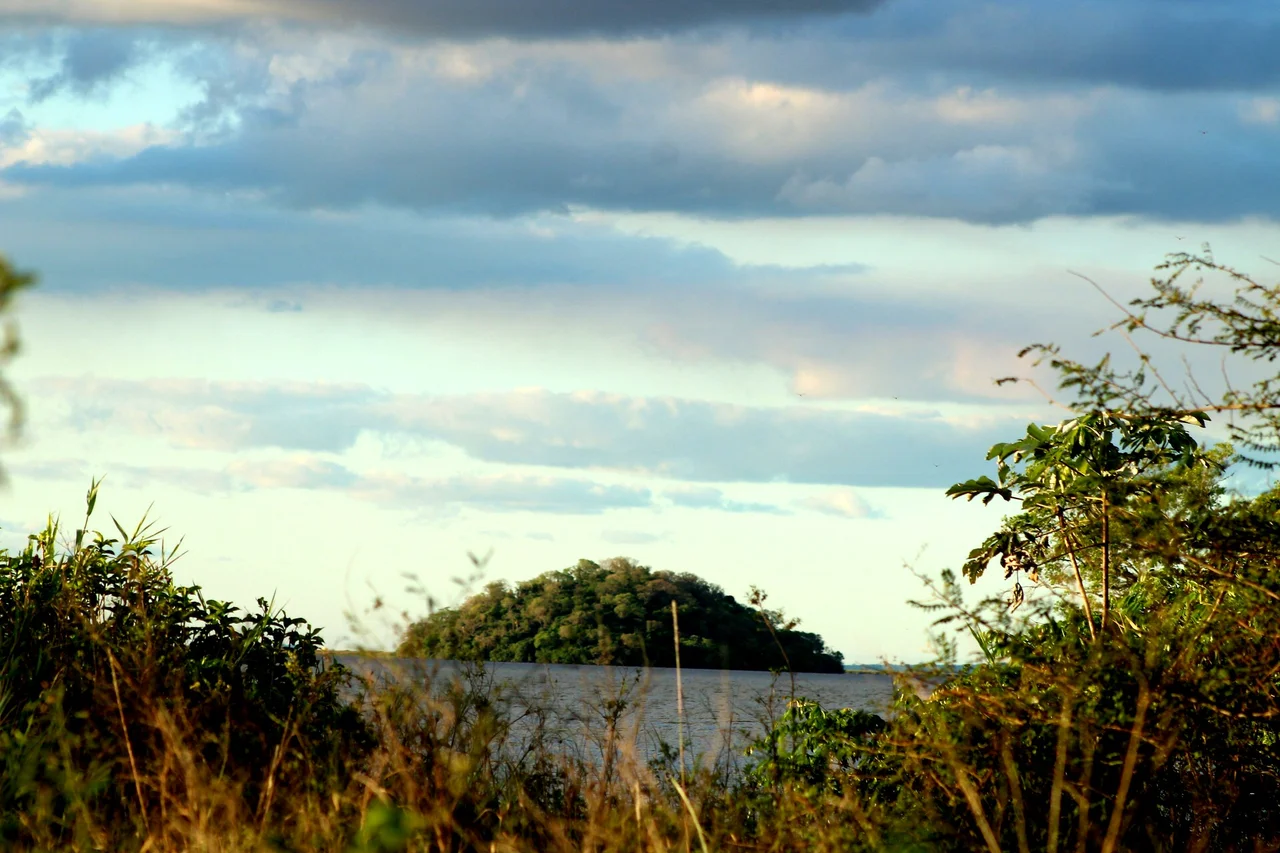

Ypoá National Park
From the air, the trees give it away. Across the flat grasslands south of Asunción, dark clumps of woodland rise from the green like islands, mimicking hills in a country that has almost none here. Beneath them spreads Lago Ypoá, the largest lake in Paraguay, and around it more than 123,000 hectares of marsh, swamp, and plain that the country set aside in 1992. There are no visitor centers, no gift shops, barely a paved approach. The single dirt road in is often swallowed by grass. This is wilderness left mostly to itself, and to the birds.
A Wetland the World Watches
Ypoá carries a designation that puts it on a global map: a Ramsar Wetland of International Importance, one of the most significant aquatic environments in all of Paraguay. The honor is not ceremonial. These shallow waters and seasonal marshes feed an extraordinary density of life, sheltering threatened plants and serving as a waystation for migrating birds that cross the continent. The lake sits at the heart of it, but the park's real character lives in the soggy margins, the reed beds and flooded grasslands where water and land trade places with the seasons. Protect the wetland, and you protect everything that drinks from it.
More Than Two Hundred Songs
Birdwatchers come here for the count, and the count is staggering: over 200 species, resident and migratory, some found nowhere else. The most arresting may be the ñandú, a flightless bird that resembles an ostrich but belongs entirely to South America, striding across the open plain on long legs. Toucans flash through the wooded clusters. Smaller voices fill the reeds and treetops, the suruku'a and the inambú among them, while cormorants the locals call mbiguá work the water. To stand at dawn on the lake's edge is to hear the marsh tune up, one call at a time, until the whole basin is singing.
Beneath the Surface
The water hides a different cast. Capybaras, the world's largest rodents, graze the banks in unhurried groups, and agoutis dart through the brush. In the wooded patches, monkeys move through the canopy, and maned wolves, those tall, fox-red hunters of the South American grasslands, pad through at the edges of sight. The wetlands belong, too, to reptiles. Caimans drift just below the surface or haul out to sun themselves on the shore, and tegus, big-bodied lizards in black, red, and gold, range across the park. Endemic plants line the shallows, the floating camalote and the tall caña brava that fringe the open water.
Older Than the Park
Long before Paraguay drew lines on a map, people lived along this lake. On the eastern shore, long, low ridges of discarded shells still trace where Indigenous communities harvested freshwater mussels and made their camps, generation after generation. These shell middens are the park's quiet archive, accumulated meal by meal across centuries, evidence that the abundance drawing birdwatchers today drew people for millennia. Why did they return to this particular shore? For the same reason the herons do: the shallow, food-rich water that gathers life at its edges. Ypoá was a larder long before it was a reserve. Walking the shoreline, you tread the same productive boundary between water and land that sustained those earlier lives, an unbroken human relationship with this wetland stretching back into deep time.
Coming the Hard Way
Ypoá rewards effort and punishes the unprepared. It lies about 150 kilometers south of Asunción, a roughly two-hour drive that turns to unpaved track once you leave the highway. There are no stores, no restaurants, and no potable water inside the boundaries; whatever you carry in, you carry back out. Most visitors arrange a guide with a vehicle, or base themselves in a small town like Carapeguá, where modest posadas offer a room for the night. The lack of infrastructure is the point. Few places this close to a capital city feel this genuinely remote.
From the Air
Ypoá National Park centers on Lago Ypoá at roughly 25.91°S, 57.43°W, about 150 km south of Asunción. From the air the park reads as a broad, flat mosaic: the open sheet of the lake ringed by pale grassland and dark, island-like clumps of woodland, with seasonal marsh shimmering at the margins. A recommended viewing altitude of 3,000–5,000 feet keeps the wetland-and-grassland pattern legible while staying high enough to spot rheas and waterbirds against the open plains. The nearest major airport is Silvio Pettirossi International (ICAO: SGAS) at Asunción, about 100 km north; the general-aviation field at Carapeguá lies closer to the southern approach. Skies are clearest in the dry season; in the wet months the marshes swell and standing water spreads well beyond the lake's dry-season shoreline.
Nearby Stories
- La Colmena, Paraguay 13 km away
- Yaguarón 23 km away
- New Australia 50 km away
- Doctor Moisés Bertoni 55 km away
- Río Pilcomayo National Park 68 km away
- Pilar, Paraguay 80 km away
- Santa María, Paraguay 85 km away
- Aerolíneas Argentinas Flight 707 122 km away