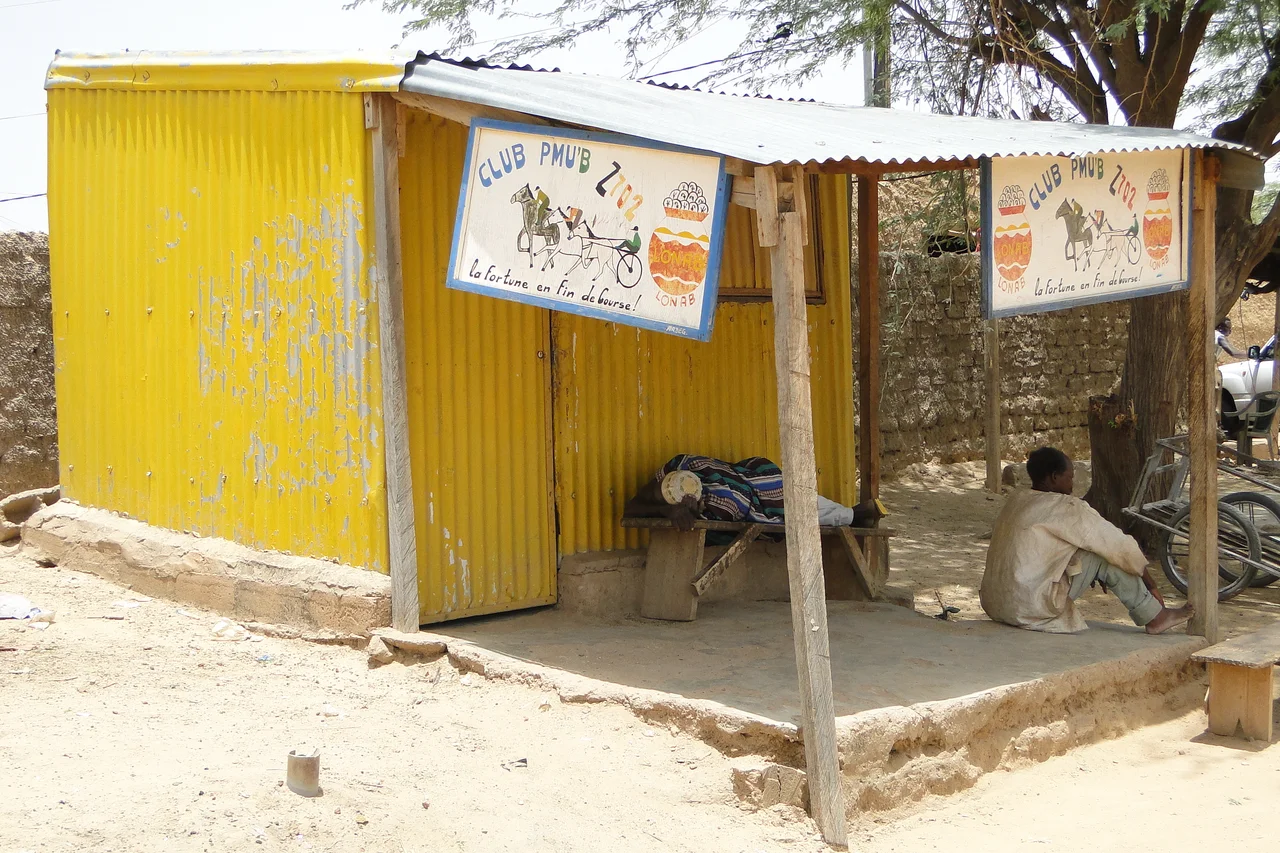

Dori, Burkina Faso
On a day in 1984, the mercury in Dori climbed to 47.2 degrees Celsius - at the time the highest temperature ever recorded anywhere in Burkina Faso. That single number tells you almost everything about this town in the country's far northeast, where the savanna gives out and the Sahel takes over on its long march toward the Sahara. Heat defines the place. So does trade. For Dori is no mere dot near the Niger border; it is the historic seat of the Liptako, a Fulani emirate, and one of the old gathering points of the southern Sahara, where camels and cattle still change hands beneath a sky bleached pale by the sun.
Living in the Heat
Dori sits in a semi-arid climate, classified in the shorthand of climatologists as BSh - hot steppe, the borderland between grassland and desert. Rain is scarce and concentrated into a brief season; the rest of the year is dry, dusty, and fierce. The landscape around the town reflects it. Nearby lie the cracked beds of seasonal lakes that flush with water and then bake to bare earth, and a duricrust inselberg - a hard-capped hill of weathered rock standing alone above the plain between Dori and Yalgo. This is a place where water is the measure of all things, where the rhythm of life bends around the wet season's brief generosity and the long dry months that bracket it.
Seat of the Liptako
Dori is the capital of the Liptako, a Fulani emirate whose authority survives into the present: as recently as 2020 the Emir of Liptako, Ousmane Amirou Dicko, made his residence here. That continuity matters in a region where so much has been swept away. The town's old quarter, photographed at the turn of the millennium, still showed the dense, low architecture of a traditional Sahelian settlement, and the influence of Islam runs visibly through its built fabric - in the mosque that anchors the streets and in rooftop ornaments shaped like the crescent moon. Dori carries its history not in grand monuments but in the texture of daily life, the persistence of an emirate, and the quiet authority of a place that has long mattered to those who live around it.
The Friday Market
To understand Dori, come on market day. This is where the strands of the Sahel braid together. Fulani herders - the Peul - drive in their zebu cattle and goats; Tuareg traders arrive veiled against the dust; Mauritanian shopkeepers stock their stores with goods hauled across the desert. A white camel might stand for sale in one corner of the grounds while carts rattle along the dirt tracks that thread between the trees. Dori has always been a meeting place, a node where the trade of the southern Sahara touches the agriculture of the savanna. Even the entertainment reflects the mix: among the dust and the livestock, the town has been known to host horse races, jockeys urging their mounts on while crowds wager on the finish.
Iron in the Ground, Roads Not Built
The future has reached for Dori more than once. In 2004 a proposal surfaced to run a railway linking the region's manganese deposits to the seaports of Ghana, far to the south - a scheme to plug this remote corner of the Sahel into global trade. The line through Dori was never built, and the mineral wealth still waits beneath ground that has seen empires of trade come and go. The town has produced its share of notable people, including Albert Ouédraogo, a former interim prime minister of Burkina Faso, and the humanitarian Roukiatou Maiga. Dori endures as it always has: a hot, dusty, deeply rooted Sahel town, holding its place at the edge of the desert through trade, faith, and sheer persistence.
From the Air
Dori lies at 14.03°N, 0.03°W in northeastern Burkina Faso, near the Niger border, capital of the Sahel Region. It has its own aerodrome (Dori Airport, DFEM). From altitude in the typically clear, hazy-dry Sahel air, look for the town set on a flat semi-arid plain studded with seasonal lakebeds and the occasional isolated inselberg, such as the duricrust hill on the road toward Yalgo. Expect heat shimmer and dust; visibility can drop sharply during harmattan season when Saharan dust fills the air. The Niger border lies a short distance to the east.
Nearby Stories
- Gorom-Gorom 24 km away
- Kaya 81 km away
- Djibo 101 km away
- Mount Hombori 154 km away
- Opera Village Africa 176 km away
- Pendjari National Park 322 km away
- Oti-Keran National Park 421 km away
- Tin Hinan Tomb 1072 km away