
Forestiere Underground Gardens
Forty years with a shovel, a pick, and a pair of mules. No blueprints. No engineering degree. No real plan beyond the next room, the next passage, the next skylight cut through ten feet of hardpan clay. Between 1906 and 1946, Baldassare Forestiere -- a Sicilian immigrant who had quarreled with his father and crossed an ocean to start over -- carved an underground world beneath a patch of unremarkable farmland on the outskirts of Fresno. He built bedrooms for summer and winter, a kitchen, a fishpond, a parlor with a fireplace. He planted citrus trees in subterranean chambers lit by conical skylights and grafted them to bear multiple fruits. He kept digging until the day he died, leaving behind ten acres of tunnels, grottos, and courtyards that nobody had asked him to build and nobody could quite explain.
From Sicily to Hardpan
Baldassare Forestiere was born on July 8, 1879, in the hamlet of Filari near Rometta, on the northeastern tip of Sicily. He left Italy after a falling out with his father and arrived on the East Coast in the early 1900s, eventually making his way to California's Central Valley. He bought land in Fresno with the intention of planting citrus, only to discover that the soil was almost entirely hardpan -- a dense layer of calcium carbonate that resisted roots as thoroughly as it resisted picks. The citrus dream died quickly. But Forestiere, who had grown up near Roman-era catacombs and Sicilian wine cellars carved from rock, understood something about underground spaces that his neighbors did not: they stay cool. In the San Joaquin Valley, where summer temperatures routinely exceed 100 degrees Fahrenheit, that understanding was worth more than citrus.
Digging a Life
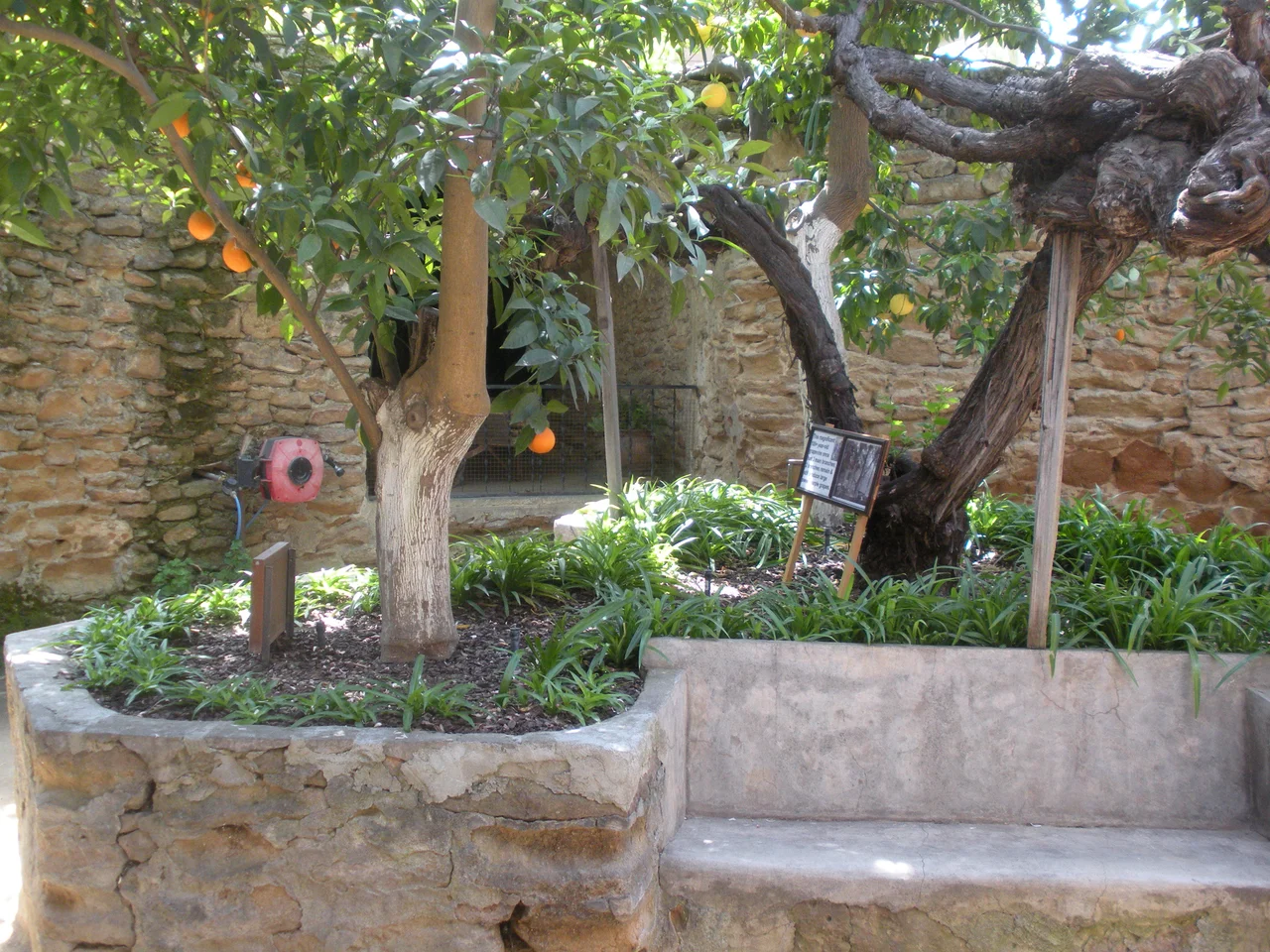
What began as a simple cellar to escape the heat became something far more ambitious. Forestiere carved attached rooms and moved in. Then he started experimenting. Could trees grow underground if you gave them enough light? He cut skylights through the hardpan -- conical openings that funneled hot air upward while letting sunlight pour down to the roots. The answer, he discovered, was yes. Trees not only grew in these underground chambers but thrived, protected from the frost that killed surface plantings in winter. He expanded relentlessly. The pathways were built with varying widths to create pressure differentials that directed airflow, a passive cooling system of remarkable sophistication. Narrow passages accelerated the breeze; curved walls bounced it through the rooms. The hardpan he excavated was reused as bricks for archways and structural supports. Nothing was wasted.
An Underground Orchard
The gardens eventually spread across three levels -- one ten feet deep, one twenty, and one twenty-three feet down. Each level was planted at different times so the trees would bloom in succession, extending the growing season beyond what any surface orchard could achieve. Forestiere grew citrus, berries, kumquats, loquats, and jujubes. He grafted individual trees to bear more than one kind of fruit, maximizing variety in a confined space. Above ground, he planted vines and trees over the dwelling, which served as insulation and formed canopies to protect the structure from rain and sun. Some of the trees he planted are still alive, more than a century old, their roots reaching down through the same skylights that let the light in. Water was collected in catch basins built into the gardens. The dirt removed during excavation filled planters and leveled the surrounding property.
The Persistence of One Man
Forestiere worked alone, with hand tools. He had no formal training in architecture or engineering. He left no blueprints. The intricate network of passages, courtyards, and rooms grew organically, each section following from the last according to some private logic. He dug through hardpan that would have defeated most people on the first day. He did it for four decades. The comparison that comes to mind is Ferdinand Cheval, the French postman who built an ideal palace out of rocks, or Sabato Rodia, the Italian immigrant who erected the Watts Towers in Los Angeles. All three men spent their lives constructing monuments that served no obvious purpose beyond the compulsion to build. T. Coraghessan Boyle wrote a fictionalized account of Forestiere for The New Yorker in 1998, drawn to the same question everyone asks: why? Forestiere left no manifesto. He just kept digging.
What Remains Below
Forestiere died on November 10, 1946, at the age of sixty-seven. His family has operated the gardens as a historic site ever since, running tours through the Forestiere Historical Center. Visitors descend into a world that feels simultaneously ancient and improvised -- Roman catacombs reimagined by a man who happened to be stubborn enough to carve them from California hardpan. The gardens are listed on the National Register of Historic Places. They sit in an unremarkable part of Fresno, surrounded by the sprawl of strip malls and suburban development that the city accumulated in the decades after Forestiere's death. From the surface, nothing suggests what lies below. That, perhaps, is the point: Forestiere built his life's work where no one could see it, for reasons he never fully explained, and it has outlasted almost everything built above it.
From the Air
The Forestiere Underground Gardens are located at 36.8072N, 119.8808W in northern Fresno, along Shaw Avenue near the intersection with Highway 99. From the air, the site is indistinguishable from the surrounding suburban development -- the gardens are entirely underground. The nearest airport is Fresno Yosemite International (KFAT), approximately 7 nautical miles southeast. Fresno Chandler Executive Airport (KFCH) lies about 8 nautical miles south. The flat San Joaquin Valley floor provides excellent visibility, though summer haze is common. Look for the commercial corridor along Shaw Avenue west of Highway 99.
Nearby Stories
- San Joaquin Experimental Range 2.1 km away
- Alkali Sink Ecological Reserve: Holding Ground for a Ghost 12 km away
- Merced Assembly Center: 133 Days Behind the Wire 32 km away
- Sequoia: Standing Among the Largest Living Things on Earth 56 km away
- Manzanar 92 km away
- The Bristlecone Pines: The Oldest Living Things on Earth 94 km away
- Hearst Castle 129 km away
- Great Bakersfield Fire of 1889 146 km away
Sources
- Forestiere Underground Gardens - Wikipedia
- The Forestiere Underground Gardens: A Pictorial Journey
- Forestiere - Forestiere Historical Center
- Buried Treasure: A Legal Battle Soils the Splendor of Subterranean Gardens
- The Underground Gardens
- Forestiere Underground Gardens - undergroundgardens.com