
Gao-Saney
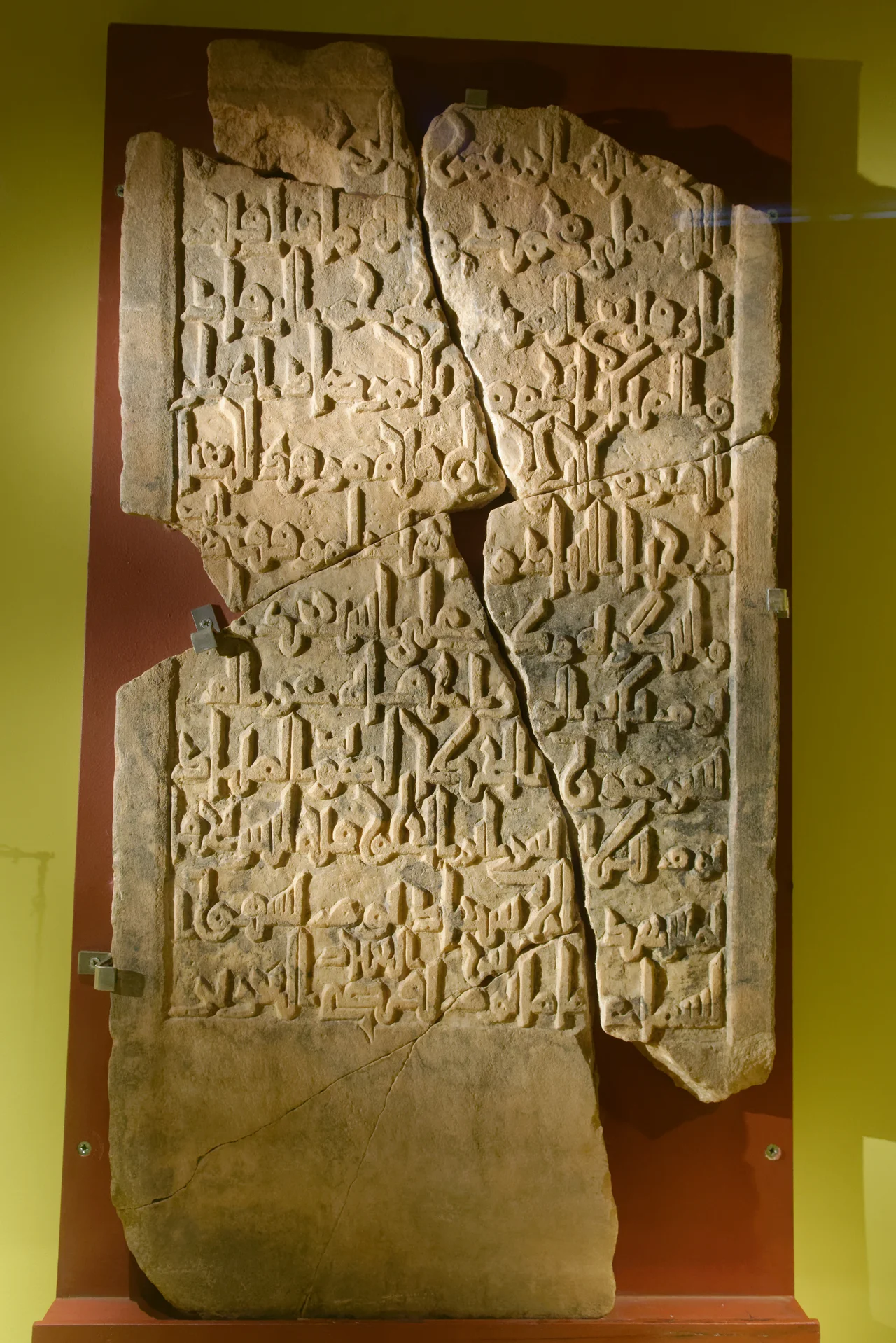
In 1939, French administrators digging into a sand-covered cave near Gao pulled out something that did not belong to the desert at all: finely carved marble tombstones, cut from quarries in Almeria, in southern Spain, and inscribed with the names of long-dead African kings. The stones had crossed the Sahara to mark the graves of Muslim rulers in a town that had since dissolved back into the earth. That town was Gao-Saney, a settlement mound seven kilometers from the royal city of Gao, and the tombstones were only the most spectacular clue to how far this place once reached out into the world.
When the Desert Was Green
Today the Gao region is too dry to support year-round life without deep wells. A thousand years ago it was different. Gao-Saney was occupied by roughly 700 CE and thrived for centuries, which has led archaeologists to suspect the climate was wetter then, the rains more generous. The settlement was no village. Excavators have read it as a center of manufacture and iron smelting, a place that hummed with production. Its great mound, layered with the debris of daily life, preserves the record of a town that flourished on the southern edge of the Sahara when that edge was a far more livable frontier than it is now.
Beads from Baghdad, Salt from the Mine
What sets Gao-Saney apart is the sheer reach of its trade. Among sub-Saharan sites of the eighth to tenth centuries, only the famous Igbo-Ukwu in Nigeria moved glass and copper on a comparable scale. Diggers have recovered hundreds of copper artifacts, nearly half shaped into crescents so uniform that some scholars think they served as money. The glass beads number in the thousands, in reds and blues and yellows, and chemistry can trace their birthplaces: the earlier beads came from Iraq and Baghdad, the later ones from Egypt, the sources shifting around the close of the tenth century. Salt, too, was treasure here, said to be a major part of the king's wealth, though salt dissolves and leaves no trace for the archaeologist to find.
The Road of Chariots
This little-known town sat at the end of a very long road. Gao-Saney was the southern terminus of a trade route, powered in its earliest days by chariots, that linked the Niger Bend all the way to the Mediterranean, reaching markets as distant as Mesopotamia. The flood of imported goods surged when Islam arrived: in the late eighth century, Ibadi merchants made the first recorded contact with Gao, and with them came dry-stone architecture, wheat, and glass. The spread of a common faith, a common language, and shared law, one historian notes, brought trust and security to trade networks that stretched across thousands of miles of sand. Around the early tenth century the Songhai king moved his seat to nearby Gao Ancien, on the bank of the Niger, and Gao-Saney itself was likely abandoned by the time the geographer al-Idrisi described the area in the mid-twelfth century.
Kings in Stone
Which returns us to the marble. The inscribed stelae commemorate kings of a Muslim dynasty who took as their names those of the Prophet Muhammad and his two successors - rulers of medieval Gao at a moment when the leadership of the region was passing into Islam. The historian Dierk Lange has argued that these Zaghe kings are one and the same as the rulers of the Za dynasty named centuries later by the chroniclers of Timbuktu in the Ta'rikh al-Sudan and the Ta'rikh al-Fattash. Other scholars, John Hunwick among them, have rejected that identification. The debate is unresolved, but the stones themselves are not in question. They are real, they crossed a continent, and they tell us that the kings buried beneath the sand near Gao were connected to a world far wider than the empty plain that covers them now suggests.
From the Air
Gao-Saney lies at 16.251 N, 0.003 W, about seven kilometers from the modern city of Gao on Mali's Niger Bend. The site is a low settlement mound on flat Sahelian terrain near the Niger River, not visually dramatic from altitude. The nearest airport is Gao (GAGO), just to the southwest; Mopti (GAMB) lies far to the west. The region carries significant security restrictions.
Nearby Stories
- Askia Daoud 15 km away
- Agacher Strip War 124 km away
- Mount Hombori 132 km away
- Hombori 152 km away
- Liptako 197 km away
- Pendjari National Park 564 km away
- Oti-Keran National Park 675 km away
- Tin Hinan Tomb 850 km away