
Gettysburg, Washington
Ida M. Simmons served one hour in prison. That was the whole sentence, handed down in 1912 to the postmaster of Gettysburg, Washington, after her conviction for embezzling $814 from the United States government. The newspapers called the punishment unique, and they were right, though nobody seems to have recorded what the judge was thinking. More than a century later it is close to the only thing anyone remembers about the place. Gettysburg stood at the mouth of the Lyre River, on the north edge of the Olympic Peninsula, where the forest runs out of land and the Strait of Juan de Fuca opens west toward the Pacific. The town lasted roughly forty years. The river had been there considerably longer.
The Man Who Left Only His Name
Robert N. Getty was thirty years old when he arrived in 1887, a lumber businessman with an eye for the kind of country that turns trees into money. The timber here was enormous and the water was deep, and those two facts were the entire economic argument for a settlement at this spot. Getty put up several structures to serve the logging boom that followed. A post office opened in 1890, spelled Gettysburgh with a final h that would quietly vanish over the years, and it stayed in business until 1926. By 1910 the census counted sixty-five residents. No road connected them to anywhere. What they had instead was a steamboat link to the cities of Puget Sound, which meant the mail, the groceries, the payroll, and every person who ever left arrived and departed by water.
A River With Older Claims
The Lyre River begins at the outlet of Lake Crescent and runs about five miles northwest to Low Point, a short and cold and remarkably productive stretch of water. Gonzalo Lopez de Haro charted it as the Rio de la Cuesta in 1790. Captain Henry Kellett renamed it the Lyre in 1847, and that version stuck, as British naval charts tended to. Both names were latecomers. The Makah at Neah Bay regarded the Lyre as the eastern edge of their territory, and the Klallam had settlements along it, including a fishing village called Kwahamish. The reason for all this attention was salmon. Chum and coho ran the lower river in numbers that supported people here for a very long time before anyone thought to name it after a musical instrument.
How a Timber Town Actually Worked
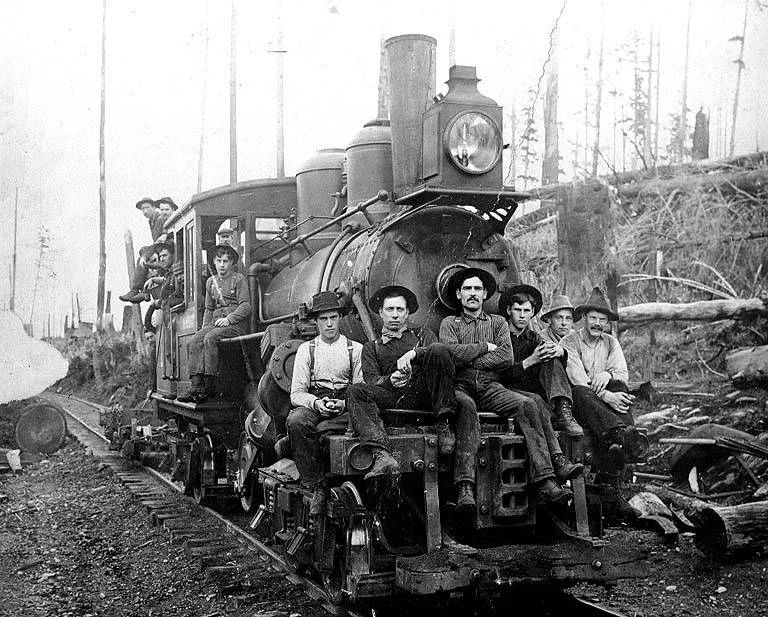
Places like Gettysburg were less towns than they were arrangements. A camp needed a store, a store needed a post office, and a post office needed a name, which is how a Pennsylvania battlefield ended up borrowed for a rain-soaked cove in Clallam County. The work was brutal and seasonal. Men felled old-growth fir and cedar on hillsides that dropped straight into saltwater, and the logs went out the same way everything else did, by boat. Families lived within earshot of the surf and the saws at once. When the steamer came in, it was an event. When the accessible timber ran out, the arrangement had no reason to continue, and the ending was not going to be gradual.
Fire, and the Long Silence After
The post office closed in 1926. The following year, the town burned to the ground, and local accounts blame a movie projector, which suggests that in its final season Gettysburg had at least acquired the habit of showing pictures. Nothing was rebuilt. In a fire-prone coastal forest, wooden buildings that nobody has an economic reason to replace do not get replaced. By 1976 a survey of Washington's vanished settlements reported that nothing remained of Gettysburg except its name, and even the name survives mostly in lists of ghost towns and on old postal records. There is no monument. The people who lived here were not famous and their town was not important, which is exactly why it disappeared so completely.
What the River Kept
The Lyre outlasted the town that tried to use it. Below the falls it still carries coastal cutthroat trout and winter and summer steelhead, and near its source at the Lake Crescent outlet it holds Beardslee trout, a strain found nowhere else in the world. In 2014 the North Olympic Land Trust bought 280 acres at the river mouth -- estuary, streams, wetlands, tideland, and beach -- as a conservation area protecting the ground where the old townsite stood. Drive Highway 112 today and you pass through without noticing. The forest has closed back over the clearing, the gravel bar shifts each winter, and the fish keep arriving on schedule.
From the Air
The Gettysburg site sits at 48.157N, 123.826W, on the north coast of the Olympic Peninsula at the mouth of the Lyre River, roughly 18 miles west of Port Angeles. From the air the landmark is the river mouth itself, a small gravel outlet at Low Point where the Lyre breaks out of dark second-growth forest into the Strait of Juan de Fuca. Highway 112 traces the shoreline just inland. Look south and the Olympic Mountains rise fast, with Lake Crescent, the river's source, visible as a long blue trench about six miles inland. Look north across the strait and Vancouver Island fills the horizon about 12 miles away. Nearest airports are William R. Fairchild International at Port Angeles (KCLM) to the east and Victoria International (CYYJ) across the water in British Columbia. Best viewed at 2,000 to 4,000 feet AGL. Marine fog is common here in summer mornings and can obscure the coastline entirely while the mountains behind stay clear.
Nearby Stories
- Sheringham Point Light 4.1 km away
- Ogden Point 8.4 km away
- Makah Museum 11 km away
- Ozette Lake 13 km away
- Destruction Island 16 km away
- Hurricane Ridge 17 km away
- Olympic: Where Rainforest Meets the Wild Pacific 24 km away
- United States Naval Undersea Museum 59 km away