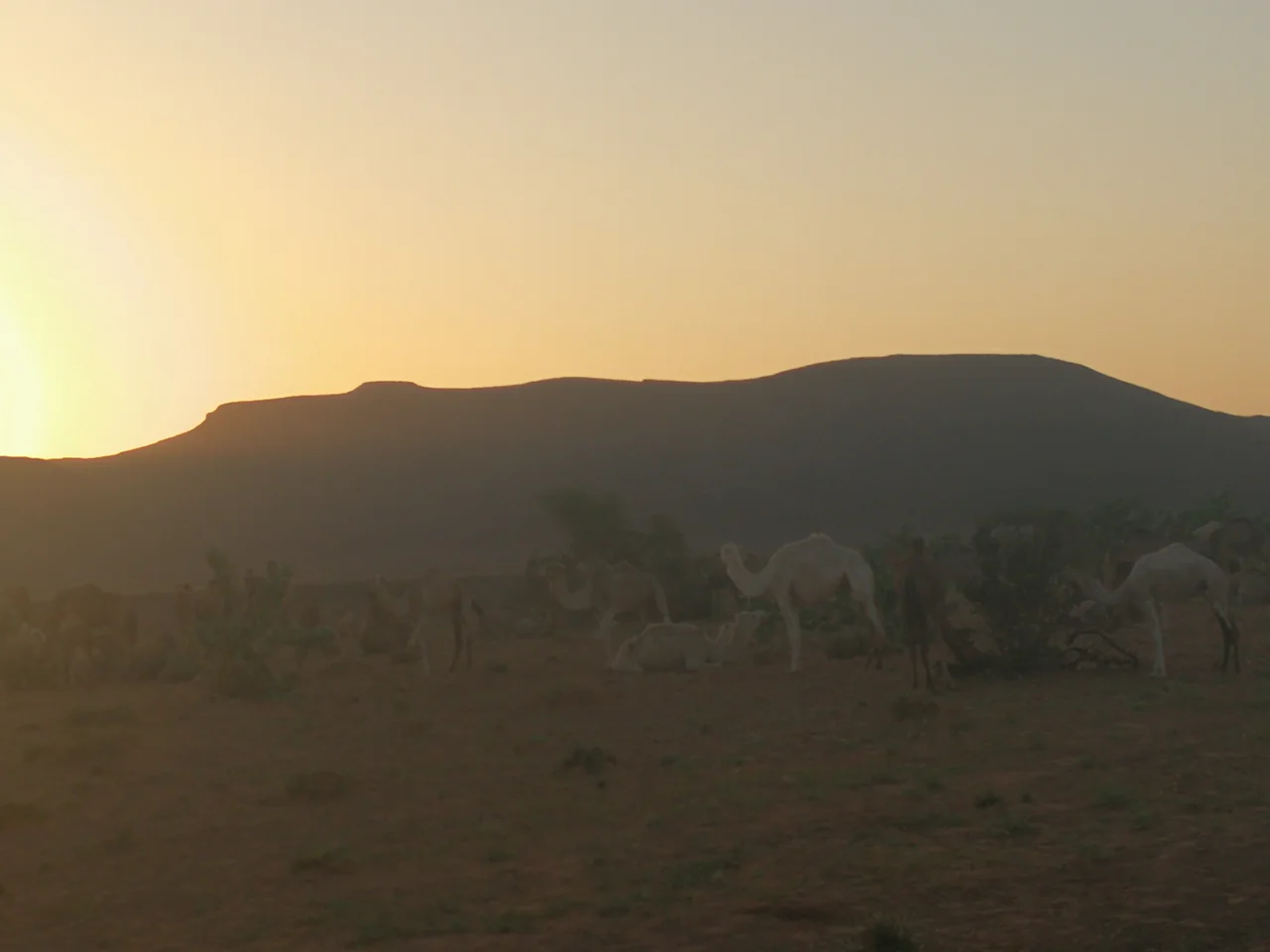

Inchiri region
List the metals buried under Inchiri and it reads like a chemistry exam: asbestos, beryllium, chromium, cobalt, copper, gold, iron, nickel, titanium, tungsten. Now look at what lives above them. One city. Roughly twenty thousand people. A short, sun-blasted coastline and a vast interior of nothing much at all. This is the paradox of western Mauritania's mineral frontier, a region almost empty of people yet astonishingly rich in the things that the modern world digs up and fights over.
A Region of One City
Inchiri is barely a region in the way most places are. It has a single city, Akjoujt, which serves as its capital and, in practical terms, its only town. Its borders touch Adrar to the east, Trarza to the south, and Dakhlet Nouadhibou wrapping around the north and west, with just a sliver of Atlantic coast to call its own. The whole place held about 20,386 people as of 2016, a population that grows slowly: 15,609 in 2011, 19,639 in 2013. In a country defined by desert, Inchiri is among the emptiest pockets, a near-blank space on the map whose importance has nothing to do with how many people live there and everything to do with what lies beneath them.
The Buried Fortune
What Inchiri lacks in people it makes up for in geology. The region is famous for rich copper deposits, the same ones that drew Bronze Age smelters to Akjoujt three thousand years ago, but copper is only the beginning. Gold has become the headline metal, and the Tasiast mine in the region's north, run by a subsidiary of Canada's Kinross Gold, is the operation everyone watches. Beyond those two, the ground holds iron, nickel, titanium, cobalt, tungsten and more, a frontier still only partly tapped. Most of this work happens far from where anyone lives, out in the open desert, so that the wealth and the population occupy almost separate worlds within the same region's borders.
Hard Numbers, Thin Margins
Life on a mineral frontier is harder than the metal underfoot might suggest. As of 2014 nearly one in five working-age Mauritanians in Inchiri was unemployed, and only about 3.4 percent of households owned a home computer of any kind. Reliable figures are themselves scarce, since the government had not updated much of its economic census on the region since 2008. During the rains from July to October, the World Health Organization warns, malaria becomes a real risk in this otherwise bone-dry land. The contrast can be stark: a region exporting gold and copper to the world, where data about daily life is one of the harder things to come by.
A Frontier's Famous Son
Empty as it is, Inchiri has placed its stamp on the nation. Mohamed Ould Abdel Aziz, a former president of Mauritania, was born and raised in Akjoujt, carrying the name of this desert mining town to the heights of national power. It is a fitting emblem for the region: a place most Mauritanians will never visit, sparsely peopled and easy to overlook, yet bound tightly to the country's fortunes through the metal it yields and the lives it shapes. The mines run on, the population inches upward, and Inchiri remains what it has long been, a quiet, mineral-laden corner of the Sahara doing outsized work.
From the Air
Inchiri region centers near Akjoujt at 19.74 degrees north, 14.38 degrees west, in western Mauritania, with a short Atlantic coastline to the west and desert interior elsewhere. From altitude the region appears as open Saharan terrain, the city of Akjoujt and scattered mine workings the main signs of habitation; the large Tasiast gold operation lies to the north. Nearest major airports are Nouakchott (GQNN) to the south and Nouadhibou (GQPP) to the northwest. Visibility is typically excellent away from the rainy season, when July-to-October moisture and occasional dust can reduce it.
Nearby Stories
- Erg Amatlich 14 km away
- Terjit 69 km away
- Maaden El-Irvane 73 km away
- Tasiast Gold Mine 98 km away
- Chami 134 km away
- Portendick 176 km away
- Ksar el Barka 200 km away